
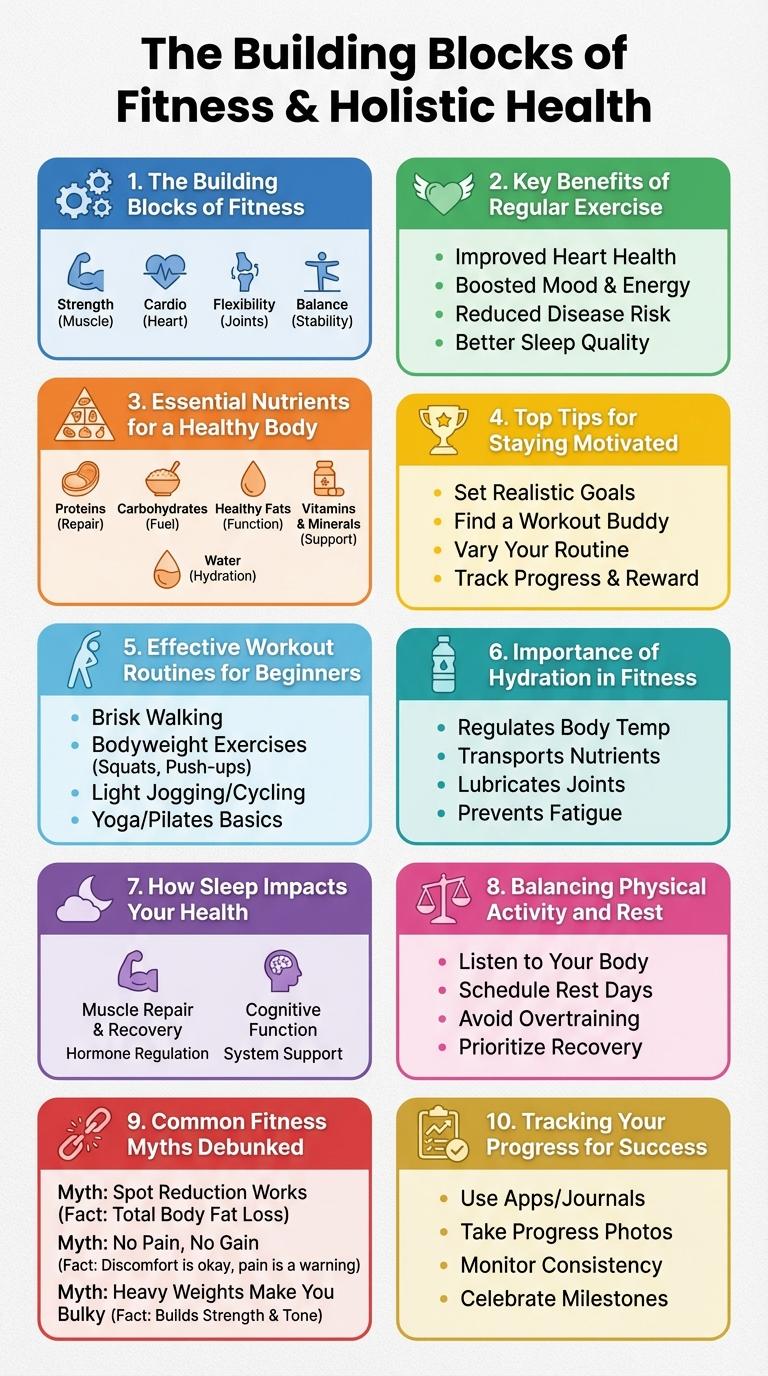
Fitness and health infographics visually present essential information on exercise routines, nutrition tips, and wellness strategies to enhance overall well-being. These graphics simplify complex data into easy-to-understand formats, making it easier to adopt healthy habits. Visual elements highlight key statistics and actionable advice for maintaining an active and balanced lifestyle.
The Building Blocks of Fitness
Fitness and health are founded on essential components that work together to enhance overall well-being. Understanding these building blocks helps create effective fitness routines and promote sustained health.
- Nutrition - Proper nutrition fuels the body and supports muscle growth, recovery, and energy levels.
- Exercise - Regular physical activity improves cardiovascular health, strength, and flexibility.
- Rest and Recovery - Adequate rest allows the body to repair and prevents injury.
Balancing these elements leads to improved physical performance and long-term health benefits.
Key Benefits of Regular Exercise
Regular exercise significantly improves cardiovascular health by enhancing heart function and circulation. It also helps regulate body weight through increased calorie expenditure.
Engaging in physical activity boosts mental well-being by reducing stress and anxiety levels. Consistent workouts strengthen muscles and bones, promoting overall physical resilience and endurance.
Essential Nutrients for a Healthy Body
Essential nutrients are vital for maintaining overall health and supporting bodily functions. Incorporating a balanced intake of these nutrients improves fitness and enhances energy levels.
- Proteins - Proteins help build and repair muscle tissue crucial for strength and recovery.
- Carbohydrates - Carbohydrates provide the primary source of energy necessary for physical activity.
- Fats - Healthy fats support brain function and hormone production important for overall wellness.
- Vitamins - Vitamins regulate metabolism and boost the immune system to prevent illness.
- Minerals - Minerals like calcium and iron strengthen bones and improve oxygen transport in the blood.
Top Tips for Staying Motivated
Staying motivated in fitness requires setting clear, achievable goals that align with your personal health objectives. Regularly tracking progress through apps or journals helps maintain focus and celebrates milestones. Incorporating variety in workouts prevents boredom and keeps enthusiasm high for long-term commitment.
Effective Workout Routines for Beginners
Starting a fitness journey requires routines that build strength and improve endurance safely. Effective workout plans for beginners focus on balanced exercises that enhance overall health while preventing injury.
- Compound Movements - Engage multiple muscle groups simultaneously to maximize workout efficiency and build functional strength.
- Consistency Over Intensity - Regular exercise with moderate effort supports long-term fitness gains and reduces burnout risk.
- Proper Warm-Up and Cool-Down - Preparing muscles before workouts and stretching afterward helps prevent injuries and aids recovery.
Importance of Hydration in Fitness
Hydration plays a crucial role in maintaining optimal physical performance during exercise. Proper fluid intake helps regulate body temperature and lubricate joints, reducing the risk of injury.
Dehydration can lead to fatigue, muscle cramps, and decreased endurance, directly impacting workout efficiency. Drinking water before, during, and after fitness activities supports recovery and overall health.
How Sleep Impacts Your Health
How does sleep impact your overall health? Quality sleep supports brain function, emotional well-being, and physical health. Insufficient sleep increases the risk of chronic diseases like diabetes and heart disease.
What role does sleep play in fitness recovery? Sleep promotes muscle repair and growth by releasing growth hormones during deep sleep stages. Proper rest enhances athletic performance and reduces injury risk.
How much sleep is recommended for optimal health? Adults typically need 7 to 9 hours of sleep per night for maximum health benefits. Consistent sleep patterns improve immune function and cognitive performance.
Can poor sleep affect weight management? Sleep deprivation disrupts hormones that regulate hunger and appetite, increasing cravings for unhealthy foods. Maintaining healthy sleep helps support metabolism and weight control.
How does sleep influence mental health? Adequate sleep reduces stress, anxiety, and symptoms of depression. Restorative sleep supports memory consolidation and emotional resilience.
Balancing Physical Activity and Rest
| Aspect | Key Information |
|---|---|
| Physical Activity | Engage in at least 150 minutes of moderate aerobic exercise weekly for cardiovascular health. |
| Strength Training | Include muscle-strengthening activities 2-3 times per week to improve muscular fitness and metabolism. |
| Rest and Recovery | Allow 24-48 hours of rest between intense workouts to promote muscle repair and prevent injury. |
| Sleep | Aim for 7-9 hours of quality sleep each night to support overall health and physical recovery. |
| Balance Tips | Alternate exercise types, listen to your body, and prioritize rest days to optimize performance and well-being. |
Common Fitness Myths Debunked
Fitness and health are often surrounded by misconceptions that can hinder progress. Understanding common myths helps individuals make informed decisions for better results.
Many believe that lifting weights makes you bulky, but strength training actually tones muscles and boosts metabolism. Another myth suggests that you need to exercise for hours daily; moderate, consistent workouts are more effective. Drinking excessive amounts of water during exercise is unnecessary and can be harmful, as hydration should be balanced.