
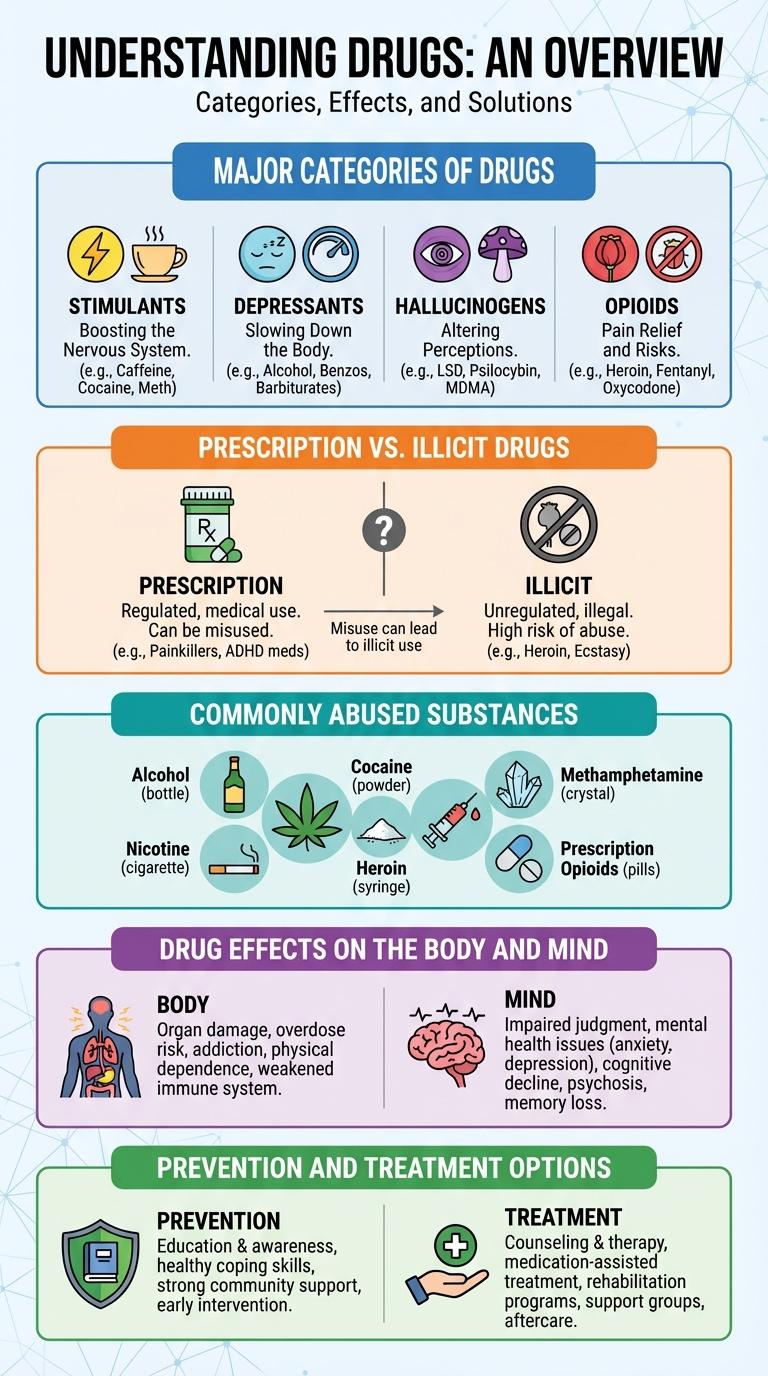
Drugs encompass a wide range of substances that affect the body and mind in various ways. They can be classified into categories such as stimulants, depressants, hallucinogens, and opioids, each with unique effects and risks. Understanding these types is crucial for recognizing their impact on health and society.
Understanding Drugs: An Overview
Drugs are substances that alter the body's normal functions, affecting the brain and other organs in various ways. They range from legal medications to illicit substances, each with distinct effects and risks.
Understanding the different types of drugs helps in recognizing their uses and potential dangers. Common categories include stimulants, depressants, hallucinogens, opioids, and inhalants.
Major Categories of Drugs
Drugs can be classified into major categories based on their effects on the human body and mind. Common categories include stimulants, depressants, hallucinogens, opioids, and cannabinoids. Each category differs in its chemical composition, usage, and potential risks.
| Category | Description |
|---|---|
| Stimulants | Increase alertness and energy by speeding up the nervous system. |
| Depressants | Slow down brain activity, inducing relaxation and drowsiness. |
| Hallucinogens | Cause altered perceptions, thoughts, and feelings. |
| Opioids | Relieve pain by binding to receptors in the brain and body. |
| Cannabinoids | Derived from cannabis, affecting mood, memory, and coordination. |
Stimulants: Boosting the Nervous System
What are stimulants and how do they affect the nervous system?
Stimulants are a class of drugs that increase the activity of the central nervous system, enhancing alertness, attention, and energy. Common stimulants include caffeine, nicotine, amphetamines, and cocaine, each varying in strength and effect duration.
Depressants: Slowing Down the Body
Depressants are a category of drugs that slow down the functioning of the central nervous system. They are often prescribed to reduce anxiety, promote relaxation, and induce sleep.
- Alcohol - A common depressant that impairs motor coordination and slows brain activity.
- Benzodiazepines - Medications used to treat anxiety and insomnia by calming the brain.
- Barbiturates - Powerful sedatives once widely used for anxiety and seizure control but now less common due to risks.
Hallucinogens: Altering Perceptions
Hallucinogens are a class of drugs that alter perception, mood, and various cognitive processes. These substances cause individuals to experience visual or auditory hallucinations that do not exist in reality.
- LSD (Lysergic acid diethylamide) - A potent hallucinogen known for producing vivid visual distortions and altered thoughts.
- Psilocybin - Found in certain mushrooms, it induces spiritual experiences and changes in sensory perception.
- Mescaline - Derived from the peyote cactus, this drug alters sensory input and emotional state.
- DMT (Dimethyltryptamine) - A naturally occurring hallucinogen that triggers intense, short-lived visionary experiences.
- Ketamine - Used medically as an anesthetic, it produces dissociative effects and altered perceptions at lower doses.
Hallucinogens disrupt normal brain communication, leading to significant changes in how reality is perceived by the user.
Opioids: Pain Relief and Risks
Opioids are a class of drugs commonly used for pain relief, including prescription medications like morphine, oxycodone, and fentanyl. These drugs act on the nervous system to reduce the perception of pain but carry significant risks such as addiction, respiratory depression, and overdose. Proper medical supervision and awareness of opioid risks are crucial for safe usage and preventing misuse.
Prescription vs. Illicit Drugs
Drugs are substances that affect the body's functions and can be categorized into prescription and illicit types. Prescription drugs are legally obtained through medical authorization to treat specific health conditions.
Illicit drugs are illegal substances used without medical supervision, often associated with health risks and social issues. Understanding the differences helps promote safe usage and awareness.
Commonly Abused Substances
Drugs are substances that can alter the mind, body, and behavior. Understanding the different types helps in recognizing the risks associated with their use.
Commonly abused substances include opioids, stimulants, depressants, hallucinogens, and cannabis. Opioids like heroin and prescription painkillers cause intense euphoria but high addiction risk. Stimulants such as cocaine and methamphetamine increase alertness and energy but can damage the heart and brain.
Drug Effects on the Body and Mind
Drugs interact with the brain and body in diverse ways, influencing physical and mental functions. Understanding these effects aids in recognizing both therapeutic benefits and potential dangers.
Drug types can be classified based on their impact on the nervous system and behavior.
- Stimulants - Increase alertness, elevate heart rate, and boost energy by stimulating the central nervous system.
- Depressants - Slow down brain function and reduce anxiety by calming neural activity.
- Hallucinogens - Alter perception, mood, and cognition, causing vivid sensory experiences and distorted reality.