
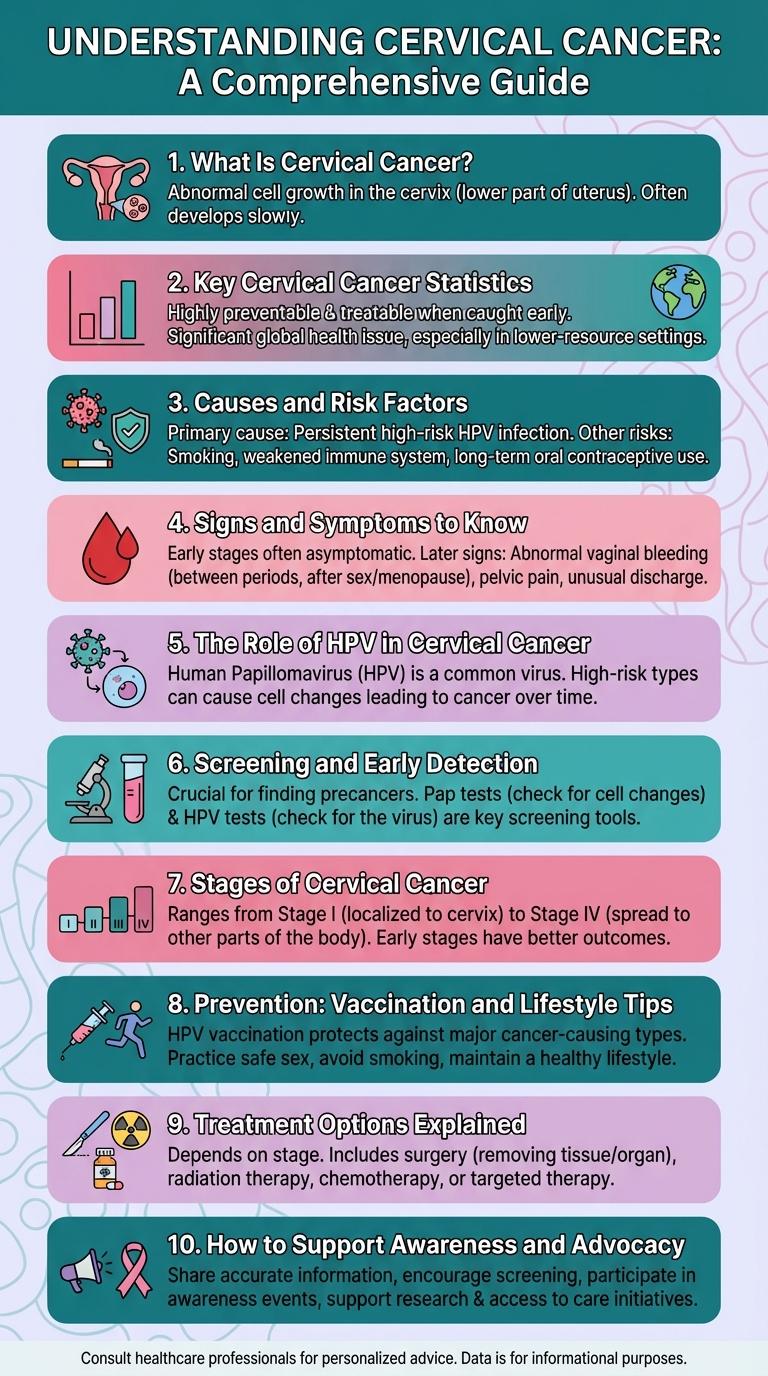
Cervical cancer remains a significant health concern worldwide, often impacting women in their prime years. Early detection through regular screenings and awareness of symptoms can drastically improve treatment outcomes. This infographic presents essential facts, risk factors, prevention methods, and screening guidelines to empower women with knowledge for better cervical health.
What Is Cervical Cancer?
Cervical cancer develops in the cells of the cervix, the lower part of the uterus connecting to the vagina. It often arises from persistent infection with high-risk human papillomavirus (HPV) types.
- Origin - Cervical cancer begins in the transformation zone of the cervix where glandular and squamous cells meet.
- Cause - Persistent infection with high-risk HPV strains is the primary cause of cervical cancer.
- Development - Cancerous changes typically progress slowly, often detectable through routine screening before symptoms arise.
Key Cervical Cancer Statistics
Cervical cancer is the fourth most common cancer among women globally, with an estimated 604,000 new cases and 342,000 deaths reported in 2020. Human papillomavirus (HPV) infection is identified as the primary cause, contributing to approximately 99% of cases. Early detection through regular screening and HPV vaccination significantly reduce the risk and mortality rates associated with cervical cancer.
Causes and Risk Factors
Cervical cancer primarily develops due to persistent infection with high-risk human papillomavirus (HPV) types. HPV is a common sexually transmitted infection affecting the cervical cells, leading to abnormal changes over time.
Other risk factors include smoking, weakened immune system, long-term use of birth control pills, and having multiple sexual partners. Early detection through Pap smears and HPV testing significantly reduces the risk of cervical cancer progression.
Signs and Symptoms to Know
What are the key signs and symptoms of cervical cancer to watch for? Early-stage cervical cancer may cause abnormal vaginal bleeding, unusual discharge, or pelvic pain. Recognizing these symptoms promptly can lead to early diagnosis and more effective treatment.
The Role of HPV in Cervical Cancer
Human Papillomavirus (HPV) is the primary cause of cervical cancer, responsible for nearly 99% of cases worldwide. High-risk HPV types, especially HPV 16 and 18, lead to the development of precancerous lesions that may progress to cancer if untreated.
Persistent infection with high-risk HPV strains can disrupt normal cell functions, causing abnormal cervical cell growth. Early detection through HPV testing and vaccination significantly reduces the risk of cervical cancer.
Screening and Early Detection
Cervical cancer screening is essential for early detection and prevention. Regular tests can identify precancerous changes before symptoms appear.
The most common screening methods include the Pap smear and HPV testing. Pap smears detect abnormal cervical cells, while HPV tests identify high-risk virus types linked to cancer. Early detection through these screenings significantly improves treatment outcomes and survival rates.
Stages of Cervical Cancer
Cervical cancer progresses through distinct stages that guide treatment options and prognosis. Understanding these stages is crucial for early detection and effective management.
- Stage I - Cancer is confined to the cervix and has not spread to nearby tissues or lymph nodes.
- Stage II - Cancer extends beyond the cervix to the upper part of the vagina but has not reached the pelvic wall.
- Stage III - Cancer involves the lower part of the vagina or pelvic wall and may block the ureters, affecting kidney function.
- Stage IV - Cancer spreads to the bladder, rectum, or distant organs such as the lungs or liver.
Prevention: Vaccination and Lifestyle Tips
Cervical cancer prevention relies heavily on vaccination against human papillomavirus (HPV), which is the primary cause of the disease. The HPV vaccine is most effective when administered before exposure to the virus, typically recommended for preteens and young adults. Lifestyle changes such as regular screening, avoiding smoking, and practicing safe sex significantly reduce the risk of cervical cancer.
Treatment Options Explained
Cervical cancer treatment varies based on the cancer stage and patient health. Early detection improves treatment success and survival rates.
- Surgery - Removal of cancerous tissue, including hysterectomy, is common for early-stage cervical cancer.
- Radiation Therapy - Uses high-energy rays to kill cancer cells and shrink tumors, often combined with chemotherapy.
- Chemotherapy - Drug treatment that targets rapidly dividing cells, used alone or with radiation for advanced cervical cancer.
Choosing the right treatment depends on multiple factors, including tumor size, location, and overall patient condition.