
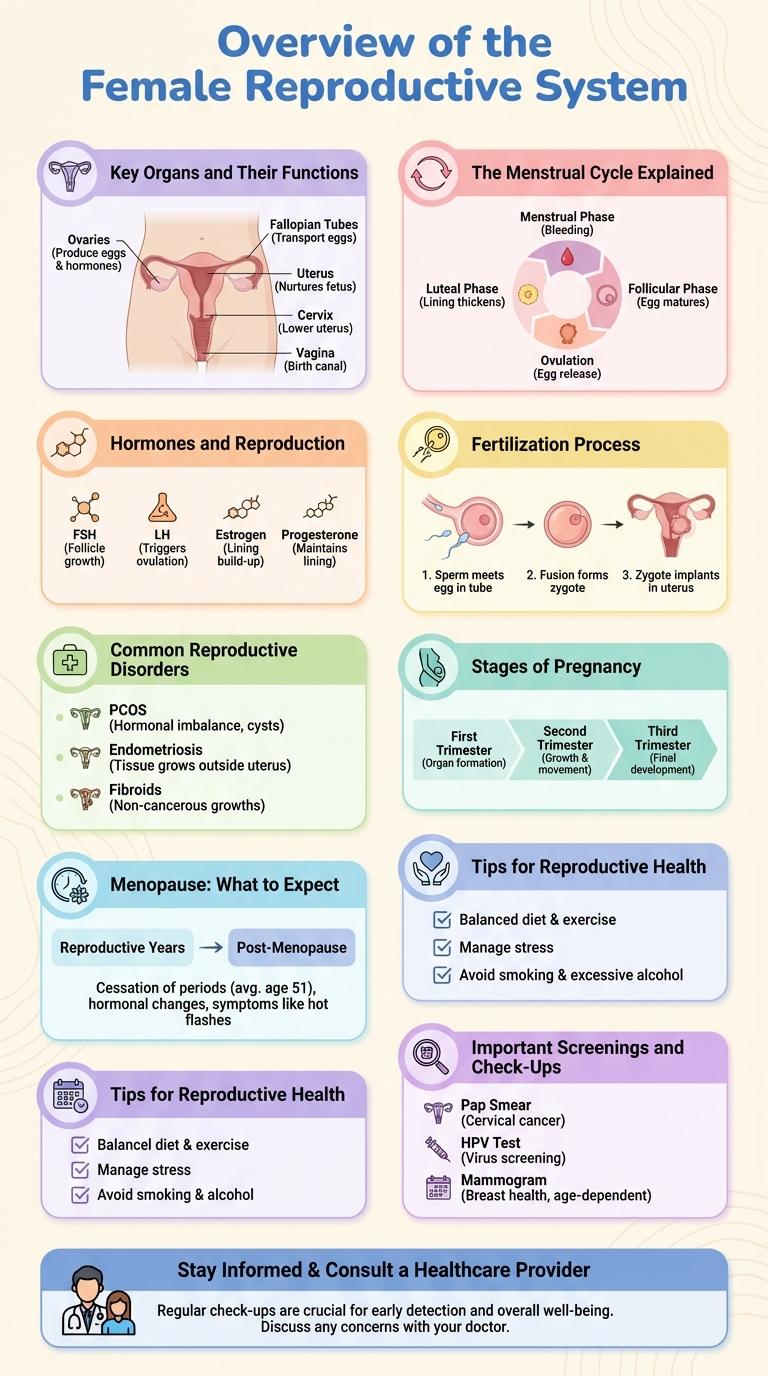
The female reproductive system comprises organs essential for reproduction, including the ovaries, fallopian tubes, uterus, and vagina. Each component plays a crucial role in processes such as ovulation, fertilization, and childbirth. Visualizing these parts through an infographic helps clarify their functions and interconnections for better understanding.
Overview of the Female Reproductive System
The female reproductive system is a complex network of organs essential for reproduction, hormone production, and menstrual cycle regulation. It includes both internal and external structures that work together to support fertility and pregnancy.
The primary components are the ovaries, fallopian tubes, uterus, cervix, and vagina.
- Ovaries - Produce eggs (ova) and secrete hormones like estrogen and progesterone.
- Fallopian Tubes - Transport eggs from the ovaries to the uterus and are the typical site of fertilization.
- Uterus - Houses and nourishes the fertilized egg, developing into a fetus during pregnancy.
Key Organs and Their Functions
The female reproductive system consists of key organs that work together to support reproduction and hormonal balance. Each organ has a specific role in the menstrual cycle, fertilization, and childbirth.
- Ovaries - Produce eggs (ova) and secrete hormones like estrogen and progesterone.
- Fallopian Tubes - Transport eggs from the ovaries to the uterus and facilitate fertilization.
- Uterus - Houses and nourishes the fertilized egg during pregnancy.
- Cervix - Acts as a gateway between the uterus and vagina, allowing passage of sperm and menstrual flow.
- Vagina - Serves as the birth canal and receptacle for sperm during intercourse.
The Menstrual Cycle Explained
The menstrual cycle is a monthly process that prepares the female body for pregnancy. It typically lasts about 28 days, but can vary between 21 to 35 days.
The cycle involves hormonal changes that regulate ovulation and menstruation. Key phases include the follicular phase, ovulation, luteal phase, and menstruation.
Hormones and Reproduction
The female reproductive system is regulated by key hormones including estrogen, progesterone, and follicle-stimulating hormone (FSH). These hormones coordinate the menstrual cycle, ovulation, and preparation of the uterus for pregnancy.
Estrogen promotes the growth of the uterine lining, while progesterone stabilizes it to support embryo implantation. FSH stimulates the development of ovarian follicles, which release eggs during ovulation.
Fertilization Process
The female reproductive system plays a crucial role in the fertilization process, enabling the union of sperm and ovum. This complex sequence creates the foundation for human development.
- Ovulation - The ovary releases a mature egg into the fallopian tube where fertilization typically occurs.
- Sperm Transport - Sperm travel through the cervix and uterus to reach the egg in the fallopian tube.
- Fertilization - A sperm cell penetrates the egg membrane, combining genetic material to form a zygote.
The resulting zygote begins cellular division as it moves toward the uterus for implantation and pregnancy establishment.
Common Reproductive Disorders
What are common reproductive disorders affecting the female reproductive system? These disorders include polycystic ovary syndrome (PCOS), endometriosis, uterine fibroids, and pelvic inflammatory disease (PID). Each condition impacts fertility and overall reproductive health differently.
How does polycystic ovary syndrome (PCOS) affect women? PCOS causes hormonal imbalances leading to irregular menstrual cycles, ovarian cysts, and difficulties in conceiving. It is one of the leading causes of infertility in women of reproductive age.
What is endometriosis and its primary symptoms? Endometriosis occurs when tissue similar to the uterine lining grows outside the uterus, causing pain and heavy menstrual bleeding. This disorder can lead to chronic pelvic pain and complications in pregnancy.
How do uterine fibroids influence the female reproductive system? Uterine fibroids are non-cancerous growths in the uterus that may cause heavy periods, pelvic pain, and sometimes infertility. They vary in size and number, affecting reproductive function based on their location.
What is pelvic inflammatory disease (PID) and how does it impact fertility? PID is an infection of the female reproductive organs often caused by sexually transmitted bacteria. If untreated, PID can lead to scarring, infertility, and increased risk of ectopic pregnancy.
Stages of Pregnancy
| Stage of Pregnancy | Key Developments |
|---|---|
| First Trimester (Weeks 1-12) | Fertilization occurs and the zygote implants in the uterus. Major organs begin forming, including the heart, brain, and spinal cord. By week 12, the fetus has recognizable limbs and facial features. |
| Second Trimester (Weeks 13-26) | Rapid growth and development of body systems happen. The fetus begins movement, and features like fingerprints develop. The placenta fully supports nutrient and oxygen exchange. |
| Third Trimester (Weeks 27-40) | Continued growth and fat accumulation prepare the fetus for birth. The lungs mature, and brain development accelerates. The fetus shifts position in preparation for delivery. |
| Labor and Delivery | The cervix dilates and contractions begin to move the baby through the birth canal. This stage ends with delivery of the baby and placenta. |
| Postpartum Recovery | The mother's body undergoes healing and hormonal adjustments. Uterus returns to pre-pregnancy size, and breastfeeding may be initiated to support newborn nutrition. |
Menopause: What to Expect
The female reproductive system undergoes significant changes during menopause, marking the end of menstrual cycles. Common symptoms include hot flashes, mood swings, and irregular periods as hormone levels fluctuate. Understanding these changes helps women manage their health and seek appropriate medical support.
Tips for Reproductive Health
Maintaining a balanced diet rich in vitamins and minerals supports overall reproductive health in females. Regular gynecological check-ups help detect and prevent potential issues early. Practicing safe sex and managing stress contribute to optimal reproductive system function.