
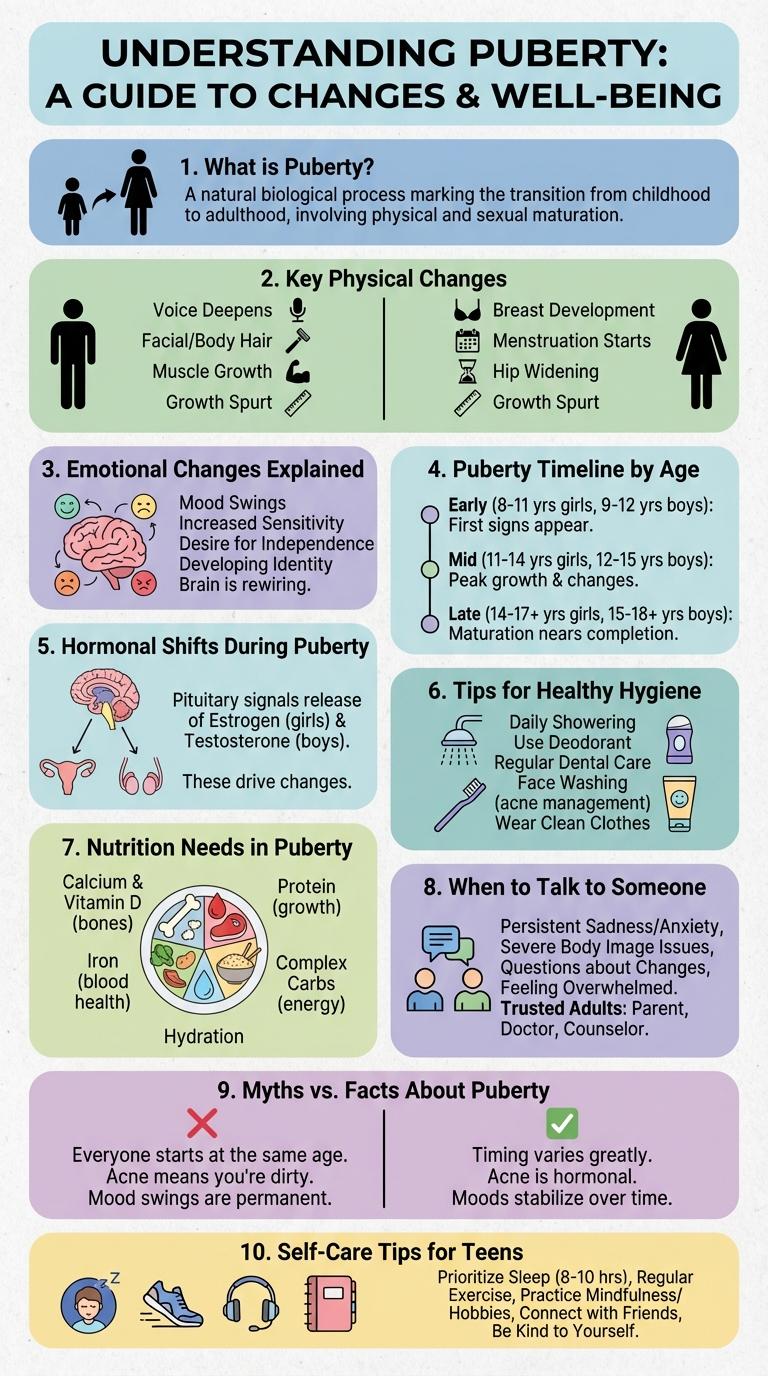
Puberty marks a significant phase of physical and hormonal changes that transform children into adolescents. This infographic visually breaks down the key stages, symptoms, and emotional shifts experienced during puberty. Understanding these changes helps promote awareness and support during this critical developmental period.
What is Puberty?
Puberty is the developmental phase when a child's body transforms into an adult body capable of reproduction. It involves physical, hormonal, and emotional changes that prepare the body for adulthood.
Key changes include growth spurts, development of secondary sexual characteristics, and hormonal shifts such as increased production of estrogen or testosterone. This stage typically begins between ages 8 and 14 and varies for each individual.
Key Physical Changes
What are the key physical changes during puberty? Puberty triggers rapid growth and development in the body, marking the transition from childhood to adolescence. These changes are driven by hormonal shifts that affect various bodily systems.
| Physical Change | Description |
|---|---|
| Growth Spurt | Significant increase in height and weight over a short period. |
| Development of Secondary Sexual Characteristics | Appearance of features like breast development in girls and facial hair in boys. |
| Skin Changes | Increased oil production leading to acne and changes in skin texture. |
| Voice Changes | Deepening of the voice primarily in males due to growth of vocal cords. |
| Body Hair Growth | Emergence of hair in armpits, pubic area, and sometimes on the face and chest. |
Emotional Changes Explained
Puberty triggers a surge of hormones that significantly influence emotions, often resulting in mood swings and heightened sensitivity. Adolescents may experience feelings of confusion, frustration, and increased self-awareness as they navigate this transitional phase. Understanding these emotional changes helps teens and caregivers support mental well-being during puberty.
Puberty Timeline by Age
Puberty is a significant developmental phase marked by physical and hormonal changes. This infographic outlines the typical timeline of puberty by age for both girls and boys.
- Ages 8-11 - Girls often experience the onset of puberty earlier, with initial breast development and growth spurts.
- Ages 9-12 - Boys begin showing signs of puberty including testicular enlargement and early growth in height.
- Ages 11-14 - Girls usually reach menarche, the first menstrual period, marking reproductive maturity.
- Ages 12-16 - Boys experience deepening of the voice, facial hair growth, and muscle development.
- Ages 14-18 - Both girls and boys typically complete major physical changes, finalizing adult height and body composition.
Hormonal Shifts During Puberty
Puberty triggers significant hormonal shifts, primarily involving increased production of gonadotropin-releasing hormone (GnRH) from the hypothalamus. This hormone stimulates the pituitary gland to secrete luteinizing hormone (LH) and follicle-stimulating hormone (FSH), which in turn activate the gonads (testes in males, ovaries in females) to produce sex steroids like testosterone and estrogen. These hormonal changes drive physical, emotional, and reproductive development characteristic of adolescence.
Tips for Healthy Hygiene
Puberty brings significant changes to the body, making healthy hygiene essential for comfort and confidence. Establishing good habits early supports skin health and overall well-being during this transformative time.
Regularly washing the face with a gentle cleanser helps prevent acne and removes excess oil. Daily showers, especially after sweating, reduce body odor and keep skin clean. Wearing clean clothes and changing socks daily also contribute to maintaining freshness and preventing infections.
Nutrition Needs in Puberty
Proper nutrition during puberty is crucial for supporting rapid growth and hormonal changes. Adolescents require increased intake of calories, protein, vitamins, and minerals to meet developmental demands.
Calcium and vitamin D are essential for bone growth, while iron supports increased blood volume and muscle development. Balanced diets rich in fruits, vegetables, whole grains, and lean proteins promote healthy maturation.
When to Talk to Someone
Puberty is a significant developmental stage that brings many physical and emotional changes. Knowing when to talk to someone about these changes is essential for support and guidance.
- Early Signs - Discuss changes as soon as initial symptoms like growth spurts or mood swings appear.
- Emotional Stress - Seek conversation when feelings of anxiety, confusion, or sadness become overwhelming.
- Questions and Curiosity - Talk when there is a need for reliable information about body changes and health.
Open communication during puberty helps build trust and ensures proper understanding of this transitional phase.
Myths vs. Facts About Puberty
Puberty is a natural phase of human development with many myths and misconceptions surrounding it. Understanding accurate facts helps young individuals navigate this period with confidence and knowledge.
- Myth: Puberty happens overnight - Puberty is a gradual process that can take several years to complete.
- Fact: Hormones drive physical changes - Hormonal activity triggers most of the growth and development during puberty.
- Myth: Only girls develop breasts during puberty - Boys also experience breast development temporarily, called gynecomastia.
- Fact: Acne is common in puberty - Increased oil production in skin during puberty often leads to acne.
- Myth: Puberty timing is the same for everyone - The onset and duration of puberty vary widely among individuals due to genetics and environment.