
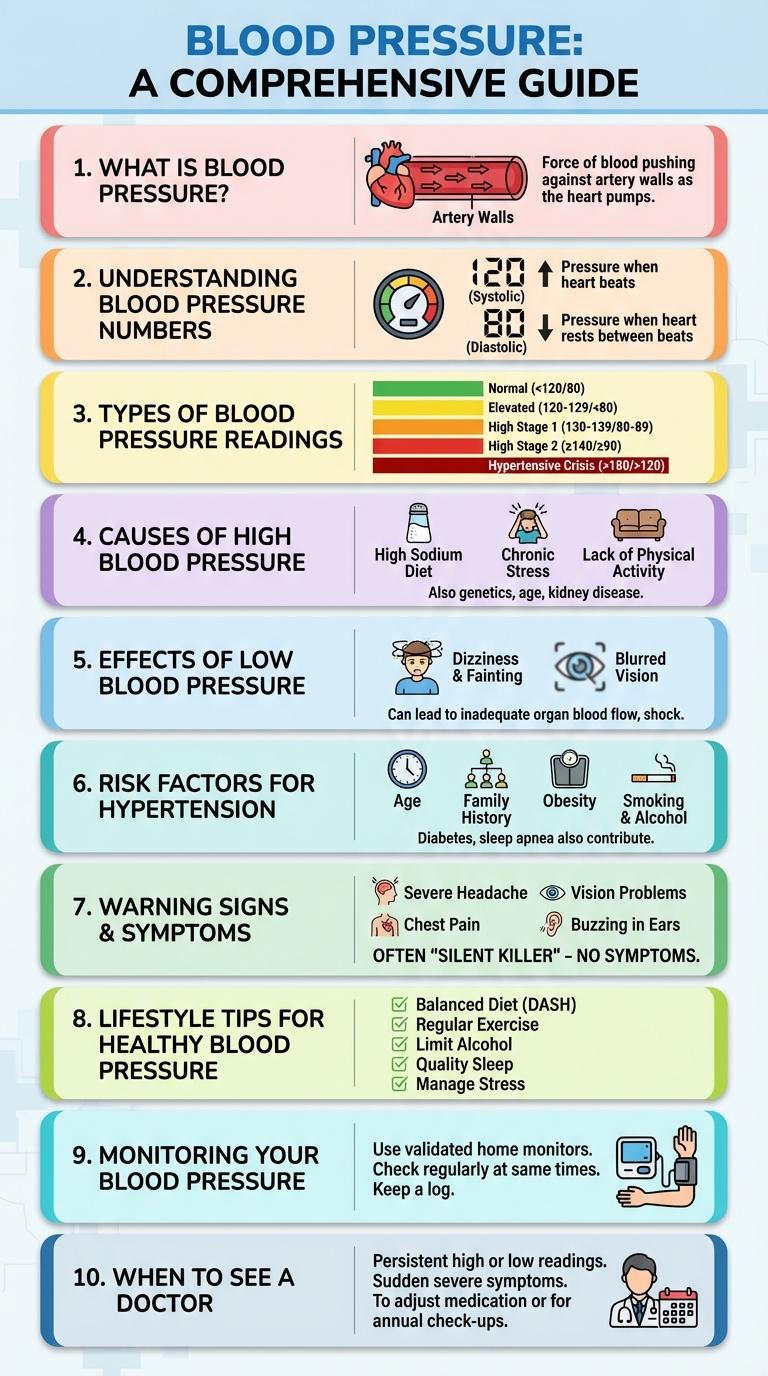
Blood pressure is a critical indicator of cardiovascular health, reflecting the force exerted by circulating blood on artery walls. Understanding its levels can help detect hypertension or hypotension, preventing serious health complications. This infographic visually breaks down key blood pressure ranges, causes, and tips for maintaining a healthy heart.
What is Blood Pressure?
Blood pressure measures the force exerted by circulating blood against the walls of arteries. It is a vital indicator of cardiovascular health, reflecting how hard the heart works to pump blood throughout the body.
Blood pressure is expressed with two numbers: systolic pressure over diastolic pressure, measured in millimeters of mercury (mmHg). Maintaining optimal blood pressure levels reduces the risk of heart disease, stroke, and other health complications.
Understanding Blood Pressure Numbers
Blood pressure measures the force of blood pushing against artery walls during heartbeats. Understanding the numbers helps monitor heart health and prevent complications.
- Systolic Pressure - The top number indicates pressure when the heart beats and pumps blood.
- Diastolic Pressure - The bottom number represents pressure when the heart rests between beats.
- Normal Range - A typical healthy blood pressure reading is around 120/80 mmHg.
Types of Blood Pressure Readings
Blood pressure readings consist of two key numbers: systolic and diastolic pressure. Systolic pressure measures the force of blood against artery walls when the heart beats, while diastolic pressure measures it when the heart rests between beats.
Normal blood pressure is typically around 120/80 mmHg. High blood pressure, or hypertension, increases risks for heart disease and stroke, while low blood pressure, or hypotension, can cause dizziness and fainting.
Causes of High Blood Pressure
High blood pressure, or hypertension, often results from factors such as excessive salt intake, obesity, and chronic stress. Genetic predisposition and age-related arterial stiffness also play significant roles in elevating blood pressure levels. Lifestyle choices including lack of physical activity and excessive alcohol consumption further contribute to the onset of hypertension.
Effects of Low Blood Pressure
Low blood pressure, or hypotension, can cause dizziness, fainting, and blurred vision due to insufficient blood flow to the brain. Severe hypotension may lead to shock, resulting in organ damage and life-threatening complications. Monitoring blood pressure regularly helps detect and manage these risks effectively.
Risk Factors for Hypertension
High blood pressure, or hypertension, increases the risk of heart disease and stroke worldwide. Identifying risk factors helps in prevention and effective management of this condition.
- Age - Blood pressure tends to rise with age due to arterial stiffness and other physiological changes.
- Obesity - Excess body weight strains the heart and increases the risk of developing hypertension.
- High Salt Intake - Consuming too much sodium can cause the body to retain fluid, raising blood pressure levels.
Lifestyle modifications targeting these risk factors are essential for controlling and preventing hypertension.
Warning Signs & Symptoms
Blood pressure warning signs indicate critical changes in cardiovascular health that require immediate attention. Recognizing these symptoms early can prevent severe complications such as stroke or heart attack.
- Severe Headache - Intense headaches may signal dangerously high blood pressure levels affecting the brain.
- Chest Pain - Pain or pressure in the chest often indicates strain on the heart caused by elevated blood pressure.
- Shortness of Breath - Difficulty breathing can result from high blood pressure impacting lung function or heart performance.
- Dizziness or Fainting - Sudden lightheadedness may be due to fluctuating blood pressure affecting brain oxygen supply.
- Blurred Vision - Changes in vision may occur when high blood pressure damages blood vessels in the eyes.
Lifestyle Tips for Healthy Blood Pressure
| Lifestyle Tip | Benefit for Blood Pressure |
|---|---|
| Maintain a Balanced Diet | Reduces sodium intake, improves heart health, lowers hypertension risk |
| Regular Physical Activity | Strengthens heart muscles, promotes healthy circulation, decreases blood pressure |
| Limit Alcohol Consumption | Prevents blood pressure spikes, reduces risk of long-term hypertension |
| Manage Stress | Lowers cortisol levels, stabilizes blood pressure, supports cardiovascular health |
| Maintain Healthy Weight | Reduces strain on the heart, improves blood vessel function, aids in blood pressure control |
Monitoring Your Blood Pressure
Why is monitoring your blood pressure important? Regular blood pressure monitoring helps detect hypertension early, reducing the risk of heart disease and stroke. Accurate tracking allows for timely adjustments in lifestyle or medication to maintain healthy levels.