
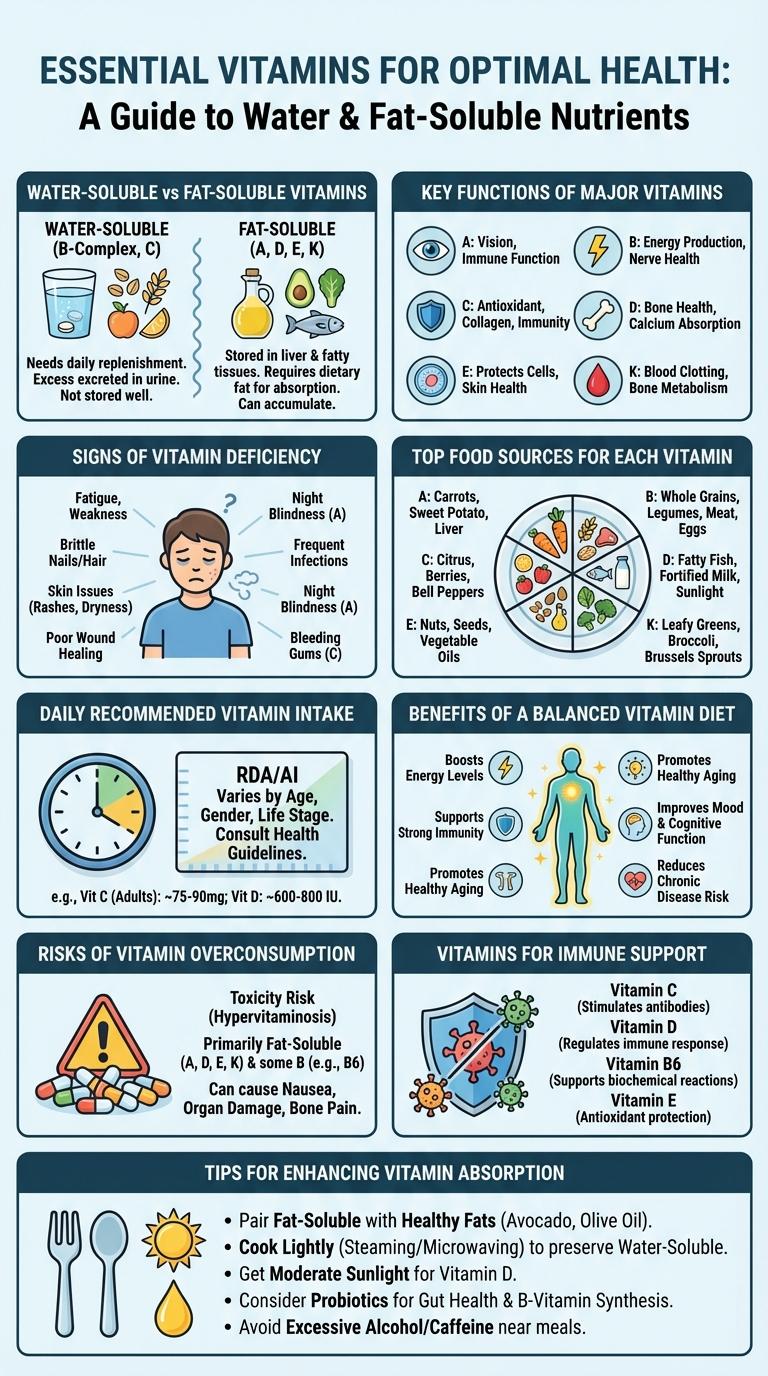
Vitamins are essential nutrients that support vital bodily functions and overall health. This infographic highlights the key vitamins, their benefits, daily requirements, and food sources to help you maintain a balanced diet. Understanding these nutrients enables better choices for boosting immunity, energy, and well-being.
Essential Vitamins for Optimal Health
Essential vitamins play a crucial role in maintaining overall health and supporting bodily functions. These nutrients must be obtained through diet to ensure optimal physical and mental well-being.
- Vitamin A - Supports vision, immune function, and skin health by promoting cell growth and differentiation.
- Vitamin C - Acts as a powerful antioxidant, boosting immunity and aiding in collagen production for skin and tissue repair.
- Vitamin D - Facilitates calcium absorption, essential for bone health and immune system regulation.
Water-Soluble vs Fat-Soluble Vitamins
Vitamins are essential nutrients that support vital bodily functions. They are categorized into water-soluble and fat-soluble types based on how they are absorbed and stored.
- Water-Soluble Vitamins - These vitamins dissolve in water and are not stored in large amounts; excess is excreted in urine.
- Fat-Soluble Vitamins - These vitamins dissolve in fat and are stored in body tissues, primarily the liver and fat cells.
- Examples and Functions - Water-soluble vitamins include B-complex and C, important for energy metabolism and immune support; fat-soluble vitamins include A, D, E, and K, critical for vision, bone health, antioxidant functions, and blood clotting.
Key Functions of Major Vitamins
Vitamins are essential nutrients that support various bodily functions critical for health. Each vitamin plays a unique role, from boosting the immune system to aiding energy production.
Vitamin A supports vision and immune health, while Vitamin C is crucial for collagen formation and antioxidant protection. Vitamin D helps regulate calcium absorption, vital for bone strength, and Vitamin E protects cells from oxidative damage.
Signs of Vitamin Deficiency
Vitamin deficiency can lead to various health issues, often signaled by specific symptoms. Early detection of these signs helps prevent long-term complications.
Common signs of vitamin deficiency include fatigue, brittle nails, and skin problems. Identifying these symptoms prompts timely dietary adjustments or supplementation.
Top Food Sources for Each Vitamin
Vitamins are essential nutrients that support various bodily functions, including immune health, energy production, and bone strength. Each vitamin is most abundant in specific food sources, making a balanced diet crucial for adequate intake. Identifying top food sources for each vitamin helps in planning meals that meet daily nutritional needs effectively.
| Vitamin | Top Food Sources |
|---|---|
| Vitamin A | Carrots, sweet potatoes, spinach |
| Vitamin C | Oranges, strawberries, bell peppers |
| Vitamin D | Fatty fish, fortified milk, egg yolks |
| Vitamin E | Almonds, sunflower seeds, spinach |
| Vitamin K | Kale, broccoli, Brussels sprouts |
Daily Recommended Vitamin Intake
Understanding the daily recommended intake of vitamins is essential for maintaining overall health and preventing deficiencies. Each vitamin has a specific guideline that varies by age, gender, and health status.
- Vitamin A - 900 mcg for men and 700 mcg for women daily supports vision and immune function.
- Vitamin C - 90 mg for men and 75 mg for women daily boosts the immune system and aids in collagen production.
- Vitamin D - 600 IU for most adults promotes bone health and calcium absorption.
Meeting these daily vitamin recommendations helps optimize bodily functions and reduces risk of chronic diseases.
Benefits of a Balanced Vitamin Diet
Vitamins play a crucial role in maintaining overall health by supporting immune function, enhancing energy production, and promoting healthy skin and bones. A balanced vitamin diet ensures the body receives essential nutrients like Vitamin A, C, D, and B-complex, which help prevent deficiencies and chronic diseases. Consuming a variety of fruits, vegetables, whole grains, and lean proteins provides the optimal mix of vitamins needed for daily bodily functions and long-term wellness.
Risks of Vitamin Overconsumption
What are the risks of vitamin overconsumption? Excessive intake of vitamins can lead to toxicity, causing symptoms such as nausea, headaches, and organ damage. Long-term overuse of fat-soluble vitamins like A, D, E, and K poses a higher risk since they accumulate in body tissues.