
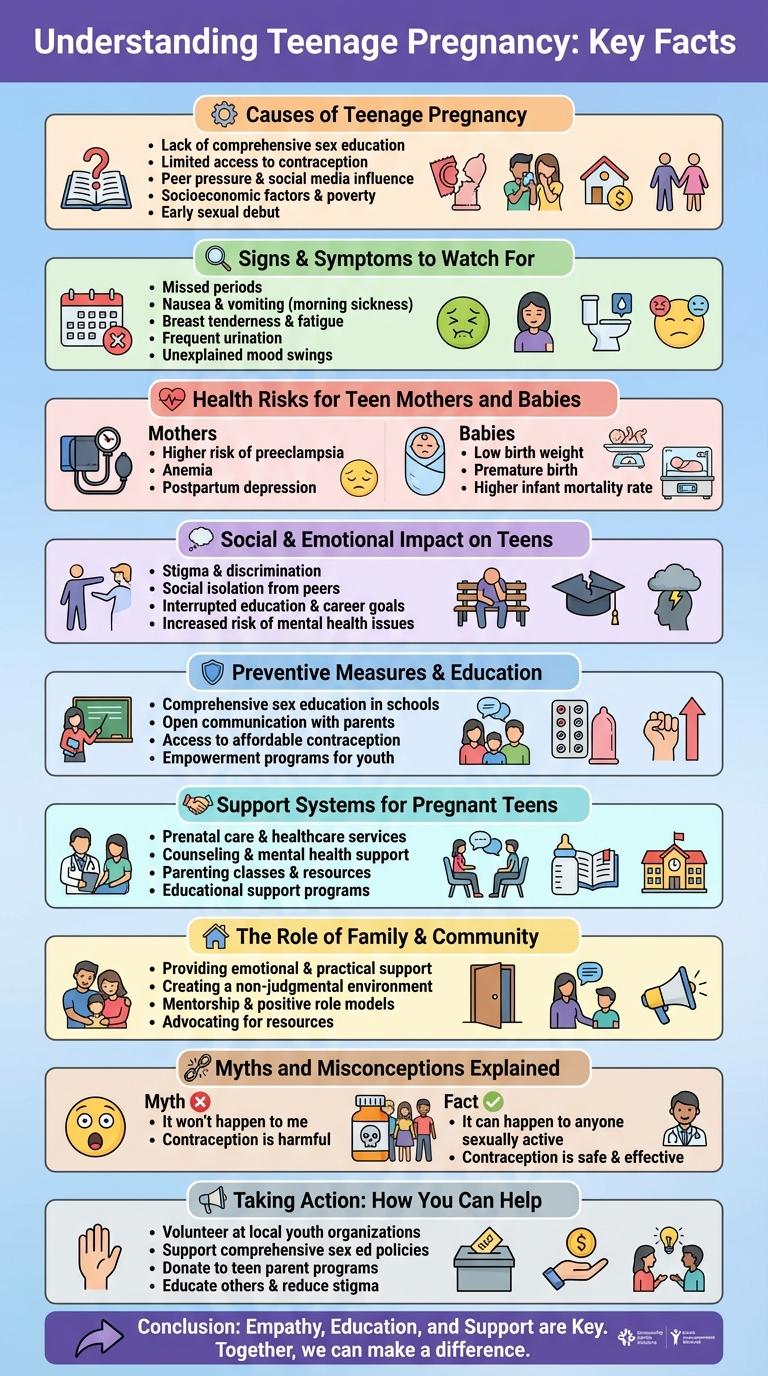
Teenage pregnancy awareness infographics visualize critical data and facts about adolescent pregnancy rates, risks, and prevention methods. These graphics emphasize the importance of education, support systems, and access to healthcare in reducing teen pregnancies. Understanding these visuals helps communities and policymakers create effective strategies to promote healthy choices among teenagers.
Understanding Teenage Pregnancy: Key Facts
What is teenage pregnancy? Teenage pregnancy refers to females aged 13 to 19 who become pregnant.
How common is teenage pregnancy worldwide? Approximately 16 million girls aged 15-19 give birth each year, representing about 11% of all births globally.
What are the main contributing factors? Lack of sexual education, limited access to contraception, and socio-economic challenges increase teenage pregnancy rates.
What are the health risks for teenage mothers? Teenage mothers face higher risks of complications like preterm birth, low birth weight, and maternal mortality.
How can teenage pregnancy be prevented? Comprehensive sex education, access to contraceptive methods, and community support programs effectively reduce teenage pregnancy rates.
Causes of Teenage Pregnancy
Teenage pregnancy often results from a lack of comprehensive sex education and limited access to contraceptive methods. Peer pressure and low self-esteem also contribute significantly to early pregnancies among adolescents.
Family dynamics, such as inadequate parental guidance and communication, play a crucial role in teen pregnancy rates. Socioeconomic factors, including poverty and limited educational opportunities, increase the risk of early pregnancy for teenagers.
Signs & Symptoms to Watch For
Teenage pregnancy presents specific signs and symptoms that can help in early identification and support. Awareness of these indicators is crucial for timely intervention and care.
- Missed Menstrual Periods - A significant early sign where the absence of menstruation may indicate pregnancy.
- Morning Sickness - Nausea and vomiting, particularly in the morning, commonly occur in early pregnancy stages.
- Breast Changes - Tenderness, swelling, or darkening of the areola signals hormonal changes related to pregnancy.
- Fatigue - Persistent tiredness results from hormonal shifts and increased energy demands during pregnancy.
- Frequent Urination - Increased need to urinate due to hormonal influences and pressure on the bladder.
Health Risks for Teen Mothers and Babies
Teenage pregnancy poses significant health risks for both young mothers and their babies, making awareness crucial. Early pregnancies often lead to complications that can affect long-term well-being.
Teen mothers face a higher likelihood of high blood pressure, anemia, and premature birth. Babies born to teenagers are more prone to low birth weight and respiratory problems. Proper education and healthcare support can reduce these risks and improve outcomes for mother and child.
Social & Emotional Impact on Teens
Teenage pregnancy significantly influences the social and emotional well-being of adolescents. Understanding these impacts helps in providing better support systems for young parents.
Social isolation and emotional stress are common challenges faced by pregnant teenagers. These factors can shape their mental health and life outcomes.
- Increased Risk of Depression - Pregnant teens are more prone to experiencing depression due to hormonal and situational changes.
- Social Stigma - Teen mothers often face judgment and exclusion from peers and community, affecting their social interactions.
- Strained Family Relationships - Pregnancy can alter family dynamics, leading to misunderstandings and reduced parental support.
Preventive Measures & Education
Teenage pregnancy awareness emphasizes the importance of comprehensive sex education and access to contraceptive methods to prevent unintended pregnancies. Schools and communities play a crucial role in providing accurate information about reproductive health and encouraging responsible decision-making among teens. Promoting open communication between parents and teenagers helps in building trust and ensuring effective preventive measures are followed.
Support Systems for Pregnant Teens
Support systems play a crucial role in the wellbeing of pregnant teens by offering emotional, medical, and educational assistance. Effective support networks can significantly improve outcomes for both the teen and the baby.
- Family Support - Provides emotional stability and practical help during pregnancy and after childbirth.
- Healthcare Services - Offers prenatal care, counseling, and health education to ensure safe pregnancies.
- Community Programs - Connects teens with resources such as parenting classes, financial aid, and peer support groups.
Strong and accessible support systems empower pregnant teens to make informed decisions and enhance their future prospects.
The Role of Family & Community
| Aspect | Impact on Teenage Pregnancy Awareness |
|---|---|
| Family Communication | Open dialogue about sexual health reduces misinformation and risky behavior among teenagers. |
| Parental Support | Emotional and educational backing from parents fosters responsible decision-making in teens. |
| Community Education | Local programs provide accessible information and resources to prevent teenage pregnancy. |
| Peer Influence | Positive peer groups encourage healthy choices and awareness about consequences of early pregnancy. |
| Healthcare Access | Community clinics offer confidential counseling and contraceptive services supporting teenager wellbeing. |
Myths and Misconceptions Explained
Teenage pregnancy is often misunderstood due to widespread myths and misconceptions. Many believe that contraception is ineffective or that discussing sexual health encourages early sexual activity. Dispelling these myths through accurate information helps promote responsible decision-making and supports teen health.