
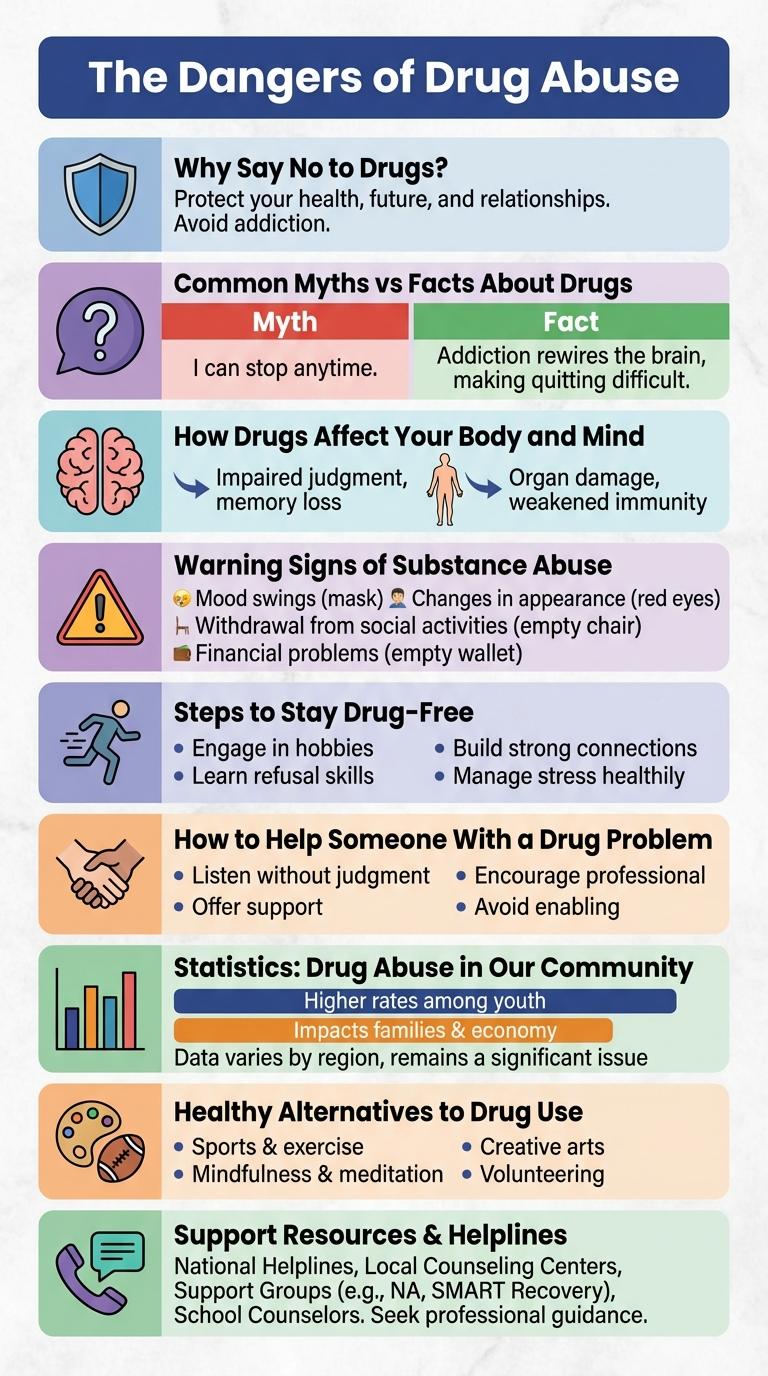
An effective anti-drug campaign infographic visually highlights the dangers of substance abuse and promotes healthy, drug-free lifestyles. By combining powerful statistics, clear messaging, and compelling imagery, it captures attention and educates diverse audiences. This tool serves as a catalyst for awareness, prevention, and community action against drug addiction.
The Dangers of Drug Abuse
Drug abuse severely impacts physical and mental health, leading to conditions such as heart disease, depression, and anxiety. It increases the risk of addiction, causing long-term damage to the brain's reward system. Awareness and prevention efforts are essential to reduce these dangers and protect communities.
Why Say No to Drugs?
| Reasons to Say No to Drugs | Impact |
|---|---|
| Protect Physical Health | Prevents heart disease, liver damage, and weakened immune system |
| Maintain Mental Clarity | Reduces risk of anxiety, depression, and cognitive decline |
| Support Strong Relationships | Improves trust, communication, and social bonding |
| Enhance Academic and Career Success | Promotes focus, motivation, and reliability |
| Preserve Financial Stability | Avoids expenses related to addiction and legal issues |
Common Myths vs Facts About Drugs
Many misconceptions about drug use can prevent effective prevention and treatment. Understanding the truth behind these myths is crucial for making informed decisions.
- Myth: Drug use is a choice, not an addiction - Addiction changes brain chemistry, making it a chronic disease rather than a simple choice.
- Myth: Prescription drugs are safe and not addictive - Many prescription medications have high potential for abuse and can lead to addiction.
- Myth: Marijuana is harmless - Regular marijuana use can impair brain development and cognitive function, especially in adolescents.
How Drugs Affect Your Body and Mind
How do drugs impact your physical health? Drugs can damage vital organs such as the heart, liver, and lungs. Long-term use often leads to chronic diseases and weakened immune function.
What effects do drugs have on your brain? Drugs alter brain chemistry, affecting mood, memory, and decision-making abilities. This can result in addiction, cognitive decline, and mental health disorders.
Can drug use change behavior and emotions? Yes, drugs can cause mood swings, anxiety, and depression. Impaired judgment from drug use increases the risk of accidents and risky choices.
How does drug abuse affect daily life? Drug dependency disrupts work, relationships, and personal goals. It often leads to social isolation and financial problems.
Is recovery from drug effects possible? With proper treatment and support, many individuals regain physical and mental health. Early intervention improves outcomes and reduces long-term damage.
Warning Signs of Substance Abuse
Recognizing the warning signs of substance abuse is crucial for early intervention and support. Awareness can help prevent the progression of addiction and promote healthier communities.
- Changes in Behavior - Noticeable shifts in mood, energy, or social interactions often indicate substance abuse.
- Physical Symptoms - Unexplained weight loss, bloodshot eyes, or frequent nosebleeds may be signs of drug use.
- Decline in Performance - Sudden drops in work, school, or daily responsibilities suggest possible substance issues.
Early identification and compassionate response can save lives and foster recovery.
Steps to Stay Drug-Free
Staying drug-free is essential for maintaining a healthy and successful life. Understanding clear steps can empower individuals to resist drug use and make positive choices.
Build strong support networks by surrounding yourself with friends and family who encourage healthy habits. Engage in hobbies and activities that promote well-being and keep your mind occupied. Seek professional help or counseling if you encounter challenges in staying drug-free.
How to Help Someone With a Drug Problem
Helping someone with a drug problem requires patience, understanding, and support. Recognize the signs of addiction such as withdrawal, mood changes, and neglect of responsibilities.
Encourage open communication without judgment, allowing the person to feel safe sharing their struggles. Offer assistance in finding professional help like therapy, support groups, or rehabilitation centers.
Statistics: Drug Abuse in Our Community
In our community, over 25% of adults aged 18-35 have reported using illicit drugs at least once in the past year. Prescription drug misuse accounts for 15% of all drug-related emergency room visits locally. Drug overdose rates have increased by 30% over the last five years, highlighting the urgent need for preventive measures.
Healthy Alternatives to Drug Use
Choosing healthy alternatives strengthens the body and mind, reducing the risk of drug use. Engaging in positive activities promotes long-term well-being and resilience against substance abuse.
- Regular Exercise - Physical activity boosts mood and energy levels naturally without harmful substances.
- Creative Hobbies - Artistic pursuits like painting and music provide emotional expression and stress relief.
- Social Connections - Building supportive relationships encourages healthy decision-making and reduces isolation.