
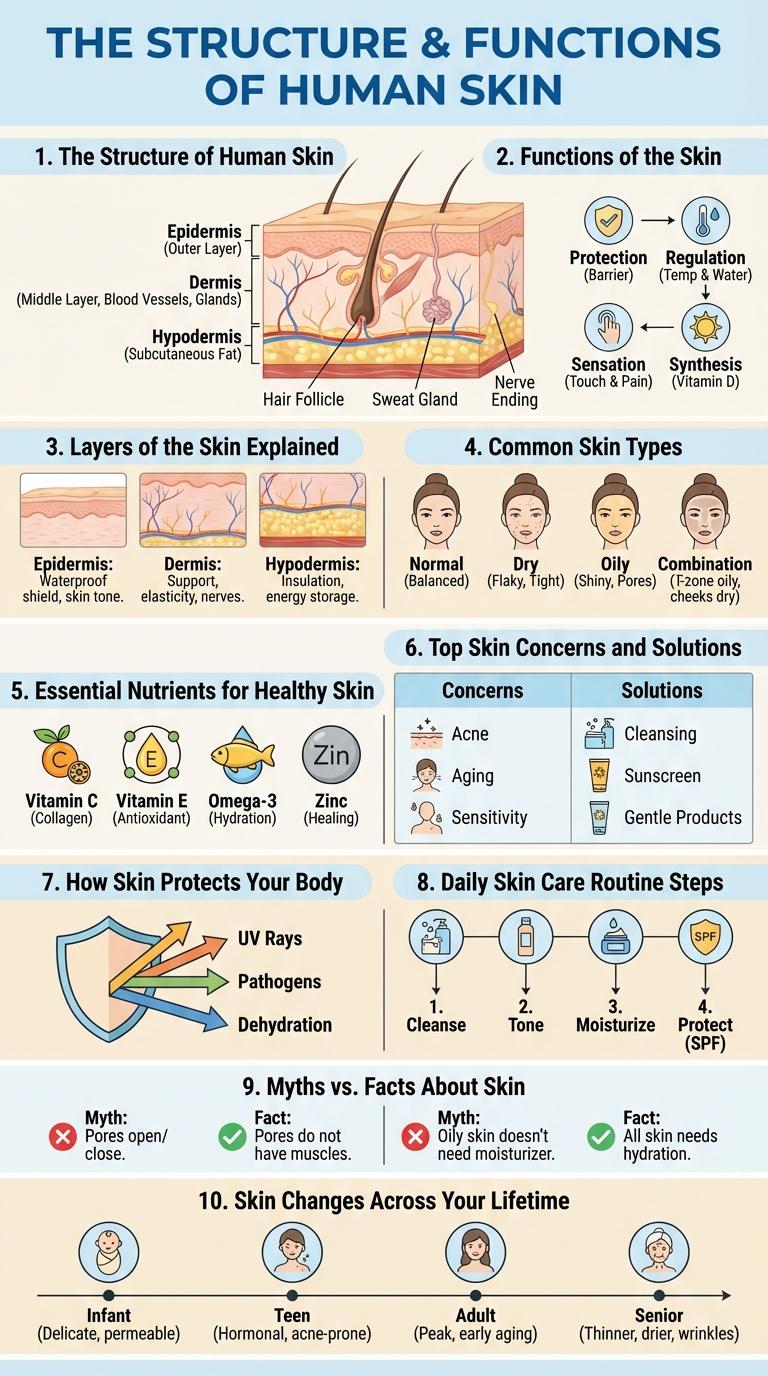
Skin, the body's largest organ, protects against environmental damage while regulating temperature and enabling sensory perception. Composed of multiple layers, including the epidermis, dermis, and hypodermis, skin plays a vital role in hydration, immunity, and wound healing. Understanding its structure and functions helps maintain healthy skin and prevent common dermatological conditions.
The Structure of Human Skin
Human skin consists of three primary layers: the epidermis, dermis, and hypodermis. Each layer plays a crucial role in protection, sensation, and temperature regulation.
The epidermis provides a waterproof barrier and creates our skin tone. The dermis contains connective tissue, hair follicles, and sweat glands essential for skin function.
Functions of the Skin
| Function | Description |
|---|---|
| Protection | Acts as a physical barrier against pathogens, UV radiation, and harmful chemicals. |
| Sensation | Contains nerve endings that detect touch, pressure, temperature, and pain. |
| Thermoregulation | Regulates body temperature through sweat production and blood vessel dilation. |
| Vitamin D Synthesis | Converts sunlight into vitamin D, essential for calcium absorption and bone health. |
| Excretion | Eliminates waste substances via sweat glands helping maintain body's chemical balance. |
Layers of the Skin Explained
The skin is the body's largest organ, composed of multiple distinct layers. Each layer has unique functions essential for protection, regulation, and sensation.
- Epidermis - The outermost layer provides a waterproof barrier and creates skin tone.
- Dermis - Located beneath the epidermis, it contains connective tissue, hair follicles, and sweat glands.
- Hypodermis - The deepest layer composed mainly of fat and connective tissue, offering insulation and cushioning.
Understanding skin layers helps in skincare, medical treatments, and appreciating the skin's role in overall health.
Common Skin Types
Understanding common skin types is essential for effective skincare. The main skin types include oily, dry, combination, sensitive, and normal, each with unique characteristics and care requirements. Identifying your skin type helps tailor skincare routines for healthier and more balanced skin.
Essential Nutrients for Healthy Skin
Healthy skin requires a balance of essential nutrients that support its structure and function. Vitamins, minerals, and antioxidants play critical roles in maintaining skin elasticity, hydration, and repair.
Key nutrients include Vitamin C, which promotes collagen production, and Vitamin E, an antioxidant that protects skin from damage. Zinc and Omega-3 fatty acids help reduce inflammation and support natural skin barrier function.
Top Skin Concerns and Solutions
What are the most common skin concerns people face? Many individuals struggle with issues like acne, dryness, and aging signs. Understanding these problems helps in choosing the right skincare solutions.
How can acne be effectively treated? Use products containing salicylic acid or benzoyl peroxide to reduce inflammation and clear pores. Consistent cleansing and avoiding harsh scrubbing are essential for managing acne.
What strategies address dry skin? Applying moisturizers with hyaluronic acid or glycerin helps retain moisture and repair the skin barrier. Avoid hot showers and use gentle cleansers to prevent further dryness.
How to combat signs of aging skin? Ingredients like retinol and vitamin C promote collagen production and reduce wrinkles. Wearing sunscreen daily protects skin from ultraviolet damage and premature aging.
Which methods help with sensitive skin? Using fragrance-free and hypoallergenic products minimizes irritation and redness. Patch testing new skincare items ensures they suit sensitive skin types before full application.
How Skin Protects Your Body
The skin serves as the body's first line of defense against environmental hazards. It safeguards internal organs by acting as a physical barrier and regulating moisture.
- Physical Barrier - The epidermis prevents pathogens and harmful substances from entering the body.
- UV Protection - Melanin in the skin absorbs ultraviolet radiation, reducing the risk of DNA damage.
- Water Regulation - The skin controls moisture loss and prevents dehydration by maintaining the skin's barrier function.
Daily Skin Care Routine Steps
Maintaining healthy skin requires a consistent daily routine tailored to your skin type. Proper care helps prevent aging, acne, and dryness while promoting a radiant complexion.
- Cleanse - Use a gentle cleanser to remove dirt, oil, and impurities from your skin twice daily.
- Moisturize - Apply a suitable moisturizer to keep skin hydrated and prevent dryness throughout the day.
- Protect - Use sunscreen with at least SPF 30 to shield your skin from harmful UV rays and prevent damage.
Myths vs. Facts About Skin
Skin is the largest organ of the human body, playing a crucial role in protection and sensation. Many widespread myths about skin can lead to misunderstandings about proper care and health.
One common myth is that oily skin does not need moisturizer, but all skin types require hydration to maintain balance. Another misconception is that sunscreen is only necessary on sunny days, while UV rays can damage skin year-round. Understanding facts about skin helps improve skincare routines and supports overall skin health.