
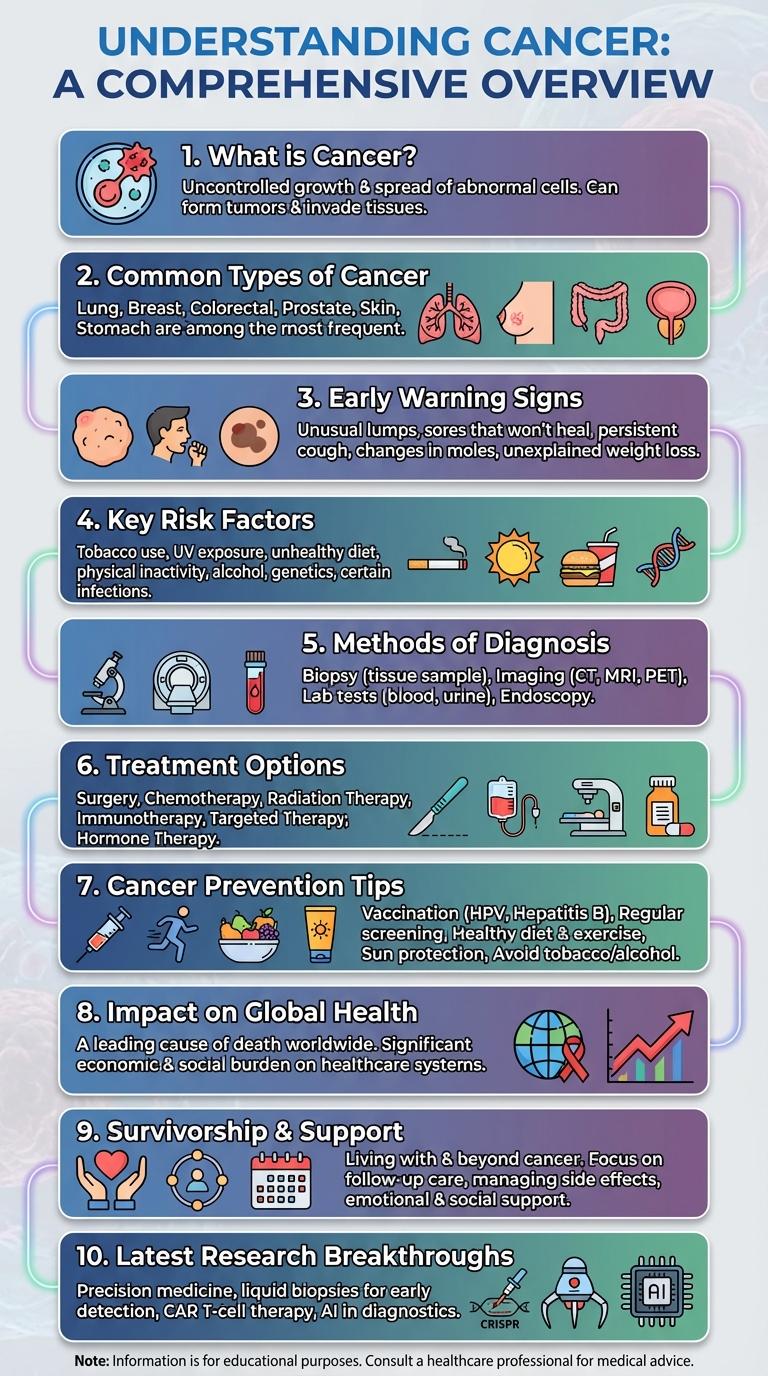
Cancer infographic highlights key statistics, types, and risk factors associated with the disease. Visual data presentation helps increase awareness and understanding of cancer prevention, symptoms, and treatment options. Effective communication through infographics supports informed decision-making for patients and healthcare providers.
What is Cancer?
Cancer is a group of diseases characterized by the uncontrolled growth and spread of abnormal cells. These cells can invade nearby tissues and form tumors, disrupting normal body functions. Early detection and treatment are crucial to improving survival rates and quality of life for patients.
Common Types of Cancer
Cancer affects millions worldwide, with several common types impacting specific organs. Early detection and awareness are key in managing these diseases effectively.
- Breast Cancer - The most frequently diagnosed cancer among women, originating in breast tissue.
- Lung Cancer - Primarily linked to smoking, it is a leading cause of cancer-related deaths globally.
- Prostate Cancer - Common in men, this cancer develops in the prostate gland and often grows slowly.
Understanding the common types of cancer supports better prevention and treatment strategies for patients worldwide.
Early Warning Signs
Early detection of cancer significantly improves treatment success and survival rates. Recognizing the early warning signs can prompt timely medical consultation and diagnosis.
- Unexplained Weight Loss - Sudden and significant weight loss without changes in diet or exercise can indicate the presence of cancer.
- Persistent Fatigue - Continuous tiredness that does not improve with rest may be a symptom of an underlying cancer condition.
- Changes in Skin Appearance - New or changing moles, sores that do not heal, or unusual skin pigmentation require medical evaluation.
Key Risk Factors
Cancer is influenced by a variety of key risk factors that significantly increase the likelihood of developing the disease. Understanding these factors helps in early detection and prevention efforts.
Major risk factors include tobacco use, which is responsible for nearly 22% of cancer deaths worldwide, and prolonged exposure to harmful UV radiation from the sun. Other critical factors are unhealthy diet, physical inactivity, and exposure to certain chemicals or infections that can trigger cancerous changes in cells.
Methods of Diagnosis
Cancer diagnosis involves various methods to detect and identify the disease accurately. Common techniques include imaging tests like MRI and CT scans, biopsy procedures for tissue analysis, and blood tests that measure tumor markers. Early and precise diagnosis improves treatment outcomes and patient survival rates.
Treatment Options
Cancer treatment includes a variety of methods tailored to the type and stage of cancer. Effective therapy aims to eliminate cancer cells while preserving healthy tissues.
- Surgery - Removal of cancerous tissue physically from the body to prevent spread.
- Chemotherapy - Use of drugs to kill or slow the growth of cancer cells systemically.
- Radiation Therapy - Targeted high-energy radiation to destroy cancer cells and shrink tumors.
- Immunotherapy - Boosts the body's immune system to recognize and attack cancer cells.
- Targeted Therapy - Drugs that specifically target molecular changes in cancer cells for precise treatment.
Cancer Prevention Tips
Cancer prevention involves lifestyle choices that reduce the risk of developing certain types of cancer. Early detection and healthy habits play a crucial role in minimizing cancer incidence.
Maintaining a balanced diet rich in fruits and vegetables boosts the immune system and lowers cancer risk. Regular physical activity helps control weight and hormone levels linked to cancer. Avoiding tobacco and limiting alcohol intake are proven methods to significantly reduce cancer chances.
Impact on Global Health
Cancer ranks as a leading cause of death worldwide, accounting for nearly 10 million deaths annually. Its impact extends beyond health, affecting economic stability and healthcare systems globally.
The rising incidence of cancer strains medical resources, particularly in low- and middle-income countries. Effective prevention, early detection, and treatment strategies are critical to reducing its global burden.
Survivorship & Support
What are the key components of cancer survivorship? Cancer survivorship includes managing physical health, emotional well-being, and social support after treatment. Effective survivorship care plans help monitor for recurrence and improve quality of life.
How does support impact cancer survivors? Support from family, healthcare providers, and support groups reduces stress and promotes recovery. Emotional and practical assistance enhances coping skills and long-term health outcomes.