
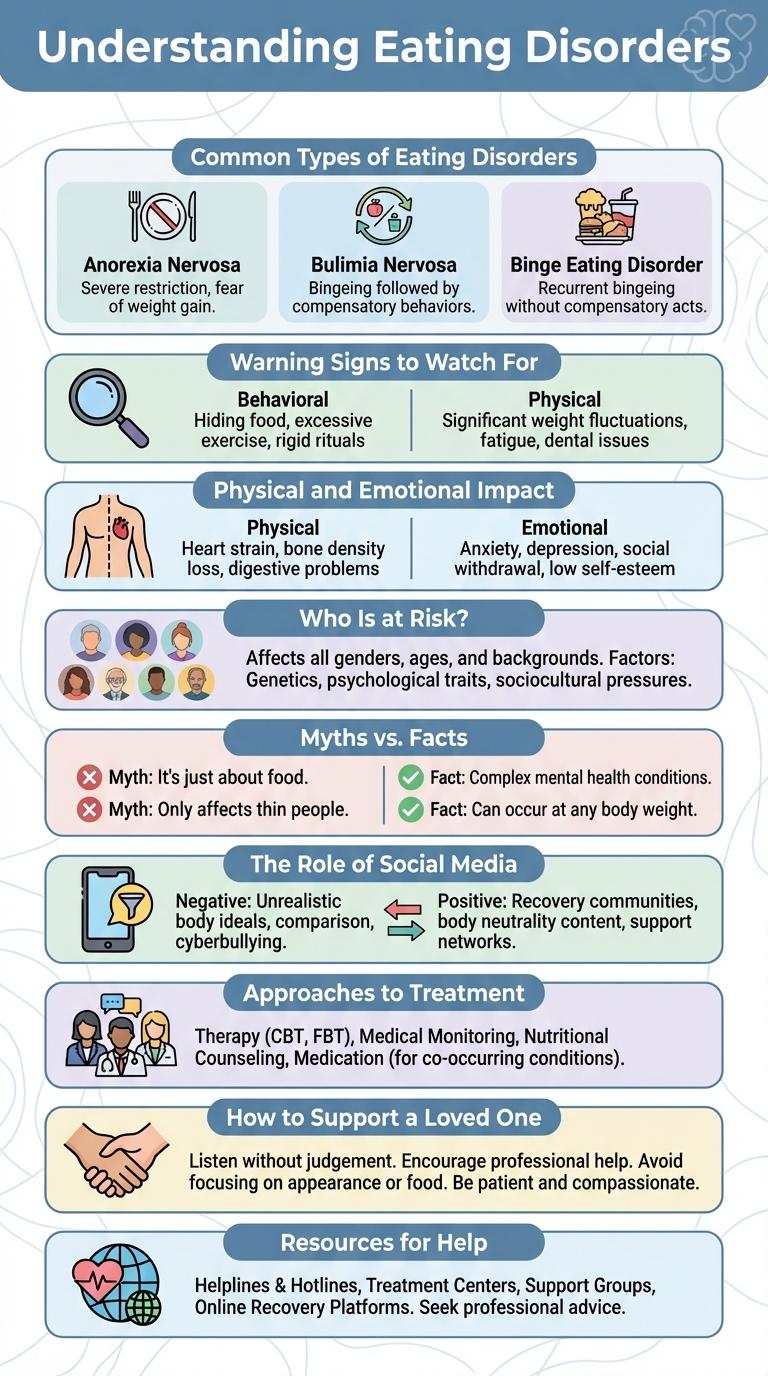
Eating disorders impact millions worldwide, affecting both physical health and emotional well-being. Visualizing key statistics and facts through an infographic helps raise awareness and promotes understanding of these complex conditions. Early recognition and intervention remain crucial steps toward recovery and support.
Understanding Eating Disorders
Eating disorders are complex mental health conditions characterized by abnormal eating habits that negatively affect physical and emotional well-being. Understanding the symptoms and causes is crucial for early intervention and effective treatment.
Recognition of eating disorders involves identifying symptoms such as extreme food restriction, binge eating, and excessive concern about body weight or shape.
- Anorexia Nervosa - A disorder marked by restrictive eating, intense fear of gaining weight, and distorted body image.
- Bulimia Nervosa - Characterized by cycles of binge eating followed by purging behaviors like vomiting or excessive exercise.
- Binge Eating Disorder - Involves recurrent episodes of consuming large quantities of food without compensatory behaviors.
Common Types of Eating Disorders
Eating disorders are serious mental health conditions characterized by abnormal eating habits that negatively affect physical and emotional well-being. Common types include Anorexia Nervosa, Bulimia Nervosa, and Binge Eating Disorder, each with distinct symptoms and health risks. Early diagnosis and treatment are crucial to improve outcomes and prevent long-term complications.
Warning Signs to Watch For
Eating disorders affect millions worldwide and can have serious health consequences if left unrecognized. Identifying the warning signs early is crucial for effective intervention and recovery.
Common warning signs include drastic weight changes, obsessive behaviors around food, and excessive concern about body image. Other indicators may involve withdrawal from social activities and noticeable changes in eating habits. Being aware of these signs can help support those struggling with eating disorders and encourage timely professional help.
Physical and Emotional Impact
What are the physical effects of eating disorders on the body? Eating disorders can lead to severe malnutrition, heart problems, and weakened bones. Physical symptoms often include fatigue, dizziness, and hair thinning.
How do eating disorders affect emotional well-being? Individuals may experience anxiety, depression, and low self-esteem. Emotional struggles often include feelings of isolation and intense fear of weight gain.
Who Is at Risk?
Eating disorders affect individuals of all ages, genders, and backgrounds, but certain groups are at higher risk. Teenagers, particularly adolescent girls, are most commonly impacted due to societal pressures and body image concerns.
Athletes involved in sports emphasizing weight and appearance, such as gymnastics and wrestling, face increased risk. Family history of eating disorders and coexisting mental health conditions like anxiety also contribute significantly to vulnerability.
Myths vs. Facts
Eating disorders are complex mental health conditions that affect millions worldwide. Myths often create misunderstandings that hinder proper support and treatment.
- Myth: Eating disorders are a choice - They are serious mental illnesses influenced by genetic, psychological, and environmental factors.
- Myth: Only females suffer from eating disorders - Males and non-binary individuals are also affected at significant rates.
- Fact: Early intervention improves recovery - Prompt treatment increases the chances of full recovery and reduces health complications.
The Role of Social Media
Social media platforms significantly influence perceptions of body image and beauty standards, often promoting unrealistic ideals. This exposure can contribute to the development of eating disorders, especially among teenagers and young adults.
Images and content that emphasize thinness or dieting create pressure to conform, leading to unhealthy eating behaviors. Awareness and education about these risks are essential to mitigate the harmful impact of social media on mental health.
Approaches to Treatment
Eating disorders require comprehensive treatment plans tailored to individual needs. Effective approaches combine psychological, nutritional, and medical support for optimal recovery.
- Cognitive Behavioral Therapy (CBT) - Focuses on changing negative thought patterns and behaviors related to eating and body image.
- Medical Monitoring - Involves regular health assessments to manage physical complications from eating disorders.
- Nutrition Counseling - Provides guidance on developing balanced eating habits and restoring healthy nutrition.
Early intervention and ongoing support improve treatment outcomes for individuals with eating disorders.
How to Support a Loved One
| Listen Without Judgment | Offer a safe space for your loved one to share their feelings and experiences without fear of criticism. |
| Encourage Professional Help | Gently suggest consulting healthcare professionals specializing in eating disorders for appropriate diagnosis and treatment. |
| Educate Yourself | Learn about anorexia, bulimia, and binge eating disorder to understand symptoms, triggers, and recovery processes. |
| Offer Practical Support | Assist with meal planning, attending appointments, and creating a supportive environment that promotes healthy habits. |
| Be Patient and Compassionate | Recognize recovery is a gradual process; maintain empathy and avoid expressing frustration or blame. |