
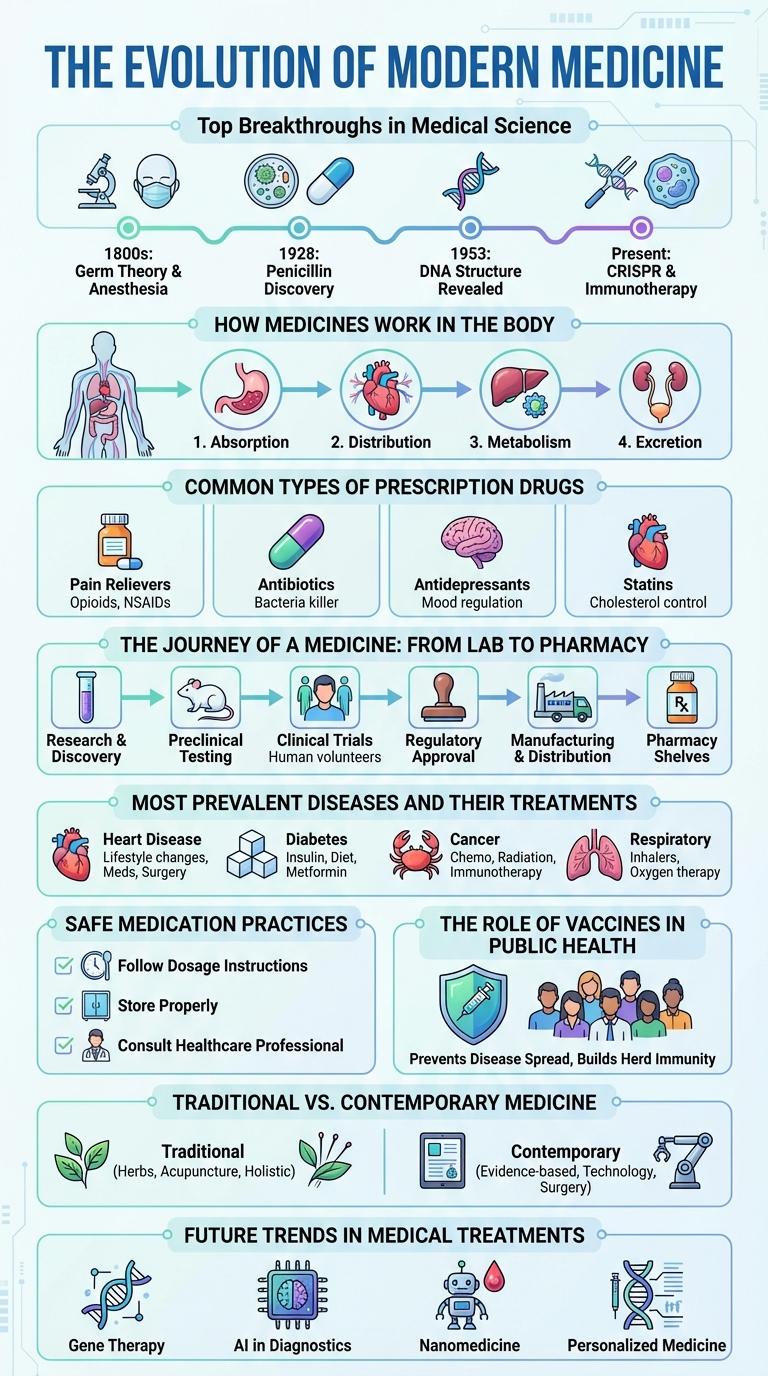
Visualizing complex medical information through infographics enhances understanding and retention of key health concepts. Clear charts and concise data presentations simplify topics such as drug mechanisms, treatment protocols, and disease statistics. Leveraging these graphical tools supports better patient education and informed decision-making in healthcare.
The Evolution of Modern Medicine
The evolution of modern medicine has revolutionized healthcare through groundbreaking discoveries and technological advancements. From ancient herbal remedies to cutting-edge pharmaceutical innovations, medicine continues to enhance patient outcomes worldwide.
Key milestones include the development of vaccines, antibiotics, and advanced diagnostic tools such as MRI and genetic testing. These advancements have drastically reduced mortality rates and improved disease prevention and treatment.
Top Breakthroughs in Medical Science
What are the top breakthroughs in medical science that have transformed healthcare? Medical science has seen remarkable advances that improve diagnostics, treatments, and patient outcomes. These breakthroughs drive innovation and enhance quality of life worldwide.
| Breakthrough | Impact |
|---|---|
| CRISPR Gene Editing | Enables precise modification of DNA to treat genetic disorders. |
| mRNA Vaccines | Rapid development of vaccines, effectively combating infectious diseases like COVID-19. |
| Immunotherapy | Harnesses the immune system to target and destroy cancer cells. |
| 3D Bioprinting | Creates tissue and organ structures for transplantation and drug testing. |
| Wearable Health Devices | Continuous monitoring of vital signs improves chronic disease management. |
How Medicines Work in the Body
Medicines interact with the body to produce therapeutic effects and alleviate symptoms. Understanding how medicines work helps optimize treatment outcomes and minimize side effects.
- Absorption - Medicine enters the bloodstream through the digestive system or other routes to begin its action.
- Distribution - The active compounds travel via the bloodstream to target tissues and organs.
- Metabolism - The liver processes medicines into active or inactive forms to regulate their effects.
- Excretion - The kidneys and other organs eliminate medicine waste products from the body.
- Receptor Binding - Medicines bind to cell receptors to trigger or block specific biological responses.
This complex process determines the effectiveness and safety of medicinal treatments.
Common Types of Prescription Drugs
Prescription drugs play a critical role in managing health conditions and improving quality of life. Understanding common types of prescription medications helps patients and caregivers make informed decisions.
- Antibiotics - Used to treat bacterial infections by killing or inhibiting bacteria growth.
- Antidepressants - Prescribed for managing depression and anxiety disorders by balancing brain chemicals.
- Antihypertensives - Help control high blood pressure to reduce the risk of heart disease and stroke.
The Journey of a Medicine: From Lab to Pharmacy
Most Prevalent Diseases and Their Treatments
Infographics provide a clear visualization of the most prevalent diseases worldwide and their corresponding treatments. Understanding this data helps in promoting awareness and guiding healthcare decisions effectively.
Cardiovascular diseases, diabetes, respiratory infections, and cancers rank among the top causes of illness globally. Treatments range from medication and lifestyle changes to surgical interventions and ongoing management.
Safe Medication Practices
Safe medication practices ensure the proper use and management of medicines to prevent errors and adverse effects. Following guidelines helps protect patient health and promotes effective treatment outcomes.
- Follow the Prescription - Always take medication exactly as prescribed by the healthcare provider to avoid harmful side effects.
- Check Medication Labels - Verify the drug name, dosage, and expiration date before use to ensure safety and efficacy.
- Store Medicines Properly - Keep medications in a cool, dry place away from children to maintain potency and prevent accidental ingestion.
The Role of Vaccines in Public Health
Vaccines play a crucial role in preventing infectious diseases and protecting public health worldwide. They stimulate the immune system to recognize and fight pathogens without causing illness. Widespread vaccination reduces disease spread, lowers healthcare costs, and saves millions of lives annually.
Traditional vs. Contemporary Medicine
Traditional and contemporary medicine represent two distinct approaches to healthcare. Traditional medicine relies on ancient practices and natural remedies passed down through generations.
Contemporary medicine utilizes modern technology, scientific research, and pharmaceuticals to diagnose and treat illnesses. Traditional medicine often emphasizes holistic healing, including spiritual and cultural aspects. Both systems have unique strengths and can complement each other in patient care.