
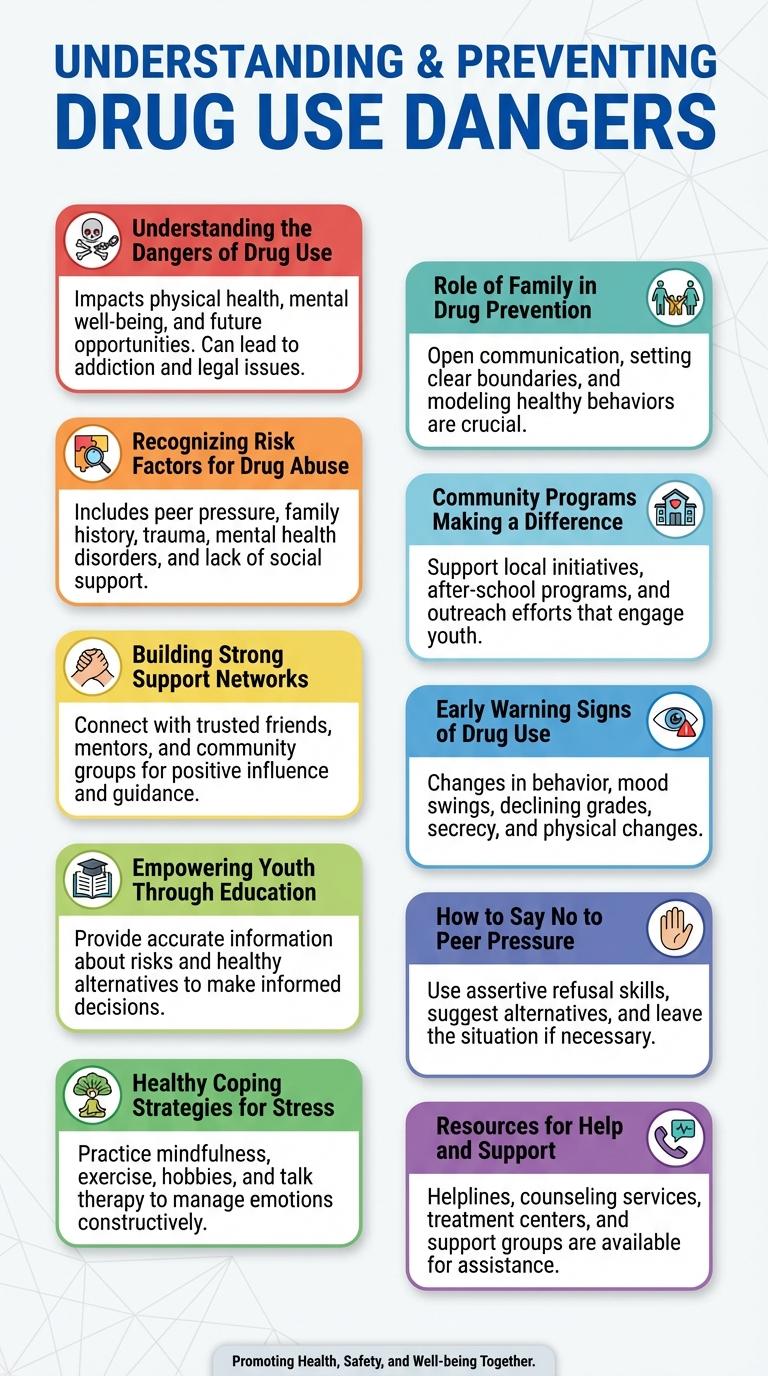
Preventing drug abuse is essential for maintaining healthy communities and promoting overall well-being. Educating individuals about the risks and consequences of drug use helps reduce addiction rates and supports safer environments. Effective prevention strategies combine awareness, support systems, and accessible resources to empower people to make informed decisions.
Understanding the Dangers of Drug Use
What are the dangers of drug use? Drug use can severely impact physical and mental health, leading to addiction and chronic diseases. Understanding these risks is essential to making informed decisions and avoiding harmful substances.
How does drug use affect the brain? Drugs alter brain chemistry, impairing judgment, memory, and coordination. This can result in long-term cognitive deficits and increased vulnerability to mental health disorders.
Why is early prevention important? Preventing drug use at a young age reduces the likelihood of addiction and related social problems. Early education fosters resilience and healthier lifestyle choices.
What are common health consequences of drug abuse? Drug abuse increases the risk of heart disease, stroke, respiratory issues, and infectious diseases. It also weakens the immune system, making recovery more difficult.
How can understanding risks promote prevention? Raising awareness about the dangers of drug use empowers individuals to reject drugs and seek support. Knowledge enables safer communities and reduces the prevalence of substance abuse.
Recognizing Risk Factors for Drug Abuse
| Risk Factor | Description |
|---|---|
| Family History | Genetic predisposition and exposure to drug use within the family increase susceptibility to drug abuse. |
| Peer Pressure | Influence from friends or social groups encouraging drug experimentation and continued use. |
| Mental Health Disorders | Conditions such as depression, anxiety, or ADHD can elevate the risk of self-medicating through drugs. |
| Environmental Stress | High levels of stress from financial problems, trauma, or unsafe living conditions contribute to drug use risk. |
| Lack of Education and Awareness | Limited knowledge about drug risks and poor coping skills increase vulnerability to abuse. |
Building Strong Support Networks
Building strong support networks is essential in preventing drug abuse by providing emotional and social stability. Supportive relationships with family, friends, and community groups encourage healthy lifestyle choices and resilience against peer pressure. Access to trusted networks promotes open communication and early intervention.
Empowering Youth Through Education
Youth education plays a crucial role in drug prevention by providing accurate information and fostering critical thinking skills. Empowered with knowledge, young people can make informed decisions and resist peer pressure effectively.
Programs that focus on interactive learning and real-life scenarios enhance understanding and engagement. Schools and communities must collaborate to create supportive environments where youth feel confident to choose healthy lifestyles.
Healthy Coping Strategies for Stress
Effective prevention of drug use begins with adopting healthy coping strategies for stress. Managing stress positively reduces the risk of turning to substances as a way to cope.
- Regular Exercise - Physical activity releases endorphins that naturally elevate mood and relieve stress.
- Mindfulness Meditation - Practicing mindfulness helps calm the mind and increase emotional resilience.
- Social Support - Connecting with friends and family provides emotional support and reduces feelings of isolation.
Role of Family in Drug Prevention
The family plays a crucial role in drug prevention by providing emotional support and fostering open communication. Strong family bonds help children develop self-esteem and resist peer pressure related to drug use.
Parents who set clear rules and monitor their children's activities reduce the risk of drug experimentation. Educating family members about the dangers of drugs promotes a healthier, drug-free environment.
Community Programs Making a Difference
Community programs play a crucial role in preventing drug abuse by educating individuals and fostering supportive networks. These initiatives create environments where healthy choices are encouraged and risky behaviors are minimized.
Programs such as youth mentorship, support groups, and educational workshops have proven effective in reducing drug use rates. They provide resources and guidance tailored to specific community needs. Engaging local leaders and volunteers strengthens the program's impact and sustainability.
Early Warning Signs of Drug Use
Recognizing early warning signs of drug use is crucial for timely intervention and prevention. Common indicators include sudden changes in behavior, declining academic or work performance, and unexplained physical symptoms. Awareness of these signs enables families and communities to provide support and seek professional help early.
How to Say No to Peer Pressure
Learning to say no to peer pressure is crucial for preventing drug use. Empowering yourself with refusal skills strengthens your ability to make healthy choices.
- Be Confident - Use a firm tone and clear language to express your refusal without hesitation.
- Suggest Alternatives - Offer other activities or ideas that don't involve drugs to redirect the situation.
- Know Your Reasons - Understand and remind yourself why avoiding drugs is important for your health and future.