
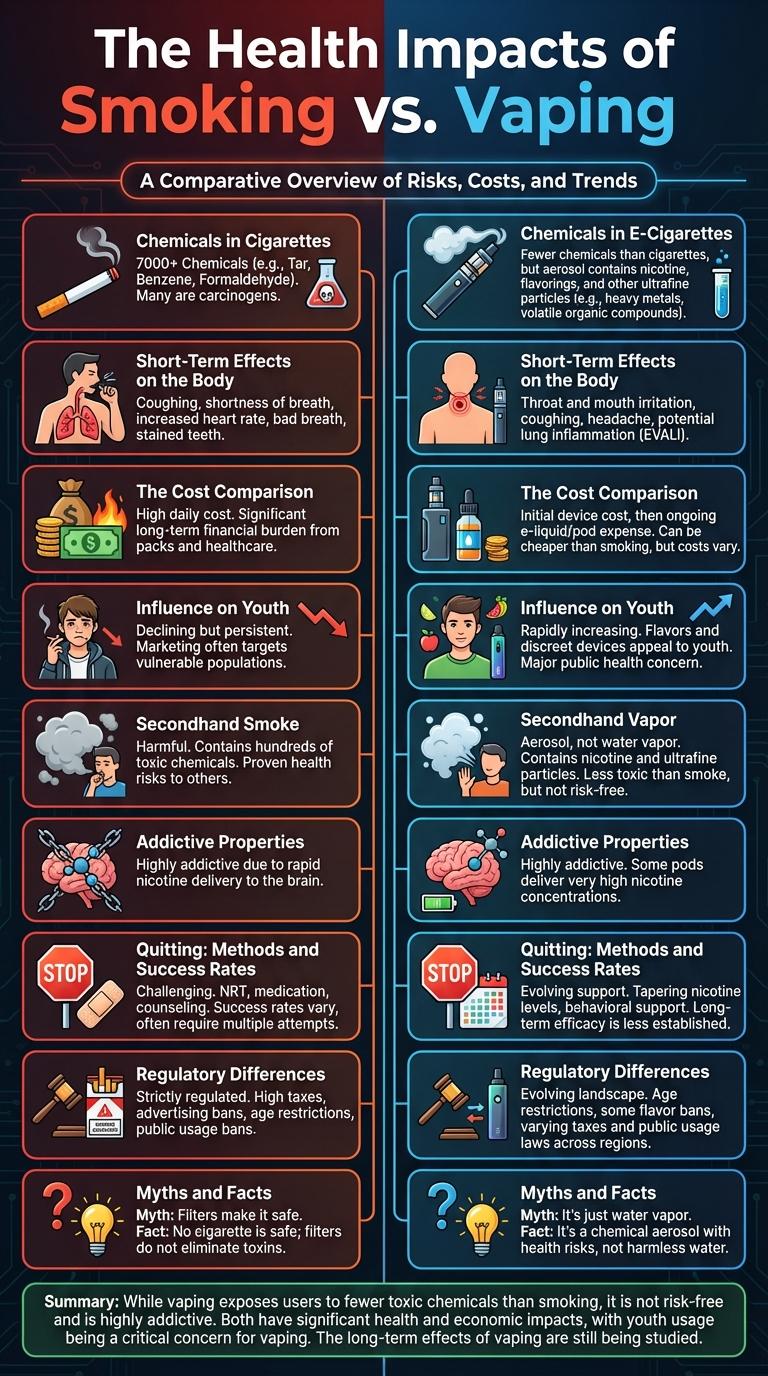
Smoking and vaping present distinct health risks that impact millions globally. Understanding the differences in chemicals, addiction potential, and long-term effects is crucial for making informed decisions. Visual data highlights key statistics and trends to raise awareness about these habits.
The Health Impacts of Smoking vs. Vaping
Smoking and vaping both pose health risks, but their impacts differ significantly in terms of chemical exposure and long-term effects. Understanding these differences is crucial for making informed choices about tobacco use.
Smoking involves inhaling combusted tobacco, releasing harmful chemicals, while vaping heats a liquid to produce aerosol with fewer toxins.
- Respiratory Health Impact - Smoking causes chronic obstructive pulmonary disease (COPD) and lung cancer due to tar and carcinogens inhaled from tobacco smoke.
- Cardiovascular Risk - Both smoking and vaping increase heart disease risk, but smoking has a higher association with arterial damage and stroke.
- Toxin Exposure - Combustion in smoking releases thousands of harmful chemicals, whereas vaping typically exposes users to fewer toxic substances, mainly nicotine and flavorings.
Chemicals in Cigarettes and E-Cigarettes
Smoking cigarettes and vaping e-cigarettes introduce various harmful chemicals into the body. Both products contain substances that can cause serious health issues.
Cigarettes release over 7,000 chemicals, including tar, carbon monoxide, and formaldehyde. E-cigarettes contain nicotine, propylene glycol, flavorings, and sometimes heavy metals. While vaping generally has fewer chemicals than smoking, it still poses significant health risks due to toxic compounds.
Short-Term Effects on the Body
Smoking and vaping introduce harmful chemicals into the body, causing immediate physical changes. These short-term effects impact respiratory function, cardiovascular health, and overall energy levels.
- Increased Heart Rate - Nicotine stimulates the nervous system, leading to a rapid heartbeat and elevated blood pressure.
- Respiratory Irritation - Both smoking and vaping cause throat and lung irritation, resulting in coughing and shortness of breath.
- Reduced Oxygen Levels - Carbon monoxide from smoking decreases the oxygen-carrying capacity of blood, impairing bodily functions.
The Cost Comparison: Smoking vs. Vaping
Comparing the financial impact of smoking and vaping reveals significant cost differences over time. Understanding these expenses can help individuals make informed choices about tobacco and nicotine use.
- Average Daily Cost of Smoking - Smoking one pack of cigarettes daily typically costs around $7 to $10 depending on location and brand.
- Average Daily Cost of Vaping - Vaping daily generally costs between $3 to $5, factoring in e-liquid and coil replacements.
- Long-Term Expenses - Over a year, smokers can spend approximately $2,500 to $3,650, whereas vapers might spend $1,000 to $1,800.
Choosing vaping over smoking can lead to substantial savings while reducing exposure to harmful chemicals.
Influence on Youth: Smoking and Vaping Trends
| Trend | Youth Impact |
|---|---|
| Traditional Smoking | Decline in usage but remains a health risk among teens ages 15-19 |
| Vaping | Rapid increase in popularity with significant rise in high school students vaping nicotine |
| Health Awareness | Growing awareness but misconceptions about safety of vaping persist among youth |
| Marketing Influence | Appealing flavors and targeted advertising contribute to vaping uptake in teenagers |
| Regulations | Stricter age restrictions and flavor bans are being implemented to reduce youth access |
Secondhand Smoke vs. Secondhand Vapor
Secondhand smoke comes from burning tobacco and the smoke exhaled by smokers, containing harmful chemicals such as tar, carbon monoxide, and carcinogens. It poses serious health risks including respiratory infections, heart disease, and lung cancer.
Secondhand vapor is the aerosol emitted from e-cigarettes, consisting mainly of water, nicotine, and flavoring agents. While generally considered less harmful than secondhand smoke, it still contains chemicals that may irritate the lungs and affect cardiovascular health.
Addictive Properties: Nicotine in Both
Nicotine is the primary addictive substance found in both cigarettes and vape products, leading to dependency and long-term health risks. The addictive nature of nicotine stimulates the brain's reward system, causing cravings and withdrawal symptoms when not consumed. Understanding that vaping still delivers nicotine highlights its potential for addiction similarly to traditional smoking.
Quitting: Methods and Success Rates
What are the most effective methods for quitting smoking and vaping? Behavioral therapy combined with nicotine replacement therapy (NRT) shows higher success rates compared to unassisted attempts. Prescription medications like varenicline increase quit rates by reducing withdrawal symptoms and cravings.
How successful are different quitting methods for smoking and vaping? Nicotine replacement therapies have a reported success rate of 20-25% after six months. Behavioral counseling increases long-term abstinence rates up to 30%, while unaided quitting success rates remain below 10%.
Regulatory Differences: Smoking vs. Vaping
Smoking and vaping are regulated differently across many countries due to their distinct health risks and product compositions. Smoking typically faces stricter controls, including bans in public places and higher taxation.
Vaping regulations vary widely, with some regions treating e-cigarettes as tobacco products while others regulate them as medical devices. These differences affect advertising, age restrictions, and product safety standards.