
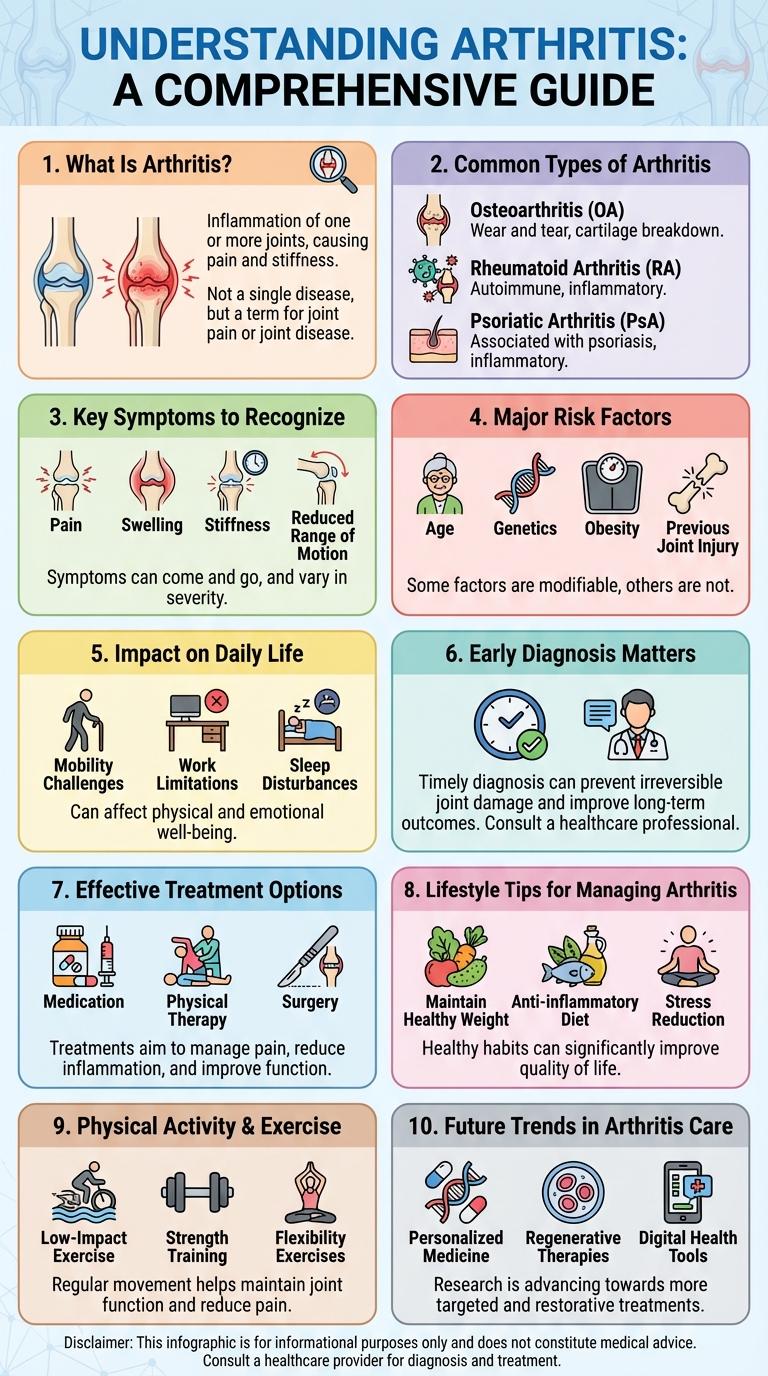
Arthritis affects millions worldwide, causing joint pain, stiffness, and reduced mobility. This infographic visually presents key statistics, common types, symptoms, and treatment options to help increase awareness and promote effective management. Understanding these factors empowers individuals to seek timely care and improve quality of life.
What Is Arthritis?
Arthritis is a common condition causing inflammation and stiffness in the joints. It affects millions worldwide, leading to pain and reduced mobility. The most common types are osteoarthritis and rheumatoid arthritis.
Common Types of Arthritis
Arthritis is a group of diseases causing joint inflammation, pain, and stiffness. Understanding common types helps in recognizing symptoms and seeking appropriate treatment.
- Osteoarthritis - A degenerative joint disease causing cartilage breakdown and bone friction.
- Rheumatoid Arthritis - An autoimmune disorder where the immune system attacks joint linings, leading to inflammation.
- Psoriatic Arthritis - An inflammatory arthritis associated with the skin condition psoriasis, affecting joints and surrounding tissues.
Key Symptoms to Recognize
| Key Symptoms of Arthritis | Description |
|---|---|
| Joint Pain | Persistent aching or stiffness in joints, often worsening with activity. |
| Swelling | Visible inflammation or puffiness around affected joints. |
| Reduced Range of Motion | Difficulty moving joints fully, causing stiffness and limited flexibility. |
| Redness | Skin around joints appears flushed or warm to the touch indicating inflammation. |
| Joint Tenderness | Sensitivity or discomfort when pressure is applied to the affected area. |
Major Risk Factors
Arthritis commonly affects individuals over the age of 50, with age being a primary risk factor. Genetics also play a significant role, increasing susceptibility if family members have a history of arthritis. Obesity contributes to joint stress, significantly raising the likelihood of developing osteoarthritis.
Impact on Daily Life
Arthritis affects millions worldwide, causing joint pain, stiffness, and swelling that significantly reduce mobility. These symptoms often impede everyday tasks, making routine activities challenging.
Many individuals with arthritis experience difficulty in dressing, cooking, or even walking, impacting their independence. Managing symptoms requires continuous care and adaptation to maintain quality of life.
Early Diagnosis Matters
Arthritis affects millions worldwide, leading to joint pain and reduced mobility. Early diagnosis plays a crucial role in managing symptoms and improving quality of life.
Recognizing arthritis symptoms early allows for timely treatment, preventing joint damage and disability. Common signs include persistent joint pain, stiffness, and swelling. Consulting a healthcare professional promptly ensures accurate diagnosis and personalized care plans.
Effective Treatment Options
Arthritis affects millions worldwide, causing joint pain and inflammation. Effective treatment options help manage symptoms and improve quality of life.
- Medications - Nonsteroidal anti-inflammatory drugs (NSAIDs) and corticosteroids reduce inflammation and relieve pain.
- Physical Therapy - Targeted exercises enhance joint mobility and strengthen muscles supporting the joints.
- Lifestyle Modifications - Weight management and balanced diet decrease joint stress and inflammation levels.
Lifestyle Tips for Managing Arthritis
Arthritis affects millions worldwide, causing joint pain and stiffness that impact daily activities. Managing arthritis involves lifestyle adjustments to reduce symptoms and improve quality of life.
- Regular Exercise - Low-impact activities like swimming and walking strengthen muscles and improve joint flexibility.
- Healthy Diet - Consuming anti-inflammatory foods such as fruits, vegetables, and omega-3 fatty acids helps reduce joint swelling.
- Weight Management - Maintaining a healthy weight decreases stress on weight-bearing joints, easing pain.
- Proper Rest - Getting adequate sleep and allowing joints to rest prevents flare-ups and promotes healing.
- Heat and Cold Therapy - Applying heat soothes stiffness, while cold reduces inflammation and numbs pain.
Incorporating these lifestyle tips supports effective arthritis management and enhances overall wellbeing.
Physical Activity & Exercise
How does physical activity benefit people with arthritis?
Regular exercise helps reduce joint pain and stiffness by strengthening muscles around the joints. It improves flexibility and increases overall physical function, enhancing quality of life.
What types of exercises are best for arthritis management?
Low-impact activities such as swimming, walking, and cycling minimize joint strain while promoting cardiovascular health. Stretching and strengthening routines improve joint mobility and muscle support.
How often should individuals with arthritis exercise?
Experts recommend at least 150 minutes of moderate-intensity aerobic activity per week combined with muscle-strengthening exercises two or more days weekly. Consistency supports symptom reduction and joint health maintenance.
Can exercise worsen arthritis symptoms?
Properly guided physical activity rarely worsens symptoms and is generally safe when performed correctly. Modifying intensity and avoiding high-impact movements reduces risk while providing joint benefits.
Why is physical activity recommended alongside medical treatment for arthritis?
Exercise complements medication by enhancing joint function and slowing disease progression. Integrating physical activity supports pain management and promotes long-term mobility.