
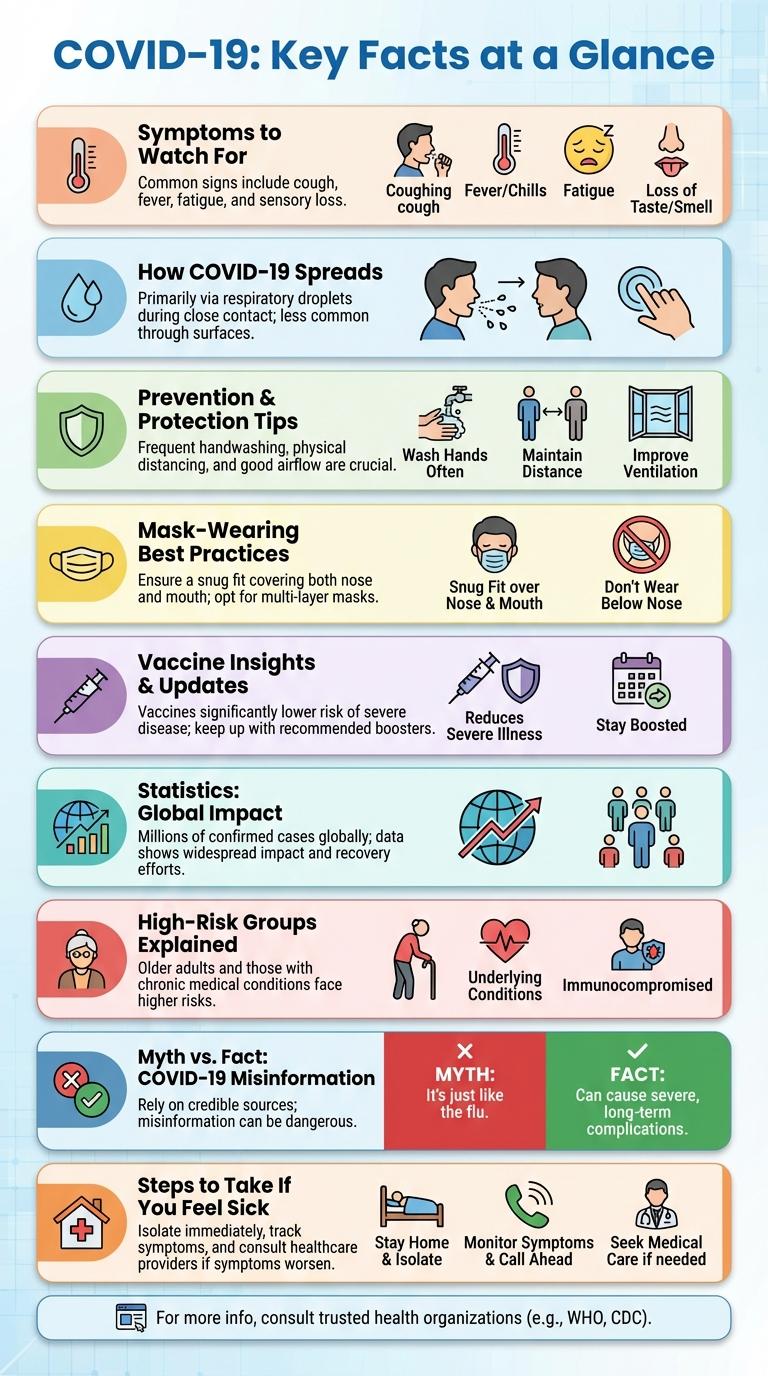
The infographic on COVID-19 visually highlights critical data such as infection rates, vaccination progress, and preventive measures. Clear charts and graphs provide an accessible overview of the pandemic's impact worldwide. This information helps individuals make informed decisions to stay safe and protect their communities.
COVID-19: Key Facts at a Glance
What are the most important facts about COVID-19? COVID-19 is caused by the SARS-CoV-2 virus, primarily spreading through respiratory droplets. Symptoms range from mild to severe, including fever, cough, and difficulty breathing.
How contagious is COVID-19? The virus spreads rapidly, especially in crowded or enclosed spaces, with an average reproduction number (R0) between 2 and 3. Vaccination and mask-wearing significantly reduce transmission risk.
Who is most at risk from COVID-19? Older adults and people with underlying health conditions like diabetes or heart disease face higher risks of severe illness. Healthy individuals can still transmit the virus, making widespread prevention crucial.
What preventive measures help stop COVID-19? Frequent hand washing, wearing masks, and physical distancing are key methods to limit spread. Vaccines have proven effective in lowering hospitalization and death rates globally.
How effective are COVID-19 vaccines? Approved vaccines reduce the risk of severe disease by up to 95% depending on the type and variant. Booster shots improve immunity against emerging variants and sustain protection over time.
Symptoms to Watch For
| Symptom | Description |
|---|---|
| Fever or chills | Elevated body temperature usually above 100.4degF (38degC). |
| Dry cough | Persistent cough without mucus, often worsening over time. |
| Shortness of breath | Difficulty breathing or feeling breathless during normal activities. |
| Fatigue | Extreme tiredness and lack of energy despite rest. |
| Loss of taste or smell | Sudden inability to detect flavors or odors, often an early indicator. |
How COVID-19 Spreads
COVID-19 primarily spreads through respiratory droplets when an infected person coughs, sneezes, or talks. Understanding the transmission methods helps in adopting effective preventive measures.
- Airborne Transmission - Tiny virus-laden droplets can linger in the air and infect people when inhaled.
- Close Contact - Direct interaction within 6 feet of an infected individual increases risk due to respiratory droplets.
- Surface Contamination - Touching surfaces with the virus followed by touching the face can lead to infection.
Practicing social distancing, wearing masks, and hand hygiene reduce the risk of COVID-19 spread.
Prevention & Protection Tips
COVID-19 continues to affect millions globally, making prevention and protection crucial for public health. Understanding effective measures reduces transmission and protects vulnerable populations.
Wear masks in crowded or enclosed spaces to block respiratory droplets that carry the virus. Regular handwashing with soap for at least 20 seconds eliminates viral particles from hands. Maintain physical distancing of at least 6 feet to minimize close contact and airborne spread.
Mask-Wearing Best Practices
Wearing a mask correctly is essential to reduce the spread of COVID-19. Masks should cover both the nose and mouth fully, fitting snugly against the sides of the face without gaps. Using multi-layered masks made of breathable materials improves filtration and comfort during extended use.
Vaccine Insights & Updates
COVID-19 vaccines have significantly reduced severe illness and hospitalizations worldwide. Ongoing research continues to improve vaccine efficacy against emerging variants.
- Vaccine Coverage - Over 70% of the global population has received at least one dose of a COVID-19 vaccine as of 2024.
- Booster Shots - Booster doses enhance immunity, especially against new variants like Omicron and BA.5 sublineages.
- Vaccine Types - mRNA vaccines, viral vector vaccines, and protein subunit vaccines are the primary types used globally.
Statistics: Global Impact
The COVID-19 pandemic has affected over 760 million confirmed cases worldwide as of mid-2024. More than 6.8 million deaths have been reported globally, highlighting the severe impact on public health.
Vaccination efforts have reached over 70% of the global population, significantly reducing hospitalizations and severe cases. The pandemic caused substantial economic disruption, with millions facing unemployment and disrupted supply chains.
High-Risk Groups Explained
COVID-19 poses a greater threat to certain high-risk groups due to weakened immune systems or underlying health conditions. Understanding who is most vulnerable helps in prioritizing protection and care efforts.
Older adults, especially those over 65, face increased risk of severe illness from COVID-19. Individuals with chronic diseases such as diabetes, heart disease, or respiratory conditions also experience higher complications.
Myth vs. Fact: COVID-19 Misinformation
COVID-19 misinformation has spread rapidly, causing confusion about the virus and prevention methods. Understanding the difference between myths and facts helps protect yourself and your community.
Clarifying common misconceptions about COVID-19 supports informed decisions and counters false information effectively.
- Myth: COVID-19 is just like the flu - COVID-19 causes more severe illness and has a higher transmission rate than the seasonal flu.
- Myth: Vaccines alter your DNA - COVID-19 vaccines use mRNA technology that does not change or interact with your DNA.
- Myth: Wearing masks is ineffective - Masks reduce virus transmission by blocking respiratory droplets from infected individuals.