
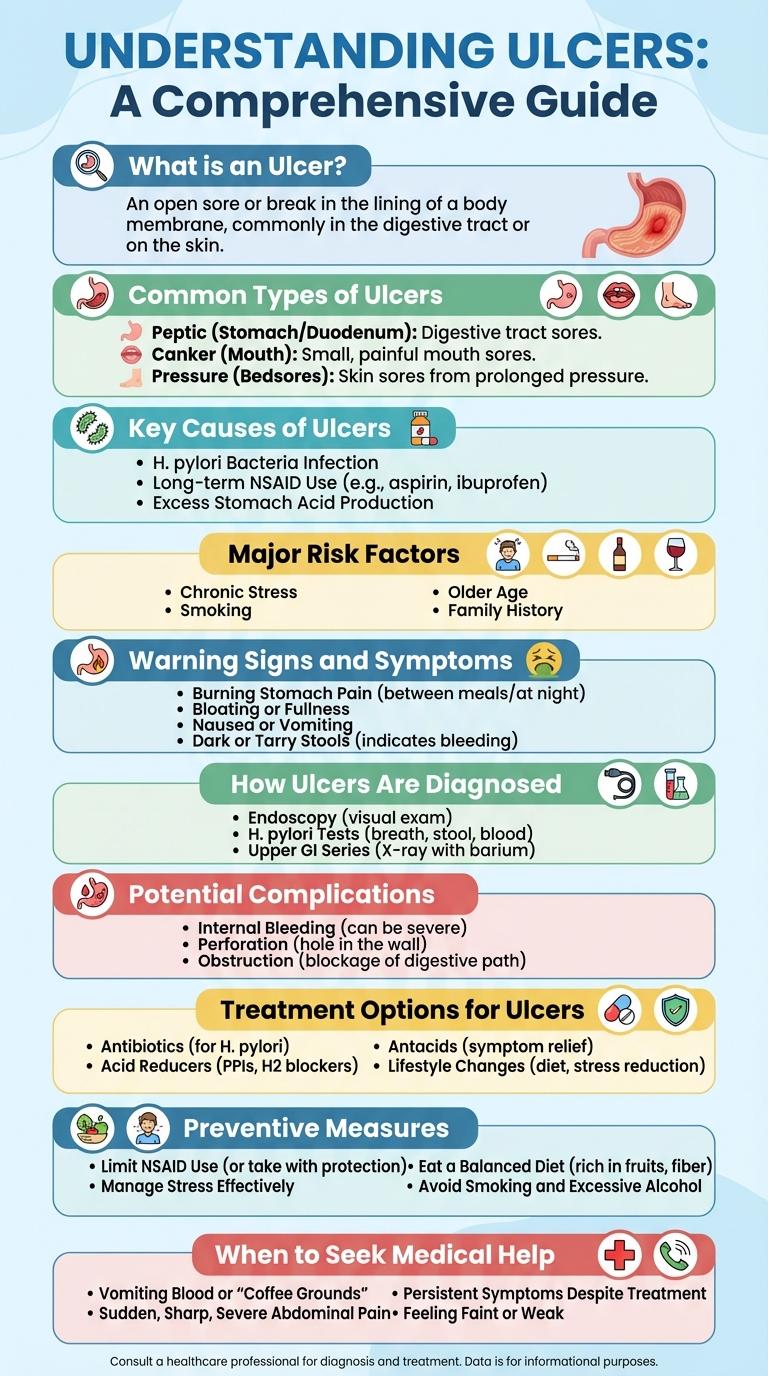
Ulcers are open sores that develop on the lining of the stomach, small intestine, or esophagus, causing pain and discomfort. Commonly caused by Helicobacter pylori infection or prolonged use of NSAIDs, ulcers require timely diagnosis and treatment to prevent complications. Understanding symptoms, risk factors, and prevention methods is essential for effective management and recovery.
What is an Ulcer?
An ulcer is an open sore that develops on the inner lining of the stomach, small intestine, or esophagus. It results from the erosion caused by stomach acid and digestive juices.
- Peptic Ulcer - A type of ulcer that occurs in the stomach or the first part of the small intestine.
- Causes - Common causes include Helicobacter pylori infection and long-term use of nonsteroidal anti-inflammatory drugs.
- Symptoms - Symptoms include burning stomach pain, bloating, heartburn, and nausea.
Common Types of Ulcers
Ulcers are open sores that develop on the skin or mucous membranes of the body. The most common types include peptic ulcers, which occur in the stomach or duodenum, and can cause abdominal pain and bleeding. Mouth ulcers and genital ulcers are other frequent types, each with distinct causes and symptoms.
Key Causes of Ulcers
Ulcers are open sores that develop on the lining of the stomach, small intestine, or esophagus due to various factors. Understanding the key causes of ulcers helps in prevention and effective treatment.
- Helicobacter pylori infection - A common bacterial infection that damages the stomach lining and leads to ulcer formation.
- Long-term use of NSAIDs - Frequent consumption of nonsteroidal anti-inflammatory drugs can irritate and erode the stomach lining.
- Excess stomach acid production - Conditions causing increased acid secretion can wear down the protective mucous layer, causing ulcers.
Major Risk Factors
Ulcers are open sores that develop on the inner lining of the stomach or the upper part of the small intestine. These lesions result primarily from the erosion caused by stomach acid.
Major risk factors for ulcers include Helicobacter pylori infection, which damages the protective mucous layer of the stomach. Frequent use of nonsteroidal anti-inflammatory drugs (NSAIDs) weakens the stomach lining and increases ulcer risk. Excessive alcohol consumption and smoking also contribute significantly by impairing healing and increasing acid production.
Warning Signs and Symptoms
| Warning Sign | Description |
|---|---|
| Burning Stomach Pain | Intense discomfort between the navel and chest, often worsening on an empty stomach. |
| Nausea and Vomiting | Frequent feeling of sickness accompanied by vomiting, sometimes with blood. |
| Dark or Tarry Stools | Appearance of black, tar-like bowel movements indicating possible bleeding. |
| Unexplained Weight Loss | Sudden decrease in weight without changes in diet or physical activity. |
| Loss of Appetite | Decreased desire to eat linked to stomach discomfort or pain. |
How Ulcers Are Diagnosed
Ulcers are open sores that develop on the lining of the stomach or duodenum. Proper diagnosis helps in effective treatment and prevention of complications.
- Endoscopy - A flexible tube with a camera is inserted through the throat to visually inspect the stomach and duodenum for ulcers.
- H. pylori Testing - Breath, blood, or stool tests detect Helicobacter pylori bacteria, a common cause of ulcers.
- Upper GI Series - X-ray imaging after swallowing a barium solution highlights ulcers in the upper gastrointestinal tract.
Diagnosing ulcers accurately ensures targeted therapy and symptom relief.
Potential Complications
Ulcers, if left untreated, can lead to serious complications that significantly impact health. These complications arise from the ulcer eroding deeper layers of the stomach or intestinal lining.
Potential complications include bleeding, perforation, and gastric outlet obstruction. Early detection and treatment are essential to prevent these dangerous outcomes.
Treatment Options for Ulcers
Ulcer treatment focuses on relieving symptoms, promoting healing, and preventing complications. Common approaches include antibiotics for H. pylori infection, proton pump inhibitors to reduce stomach acid, and lifestyle changes such as diet modification and stress management. In severe cases, surgery may be necessary to remove damaged tissue or control bleeding.
Preventive Measures
Ulcers are sores that develop on the lining of the stomach, small intestine, or esophagus, often caused by Helicobacter pylori infection or long-term use of NSAIDs. Preventing ulcers involves maintaining a healthy lifestyle and avoiding factors that irritate the stomach lining.
Consuming a balanced diet rich in fruits, vegetables, and whole grains helps protect the digestive tract. Limiting alcohol intake, quitting smoking, and managing stress effectively reduce the risk of ulcer formation.