
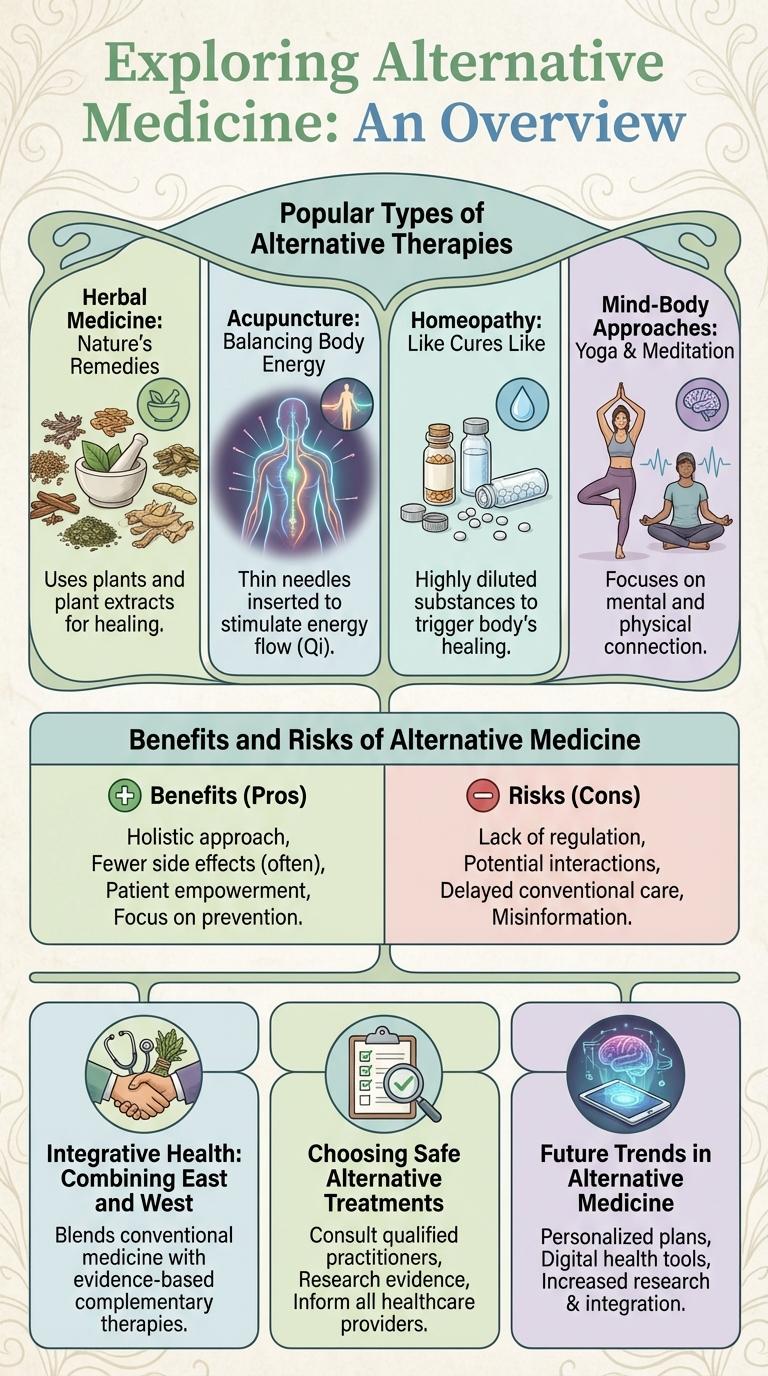
Alternative medicine encompasses a diverse range of healing practices and therapies that fall outside conventional Western medical treatments. These approaches often emphasize natural remedies, holistic care, and the body's intrinsic ability to heal itself. Infographics provide a clear and engaging way to explore the benefits, types, and evidence behind alternative medicine.
Exploring Alternative Medicine: An Overview
What key types of alternative medicine offer natural healing benefits? Alternative medicine includes practices like acupuncture, herbal medicine, and homeopathy that focus on holistic health. These methods aim to complement conventional treatments by enhancing the body's natural healing processes.
Popular Types of Alternative Therapies
Alternative medicine offers a variety of popular therapies that promote holistic health and wellness. Common types include acupuncture, herbal medicine, chiropractic care, aromatherapy, and homeopathy. These therapies aim to complement conventional treatments by addressing physical, emotional, and spiritual well-being.
| Therapy | Key Benefit |
|---|---|
| Acupuncture | Pain relief |
| Herbal Medicine | Natural healing |
| Chiropractic Care | Spinal alignment |
| Aromatherapy | Stress reduction |
| Homeopathy | Immune support |
Herbal Medicine: Nature's Remedies
Herbal medicine utilizes plant-based substances for therapeutic purposes, offering natural remedies rooted in ancient traditions. It remains one of the most popular forms of alternative medicine worldwide.
- Medicinal Plants - Common herbs like chamomile, echinacea, and ginseng are used for treating various ailments and boosting immunity.
- Phytochemicals - Active compounds such as flavonoids and alkaloids contribute to the healing effects of herbs through antioxidant and anti-inflammatory properties.
- Applications - Herbal medicine addresses conditions including digestive disorders, stress relief, and minor infections using natural formulations.
Scientific studies increasingly support the efficacy of herbal remedies, promoting their integration into modern healthcare systems.
Acupuncture: Balancing Body Energy
Acupuncture is a traditional Chinese medicine technique that involves inserting thin needles into specific points on the body to balance the flow of energy, known as Qi. This practice aims to restore harmony within the body's energy pathways, promoting overall health and well-being.
Scientific studies suggest acupuncture can alleviate pain, reduce stress, and improve immune function by stimulating the nervous system and releasing natural pain-relieving chemicals. It is widely used as a complementary therapy for conditions such as chronic pain, migraines, and anxiety.
Homeopathy: Like Cures Like
Homeopathy is a system of alternative medicine based on the principle "like cures like," where substances causing symptoms in healthy people are used in diluted form to treat similar symptoms in sick individuals. It was developed by Samuel Hahnemann in the late 18th century and relies on highly diluted remedies to stimulate the body's self-healing. Homeopathy is widely used for ailments like allergies, asthma, and chronic pain, despite ongoing scientific debate regarding its efficacy.
Mind-Body Approaches: Yoga & Meditation
Mind-body approaches like yoga and meditation emphasize the connection between mental and physical health. These practices promote relaxation, reduce stress, and enhance overall well-being.
Yoga combines physical postures, breathing exercises, and meditation to improve flexibility and mental clarity. Meditation focuses on mindfulness and deep breathing to calm the mind and support emotional balance.
Benefits and Risks of Alternative Medicine
Alternative medicine encompasses a variety of treatments outside conventional medical practices, often emphasizing natural healing and holistic approaches. Understanding its benefits and risks helps individuals make informed health choices.
- Potential for Holistic Healing - Alternative medicine often addresses physical, emotional, and spiritual health simultaneously.
- Limited Scientific Evidence - Many alternative therapies lack rigorous clinical trials supporting their effectiveness.
- Reduced Side Effects - Some alternative treatments may have fewer side effects compared to pharmaceutical drugs.
- Risk of Delaying Conventional Treatment - Relying solely on alternative medicine can delay diagnosis and treatment of serious conditions.
- Improved Patient Empowerment - Patients actively engaging in alternative therapies may experience increased control over their health.
Integrative Health: Combining East and West
Integrative health merges traditional Eastern practices with modern Western medicine to provide holistic care. This approach emphasizes the balance of mind, body, and spirit for overall wellness.
Techniques such as acupuncture, herbal medicine, and meditation are combined with conventional treatments like pharmaceuticals and surgery. Integrative health aims to optimize patient outcomes by addressing the root causes of illness, not just symptoms. Personalized care plans enhance healing and improve quality of life.
Choosing Safe Alternative Treatments
| Choosing Safe Alternative Treatments | Key Points |
|---|---|
| Research Verified Sources | Use peer-reviewed journals and reputable medical websites to gather information about alternative therapies. |
| Consult Healthcare Providers | Discuss potential alternative treatments with licensed healthcare professionals to ensure safety and compatibility with current medications. |
| Check Licensing and Certification | Verify that practitioners hold proper credentials and are certified by recognized organizations in their field. |
| Avoid Unproven Claims | Be cautious of treatments promising quick cures or miracle effects without scientific backing. |
| Monitor Side Effects | Track any adverse reactions or unexpected symptoms after starting an alternative therapy and report them promptly. |