
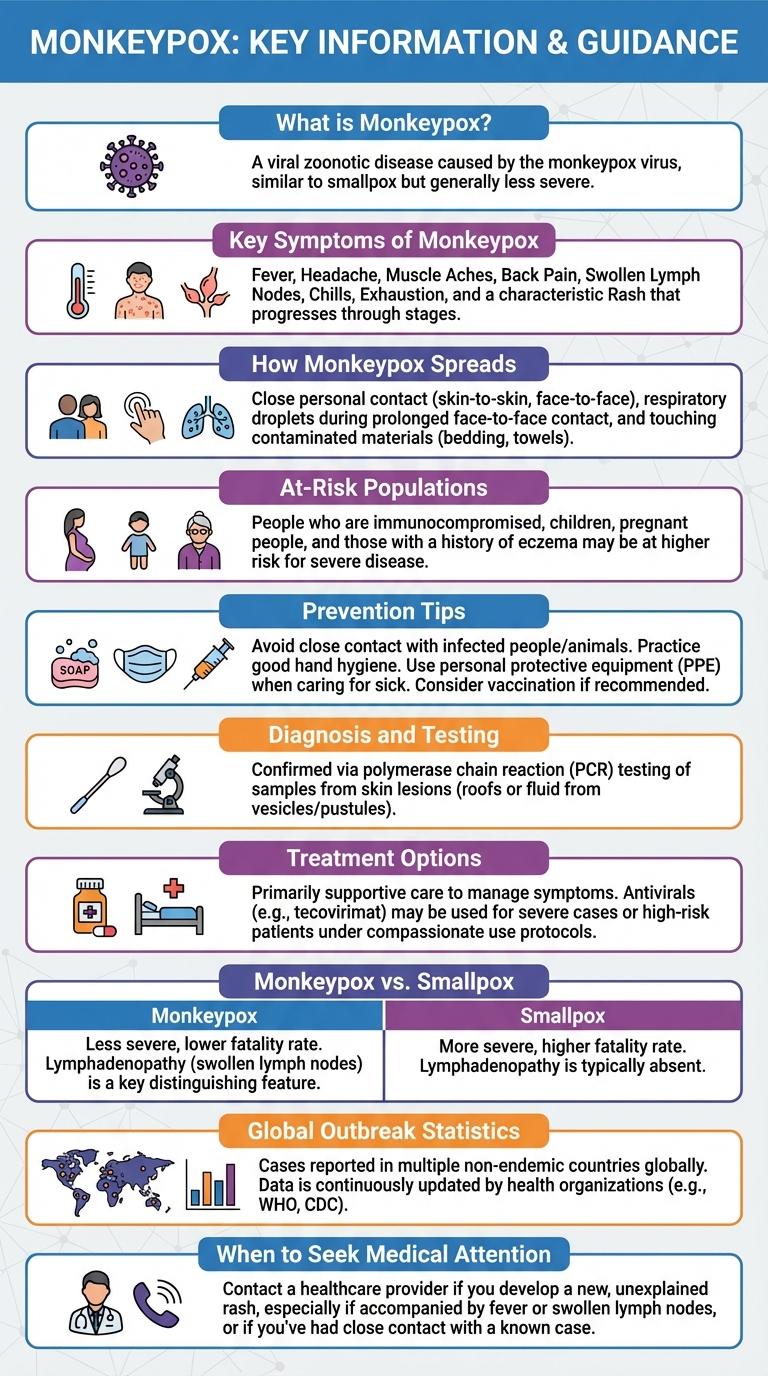
Monkeypox is a viral disease that spreads through close contact with an infected person or animal. The infographic highlights key facts about transmission, symptoms, and prevention methods. Understanding these details helps reduce the risk of outbreaks and promotes public health awareness.
What is Monkeypox?
Monkeypox is a rare viral disease caused by the monkeypox virus, belonging to the Orthopoxvirus genus. It primarily occurs in Central and West African regions but has seen outbreaks worldwide. The infection spreads through close contact with infected animals, humans, or contaminated materials.
Key Symptoms of Monkeypox
Monkeypox is a viral disease characterized by distinct symptoms that help in early identification. Understanding the key symptoms is crucial for timely diagnosis and treatment.
Common symptoms include fever, headache, muscle aches, and swollen lymph nodes. A distinctive rash often develops, starting on the face and spreading to other body parts.
How Monkeypox Spreads
| How Monkeypox Spreads | Details |
|---|---|
| Direct Contact | Touching skin lesions, body fluids, or scabs of an infected person |
| Respiratory Droplets | Exposure to coughs or sneezes during prolonged face-to-face contact |
| Contaminated Objects | Contact with clothing, bedding, or surfaces contaminated with the virus |
| Animal to Human | Bites or scratches from infected animals, or handling bushmeat |
| Mother to Child | Possible during pregnancy or at birth through close contact |
At-Risk Populations
Monkeypox primarily affects individuals who have close contact with infected animals or humans, including healthcare workers and household members. Men who have sex with men represent a significant at-risk group due to patterns observed in recent outbreaks. Immunocompromised individuals and people living in areas with limited access to healthcare are also vulnerable to severe outcomes.
Prevention Tips
Monkeypox is a contagious viral disease that spreads through close contact with infected individuals or contaminated materials. Preventing infection involves practicing good hygiene and avoiding contact with anyone showing symptoms.
Regularly wash hands with soap and water or use an alcohol-based sanitizer to reduce the risk of transmission. Avoid sharing personal items like bedding, towels, or clothing with infected persons to minimize exposure.
Diagnosis and Testing
Monkeypox is diagnosed through clinical evaluation of symptoms such as rash, fever, and swollen lymph nodes. Laboratory testing confirms the presence of the monkeypox virus by detecting viral DNA.
Polymerase Chain Reaction (PCR) testing is the most accurate method for diagnosing monkeypox. Samples are usually collected from skin lesions, including fluid or scabs. Rapid and accurate diagnosis helps in managing outbreaks and preventing the spread of the virus.
Treatment Options
Monkeypox treatment focuses on relieving symptoms and preventing complications. Current options include supportive care and antiviral medications approved for orthopoxviruses.
- Supportive Care - Symptom management involves pain relief, hydration, and treatment of secondary bacterial infections.
- Antiviral Drugs - Tecovirimat and brincidofovir are antiviral agents used to reduce viral replication in severe cases.
- Vaccination Post-Exposure - Smallpox vaccines can be administered after exposure to lower severity and transmission risk.
Monkeypox vs. Smallpox
Monkeypox and smallpox are both viral diseases with similar symptoms but differ significantly in severity and transmission. Understanding these differences helps in accurate diagnosis and effective prevention.
- Virus Type - Monkeypox virus belongs to the Orthopoxvirus genus, similar to smallpox virus but genetically distinct.
- Transmission - Monkeypox spreads primarily through contact with infected animals or bodily fluids, while smallpox spread mainly via airborne droplets between humans.
- Severity - Smallpox infection has a higher fatality rate compared to monkeypox, which is generally milder and self-limiting in most cases.
Global Outbreak Statistics
What are the current global outbreak statistics for monkeypox? Monkeypox cases have surged worldwide, with over 87,000 confirmed infections reported across 110 countries since the start of the outbreak in 2022. Most affected regions include the Americas and Europe, each reporting tens of thousands of cases.
| Region | Confirmed Cases |
|---|---|
| Americas | 45,000+ |
| Europe | 38,000+ |
| Africa | 3,000+ |
| Asia | 1,000+ |
| Oceania | 500+ |