
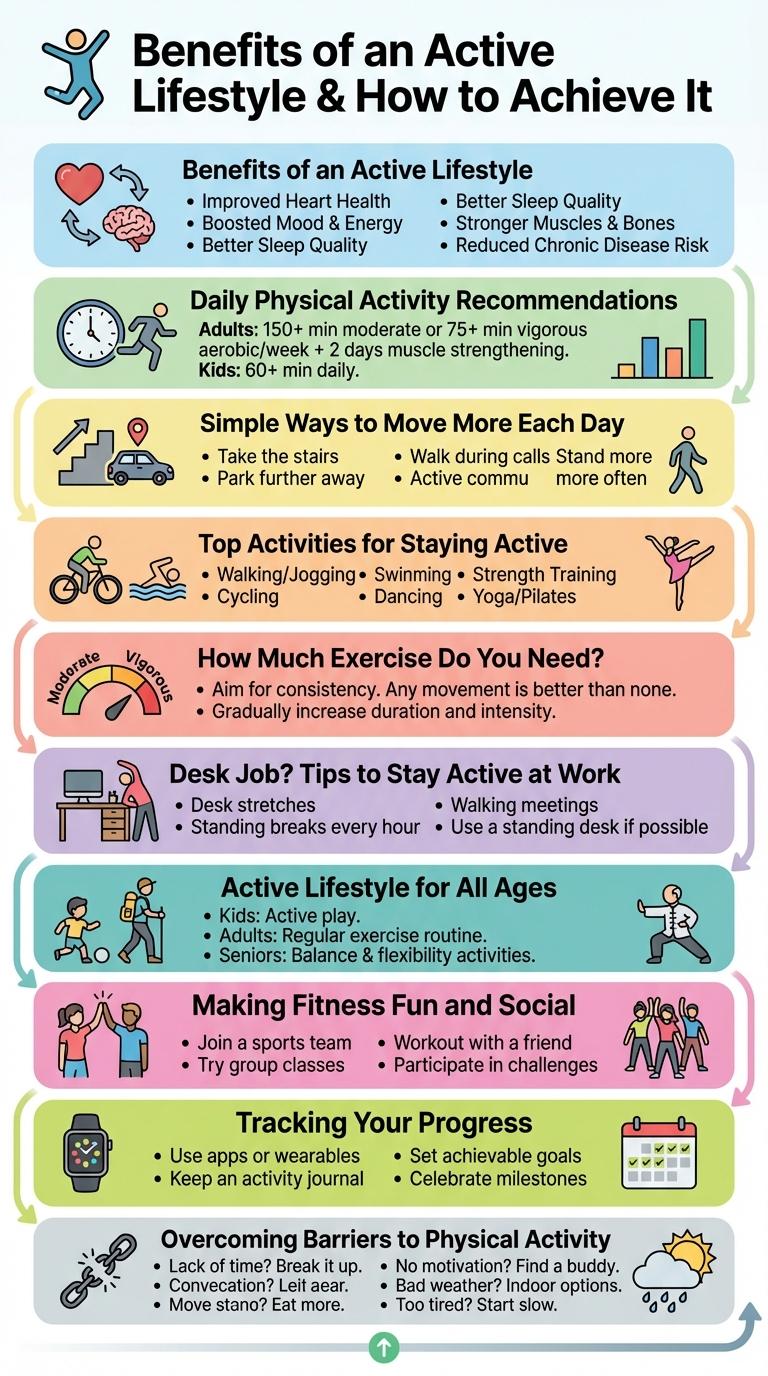
Engaging in an active lifestyle boosts physical health, enhances mental well-being, and increases overall energy levels. Regular exercise supports cardiovascular fitness, strengthens muscles, and improves flexibility. Incorporating daily movement habits can lead to a longer, healthier life.
Benefits of an Active Lifestyle
Why should you adopt an active lifestyle? An active lifestyle improves physical health and boosts mental well-being. Regular movement enhances energy levels and reduces the risk of chronic diseases.
| Benefit | Description |
|---|---|
| Improved Cardiovascular Health | Regular exercise strengthens the heart and lowers blood pressure. |
| Weight Management | Physical activity helps balance calorie intake and supports healthy weight. |
| Mental Health Boost | Exercise releases endorphins that reduce stress and improve mood. |
| Stronger Muscles and Bones | Weight-bearing activities increase muscle strength and bone density. |
| Enhanced Sleep Quality | Active individuals often experience deeper and more restorative sleep. |
Daily Physical Activity Recommendations
Daily physical activity plays a crucial role in maintaining overall health and well-being. Adults should aim for at least 150 minutes of moderate-intensity exercise or 75 minutes of vigorous-intensity exercise per week. Incorporating a mix of aerobic activities, strength training, and flexibility exercises enhances physical fitness and reduces the risk of chronic diseases.
| Activity Type | Recommended Duration |
|---|---|
| Moderate-intensity aerobic | 150 minutes per week |
| Vigorous-intensity aerobic | 75 minutes per week |
| Muscle-strengthening exercises | At least 2 days per week |
| Flexibility exercises | Regularly, as part of routine |
Simple Ways to Move More Each Day
Maintaining an active lifestyle boosts overall health and energy levels. Small daily changes can significantly increase your physical activity without requiring a major time commitment.
- Take the Stairs - Opt for stairs instead of elevators to improve cardiovascular health.
- Walk or Bike for Short Trips - Replace car rides with walking or biking to increase daily movement.
- Incorporate Stretch Breaks - Stand and stretch every hour to reduce muscle stiffness and improve circulation.
- Use Standing Desks - Standing while working can increase calorie burn and reduce sedentary time.
- Schedule Active Social Activities - Choose walking meetings or outdoor gatherings to stay active with friends.
Implementing these simple strategies supports a healthier, more active lifestyle every day.
Top Activities for Staying Active
Maintaining an active lifestyle promotes physical and mental well-being through consistent engagement in diverse activities. Top activities for staying active include walking, cycling, swimming, yoga, and strength training, each offering unique health benefits. Incorporating these exercises into daily routines can improve cardiovascular health, flexibility, and muscle strength.
How Much Exercise Do You Need?
| Exercise Type | Recommended Amount |
|---|---|
| Aerobic Activity | 150 minutes per week of moderate exercise or 75 minutes per week of vigorous exercise |
| Muscle-Strengthening | Activities involving all major muscle groups at least 2 days per week |
| Flexibility Exercises | Daily stretching or yoga to maintain joint mobility |
| Balance Training | Exercises like tai chi or balance-focused routines 3 times per week for older adults |
| Light Activity | Incorporate walking, household chores, or light physical activities daily |
Desk Job? Tips to Stay Active at Work
Maintaining an active lifestyle is crucial, especially for those with desk jobs. Prolonged sitting can lead to health issues such as poor posture and reduced circulation.
Simple tips help stay active at work, including taking short walking breaks and stretching regularly. Incorporating movement boosts energy, productivity, and overall well-being during office hours.
Active Lifestyle for All Ages
An active lifestyle benefits individuals at every stage of life, enhancing physical health and mental well-being. Incorporating regular exercise and movement helps prevent chronic diseases and boosts energy levels.
Children who engage in daily physical activities develop stronger muscles and bones while improving coordination and social skills. Adults maintaining consistent exercise routines experience better cardiovascular health and stress management. Seniors benefit from enhanced mobility, reduced risk of falls, and improved cognitive function through age-appropriate physical activities.
Making Fitness Fun and Social
Embracing an active lifestyle becomes easier when fitness activities are enjoyable and social. Group exercises and fun challenges can motivate consistent participation and improve overall well-being.
- Group Workouts - Exercising with friends increases accountability and makes workouts more enjoyable.
- Fitness Challenges - Friendly competitions boost motivation and encourage goal achievement.
- Community Events - Participating in local runs or sports events fosters social connection and physical activity.
Tracking Your Progress
Tracking your progress is essential for maintaining motivation and achieving your active lifestyle goals. Using apps, journals, or wearable devices can help you monitor your daily activities and improvements effectively.
Documenting workouts, steps, and other physical activities provides clear insight into your progress over time. This data enables you to adjust your routines for optimal health benefits and sustained fitness growth.