
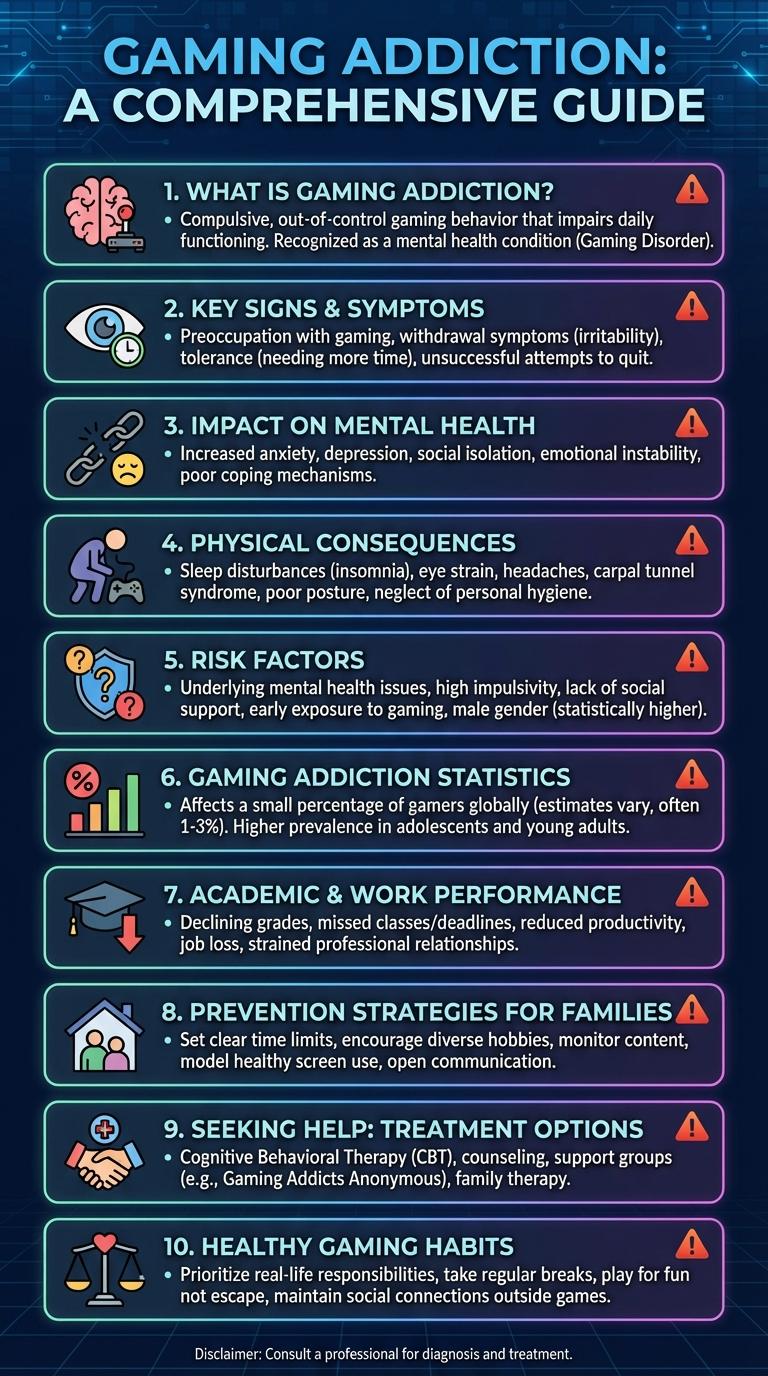
Gaming addiction affects millions worldwide, leading to significant impacts on mental health, social relationships, and daily functioning. This infographic highlights key statistics, symptoms, and prevention strategies to raise awareness and promote healthier gaming habits. Understanding these factors is essential for players, families, and healthcare providers to address this growing concern effectively.
What is Gaming Addiction?
Gaming addiction is a behavioral disorder characterized by an excessive or compulsive use of video games, interfering with daily life. It is recognized by the World Health Organization as a mental health condition under the category of Gaming Disorder.
This addiction leads to neglect of personal, social, educational, or occupational responsibilities. Symptoms include impaired control over gaming, increased priority given to gaming over other activities, and continuation despite negative consequences. The disorder can result in significant distress or impairment in important areas of functioning.
Key Signs and Symptoms
Gaming addiction affects millions worldwide, impacting mental and physical health. Recognizing key signs helps in early intervention and support.
- Preoccupation with Gaming - Constant thoughts about playing video games interfere with daily activities.
- Withdrawal Symptoms - Feeling restless or irritable when unable to play games.
- Loss of Control - Inability to reduce or stop gaming despite negative consequences.
- Neglect of Responsibilities - Ignoring work, school, or social commitments due to gaming.
- Continued Use Despite Problems - Persisting in gaming even when it causes physical or emotional harm.
Early detection of these symptoms can prevent long-term addiction and promote healthier gaming habits.
Impact on Mental Health
How does gaming addiction impact mental health?
Gaming addiction can lead to increased anxiety and depression among affected individuals. Symptoms often include withdrawal, irritability, and impaired social interactions.
What are common psychological effects of excessive gaming?
Excessive gaming is linked to reduced attention span and impaired emotional regulation. Many gamers experience stress and difficulty managing everyday responsibilities.
Can gaming addiction contribute to social isolation?
Yes, gaming addiction often results in decreased face-to-face interactions. Players may withdraw from family and friends, worsening feelings of loneliness.
How does gaming addiction affect sleep and mood?
Disrupted sleep patterns are frequent due to extended gaming sessions. Poor sleep quality exacerbates mood disorders like irritability and depression.
What mental health disorders are associated with gaming addiction?
Research highlights associations with anxiety disorders, depressive episodes, and obsessive-compulsive behaviors. Early intervention is crucial for preventing long-term psychological damage.
Physical Consequences of Excessive Gaming
Gaming addiction can lead to severe physical consequences such as eye strain, headaches, and poor posture. Extended screen time often results in repetitive strain injuries like carpal tunnel syndrome and chronic back pain. Lack of physical activity increases the risk of obesity and weakened cardiovascular health among gamers.
Risk Factors for Gaming Addiction
Gaming addiction is influenced by various risk factors that increase the likelihood of developing compulsive gaming behaviors. These factors include psychological, social, and environmental influences that contribute to excessive gaming.
Younger age, especially adolescents, is a significant risk factor as the developing brain is more vulnerable to addictive behaviors. Lack of social support and stressful life situations also elevate the risk of gaming addiction.
Gaming Addiction Statistics
Gaming addiction affects approximately 3-4% of gamers worldwide, with higher rates among teenagers and young adults. Studies reveal that gamers with addiction symptoms often spend over 30 hours per week playing, leading to negative impacts on mental health and daily life. Treatment programs report a 50% success rate in reducing gaming time and improving quality of life for affected individuals.
Effects on Academic and Work Performance
Gaming addiction significantly impairs academic and work performance. Persistent excessive gaming leads to reduced focus, productivity, and achievement in both school and professional environments.
- Decreased Concentration - Excessive gaming reduces attention span, making it difficult to focus on academic tasks or work assignments.
- Lower Productivity - Time spent gaming often replaces study or work time, resulting in missed deadlines and poor task completion.
- Poor Academic and Career Outcomes - Persistent gaming addiction correlates with lower grades and diminished career advancement opportunities.
Prevention Strategies for Families
Gaming addiction affects millions globally, impacting mental health and family dynamics. Early recognition and intervention are crucial for prevention and recovery.
Families play a vital role by setting clear gaming limits and encouraging balanced daily routines. Open communication fosters trust and awareness of gaming habits among all members.
Seeking Help: Treatment Options
| Treatment Option | Description |
|---|---|
| Cognitive Behavioral Therapy (CBT) | Evidence-based therapy targeting thoughts and behaviors contributing to gaming addiction, helping individuals develop healthier coping strategies. |
| Support Groups | Group sessions providing peer support, shared experiences, and encouragement to reduce gaming time and promote recovery. |
| Family Therapy | Involves family members to improve communication, resolve conflicts, and build supportive home environments for sustained recovery. |
| Digital Detox Programs | Structured breaks from digital devices designed to reset gaming habits and increase awareness of usage patterns. |
| Medication | Prescribed in some cases to address underlying mental health conditions like anxiety or depression associated with gaming addiction. |