
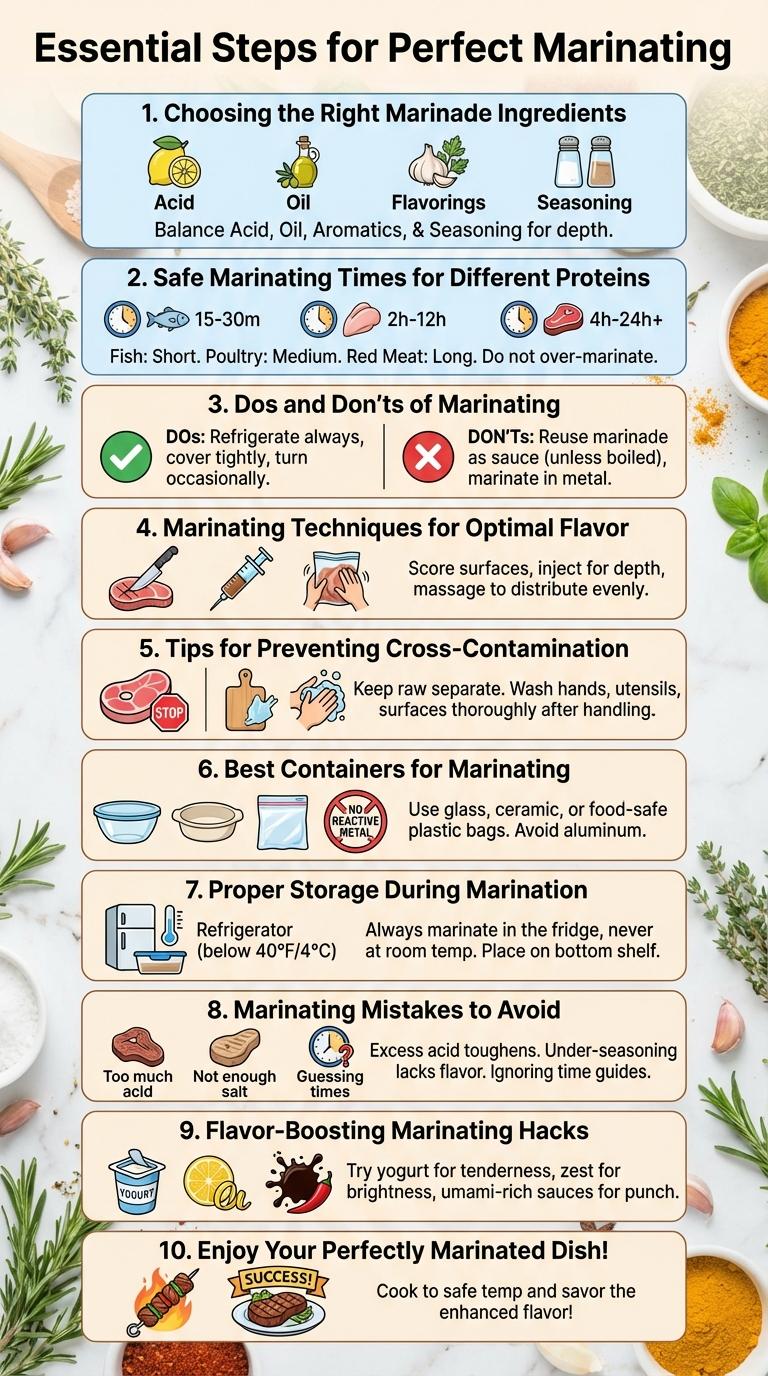
Effective marinating enhances the flavor and tenderness of your dishes by allowing spices and acids to permeate the meat or vegetables. Following precise guidelines ensures food safety and optimal taste without overpowering the natural textures. This infographic outlines essential tips to master marinating techniques for delicious and safe meals.
Essential Steps for Perfect Marinating
Marinating enhances flavor and tenderizes meat by soaking it in a seasoned liquid mixture. Follow essential steps to achieve the perfect balance of taste and texture for your dishes.
Start by choosing the right marinade ingredients, combining acids like vinegar or citrus with oils, herbs, and spices. Ensure the food is fully submerged in the marinade and refrigerate for the recommended time to prevent bacterial growth.
Choosing the Right Marinade Ingredients
Choosing the right marinade ingredients is essential for enhancing flavor and tenderizing meat effectively. Balanced components create a harmonious taste and improve texture.
- Acidic Ingredients - Use lemon juice, vinegar, or yogurt to break down protein fibers and tenderize meat.
- Oils - Olive oil or sesame oil helps retain moisture and evenly distribute flavors throughout the meat.
- Herbs & Spices - Fresh herbs like rosemary, thyme, and spices add depth and complexity without overpowering.
Select ingredients based on the type of meat and desired flavor profile for best results.
Safe Marinating Times for Different Proteins
| Protein Type | Recommended Marinating Time |
|---|---|
| Chicken (whole or pieces) | 2 to 12 hours |
| Beef (steaks, roasts) | 6 to 24 hours |
| Pork (chops, tenderloin) | 4 to 12 hours |
| Seafood (fish fillets, shrimp) | 15 to 30 minutes |
| Vegetables (eggplant, zucchini) | 30 minutes to 2 hours |
Dos and Don'ts of Marinating
What are the essential dos and don'ts of marinating meat? Marinating enhances flavor and tenderness through acid and seasoning penetration. Proper technique ensures food safety and optimal taste.
| Dos | Don'ts |
|---|---|
| Use an acidic base like vinegar, citrus, or wine for tenderizing. | Avoid marinating at room temperature to prevent bacterial growth. |
| Marinate in the refrigerator for the recommended time based on protein type. | Never reuse marinade that touched raw meat without boiling it first. |
| Use non-reactive containers such as glass, stainless steel, or food-safe plastic. | Don't marinate seafood for more than 30 minutes as acids break down texture quickly. |
| Discard leftover marinade that had raw meat to avoid contamination. | Avoid overly acidic marinades that can make meat mushy if left too long. |
| Pat meat dry before cooking to achieve a good sear after marinating. | Do not marinate delicate proteins like fish overnight to maintain texture. |
Marinating Techniques for Optimal Flavor
Marinating enhances flavor by allowing ingredients to absorb spices, acids, and oils. Effective marinating techniques unlock deeper taste profiles and tenderize meats.
Use acid-based marinades like vinegar or citrus to break down proteins gently. Avoid over-marinating, as excessive time can lead to mushy textures and overpowering flavors.
Tips for Preventing Cross-Contamination
Marinating is essential for flavor and tenderness but comes with risks of cross-contamination if not handled properly. Following clear guidelines helps ensure food safety and prevents harmful bacteria transfer.
- Use separate containers - Always marinate raw meat in a distinct container to avoid contact with other foods.
- Discard used marinade - Do not reuse marinade that has been in contact with raw meat unless it is boiled first.
- Clean utensils thoroughly - Wash knives, cutting boards, and hands immediately after handling raw meat to prevent bacterial spread.
Best Containers for Marinating
Best containers for marinating include glass, stainless steel, and food-safe plastic, as they do not react with acidic ingredients. Avoid aluminum and cast iron, which can impart unwanted flavors and react with the marinade. Use containers with tight-fitting lids to prevent leaks and ensure even flavor distribution.
Proper Storage During Marination
Proper storage during marination is essential to ensure food safety and enhance flavor absorption. Always marinate food in the refrigerator at or below 40degF (4degC) to prevent bacterial growth.
Use a sealed container or a resealable plastic bag to avoid cross-contamination with other foods. Never marinate food at room temperature, as this increases the risk of harmful bacteria. Discard leftover marinade that has come into contact with raw food unless boiled thoroughly before reuse.
Marinating Mistakes to Avoid
Marinating can enhance flavor and tenderness, but common mistakes reduce its effectiveness. Avoid using too much acid, which can break down meat fibers excessively and create a mushy texture. Do not reuse marinade without cooking it first, as it may harbor harmful bacteria.