
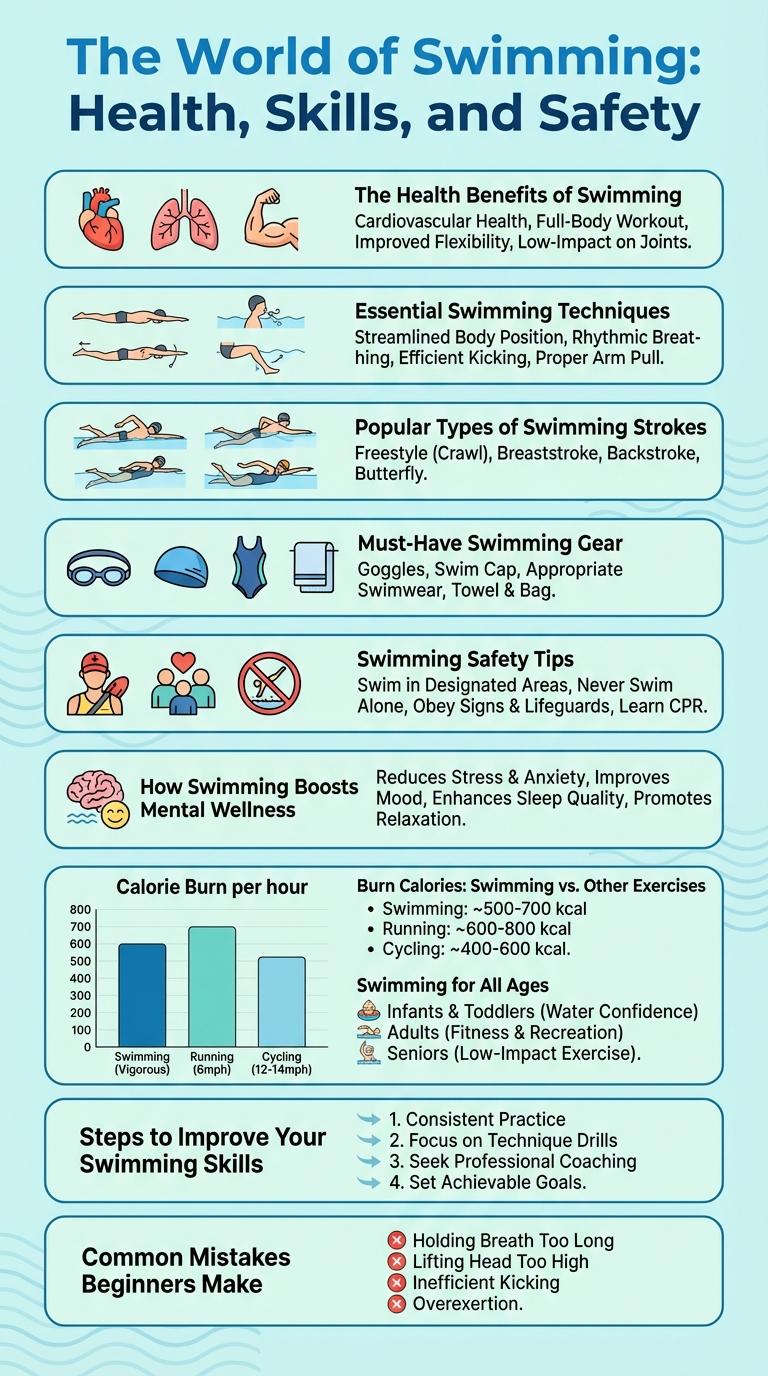
Swimming enhances cardiovascular health and builds muscular strength, making it an effective full-body workout. This infographic breaks down essential techniques, safety tips, and the benefits of regular swimming practice. Visual aids highlight stroke variations and hydration guidelines to maximize performance and enjoyment in the water.
The Health Benefits of Swimming
Swimming is a full-body workout that improves cardiovascular health and builds muscle strength. It is a low-impact exercise suitable for people of all ages and fitness levels.
- Cardiovascular Fitness - Swimming increases heart rate and promotes better circulation, reducing the risk of heart disease.
- Muscle Tone and Strength - The resistance of water helps to develop lean muscle mass and improve overall strength.
- Joint Health - Buoyancy in water reduces stress on joints, making swimming ideal for arthritis and injury rehabilitation.
Essential Swimming Techniques
| Essential Swimming Technique | Description |
|---|---|
| Freestyle Stroke | Also known as front crawl; involves alternating arm movements with flutter kicks, ensuring efficient propulsion and breathing rhythm. |
| Breaststroke | Characterized by simultaneous arm movements in a circular motion combined with frog-like kicks, ideal for controlled speed and endurance. |
| Backstroke | Swim on the back with alternating arm strokes and flutter kicks, allowing for easy breathing and steady pace. |
| Butterfly Stroke | Involves symmetrical arm movement combined with a dolphin kick, requiring strong core muscles and coordination. |
| Breathing Technique | Proper timing of breaths synchronized with strokes; essential to maintain oxygen flow and reduce fatigue during swimming. |
Popular Types of Swimming Strokes
Swimming consists of several popular strokes, each with unique techniques and benefits. The freestyle stroke is known for speed and efficiency, commonly used in competitions. Backstroke, breaststroke, and butterfly strokes offer varying levels of difficulty and target different muscle groups.
Must-Have Swimming Gear
What essential gear do you need for swimming? Swimming requires specific equipment to enhance safety, comfort, and performance. Must-have swimming gear includes items that protect your eyes, improve your technique, and keep you comfortable in the water.
| Swimming Gear | Purpose |
|---|---|
| Swim Goggles | Protect eyes from chlorine and improve underwater visibility. |
| Swim Cap | Reduces drag and keeps hair out of the face while swimming. |
| Swimsuit | Provides comfort and reduces water resistance for better speed. |
| Towel | For drying off quickly after swimming sessions. |
| Swim Fins | Help improve leg strength and swimming technique. |
Swimming Safety Tips
Swimming safety is essential to prevent accidents and ensure a fun experience in the water. Always swim in designated areas supervised by lifeguards and avoid swimming alone. Wearing life jackets, knowing basic water rescue techniques, and staying hydrated can significantly reduce risks.
How Swimming Boosts Mental Wellness
Swimming is a highly effective exercise for enhancing mental wellness. It combines physical activity with rhythmic breathing, promoting relaxation and stress relief.
Engaging in swimming regularly reduces anxiety and symptoms of depression by releasing endorphins, natural mood boosters. The water's soothing properties help improve sleep quality and cognitive function. Swimming also fosters mindfulness, allowing individuals to focus on their body movements and present moment.
Burn Calories: Swimming vs. Other Exercises
Swimming is an effective full-body workout that burns a significant number of calories. Compared to other exercises, it offers both cardiovascular and muscle-strengthening benefits.
- Calorie Burn Rate - Swimming burns approximately 400-700 calories per hour, depending on intensity and stroke technique.
- Compared to Running - Running typically burns around 600-900 calories per hour, but swimming reduces joint impact, making it sustainable for longer periods.
- Versatility - Swimming engages multiple muscle groups and improves endurance more efficiently than many single-focus activities.
Swimming for All Ages
Swimming offers a full-body workout suitable for individuals of all ages and skill levels. It promotes physical health, mental well-being, and social interaction.
- Infants and Toddlers - Early water exposure builds confidence and basic motor skills in a safe environment.
- Children and Teens - Swimming supports growth, coordination, and endurance while reducing injury risk.
- Adults and Seniors - Low-impact exercise enhances cardiovascular health, flexibility, and muscle strength.
Swimming is an inclusive activity that benefits every generation, encouraging lifelong fitness and enjoyment.
Steps to Improve Your Swimming Skills
Improving your swimming skills requires consistent practice and proper technique. Understanding the fundamental steps can help you become a more efficient swimmer.
Start by focusing on your breathing patterns to maintain stamina and reduce fatigue. Incorporate drills that enhance your stroke mechanics for smoother movements in the water.