
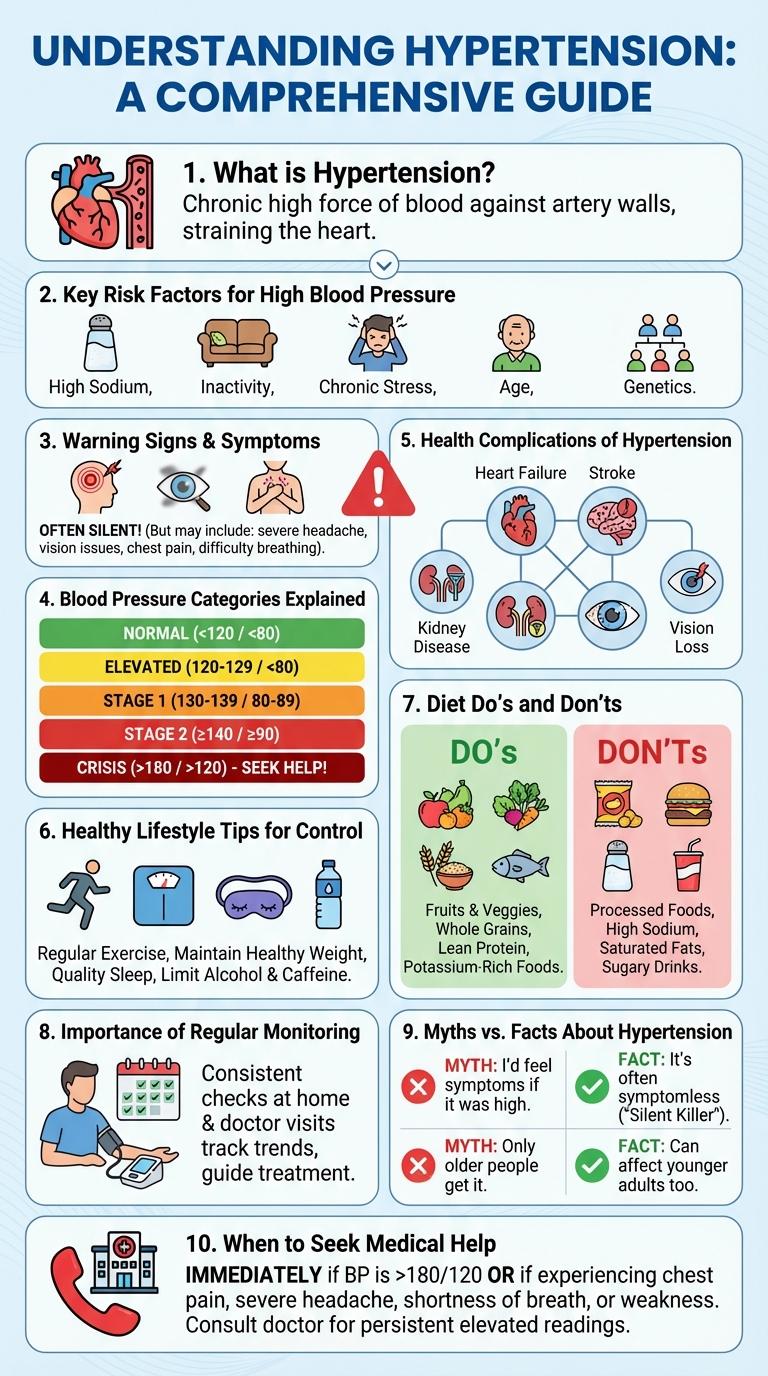
Hypertension, commonly known as high blood pressure, affects millions worldwide and significantly increases the risk of heart disease and stroke. This infographic breaks down key facts, risk factors, and prevention tips to help you understand and manage hypertension effectively. Visualizing this vital information empowers individuals to take proactive steps toward maintaining healthy blood pressure levels.
What is Hypertension?
Hypertension, commonly known as high blood pressure, is a medical condition where the force of blood against artery walls is consistently too high. This increased pressure can lead to serious health issues such as heart disease, stroke, and kidney problems. Monitoring and managing blood pressure levels is essential to prevent complications and maintain overall cardiovascular health.
Key Risk Factors for High Blood Pressure
Hypertension, or high blood pressure, is a common condition that increases the risk of heart disease and stroke. Identifying key risk factors helps in prevention and management.
- Excessive Salt Intake - High sodium consumption strains the arteries, causing blood pressure to rise.
- Obesity - Carrying excess weight increases the workload on the heart and raises blood pressure levels.
- Physical Inactivity - Lack of regular exercise contributes to higher blood pressure and poor cardiovascular health.
Warning Signs & Symptoms
Hypertension, often called the "silent killer," can develop without obvious symptoms but presents warning signs that should not be ignored. Early detection is crucial to prevent severe cardiovascular complications.
- Severe Headaches - Intense headaches may indicate dangerously high blood pressure levels requiring immediate attention.
- Chest Pain - Persistent chest discomfort can signal strain on the heart caused by elevated blood pressure.
- Shortness of Breath - Difficulty breathing can result from hypertension impacting heart and lung function.
- Vision Problems - Blurred or impaired vision may occur due to damage in blood vessels of the eyes.
- Fatigue or Confusion - Cognitive issues and extreme tiredness may be signs of hypertension-related brain effects.
Recognizing these symptoms early supports timely medical intervention to manage hypertension effectively.
Blood Pressure Categories Explained
Hypertension, commonly known as high blood pressure, is categorized based on systolic and diastolic readings. Understanding these categories helps in managing and preventing cardiovascular risks effectively.
Blood pressure is measured in millimeters of mercury (mm Hg) and divided into distinct levels according to health guidelines.
- Normal Blood Pressure - Systolic less than 120 mm Hg and diastolic less than 80 mm Hg signify healthy blood pressure.
- Elevated Blood Pressure - Systolic between 120-129 mm Hg with diastolic below 80 mm Hg indicates a risk for hypertension.
- Hypertension Stage 1 - Systolic between 130-139 mm Hg or diastolic between 80-89 mm Hg requires lifestyle changes and possible medical treatment.
- Hypertension Stage 2 - Systolic 140 mm Hg or higher or diastolic 90 mm Hg or higher indicates more severe hypertension requiring immediate medical attention.
- Hypertensive Crisis - Systolic over 180 mm Hg and/or diastolic over 120 mm Hg is a medical emergency needing urgent care.
Health Complications of Hypertension
| Health Complication | Description |
|---|---|
| Heart Attack | High blood pressure strains the heart, increasing the risk of coronary artery disease and myocardial infarction. |
| Stroke | Hypertension can cause blood vessels in the brain to rupture or become blocked, leading to ischemic or hemorrhagic stroke. |
| Kidney Damage | Elevated blood pressure damages the blood vessels in the kidneys, impairing their ability to filter waste effectively. |
| Vision Loss | High blood pressure can damage retinal blood vessels, resulting in hypertensive retinopathy and potential blindness. |
| Heart Failure | Chronic hypertension causes the heart muscles to thicken and weaken, reducing pumping efficiency and leading to heart failure. |
Healthy Lifestyle Tips for Control
Hypertension affects millions worldwide and managing it requires consistent lifestyle changes. Adopting a balanced diet rich in fruits, vegetables, and low sodium can significantly reduce blood pressure levels. Regular physical activity, stress management, and avoiding tobacco use are essential steps to control hypertension effectively.
Diet Do's and Don'ts
Hypertension, or high blood pressure, can be effectively managed through proper diet choices. Selecting the right foods helps control blood pressure levels and reduces health risks.
Do consume fruits, vegetables, whole grains, and lean proteins to support heart health. Don't eat excessive salt, processed foods, or high-fat snacks that increase hypertension risk.
Importance of Regular Monitoring
Regular monitoring of hypertension is crucial for effective blood pressure management and preventing serious health complications. Consistent tracking helps detect any significant changes early, allowing timely medical intervention.
Patients who regularly monitor their blood pressure often experience better control of hypertension and reduced risk of heart disease or stroke. Healthcare providers use this data to adjust treatments, ensuring personalized and precise care.
Myths vs. Facts About Hypertension
Is hypertension always noticeable? Many people believe hypertension shows clear symptoms, but it often goes undetected without testing. This silent nature makes regular blood pressure checks essential for early detection.
Can only overweight individuals develop hypertension? Hypertension can affect people of all body types, not just those who are overweight. Genetics, age, and lifestyle also play significant roles in its development.
Does reducing salt intake lower hypertension risk? Lowering salt consumption helps manage blood pressure by reducing fluid retention. A balanced diet remains a critical component in controlling hypertension.
Is medication the only treatment for hypertension? Lifestyle changes like exercise, diet, and stress management effectively control high blood pressure in many cases. Medication is often necessary when lifestyle modifications alone are insufficient.
Will hypertension always cause complications if untreated? Untreated hypertension increases the risk of serious health problems such as heart disease and stroke. Early detection and management significantly reduce these risks.