
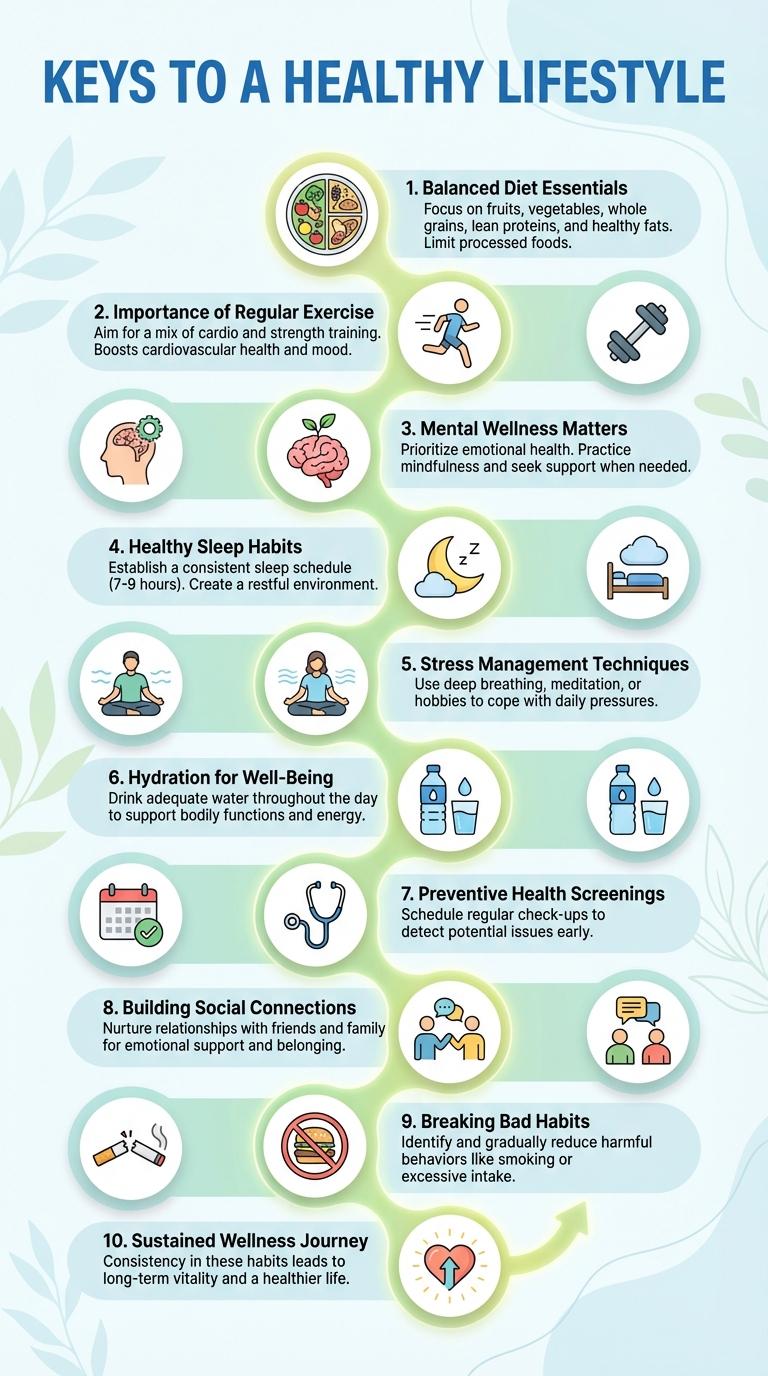
Maintaining good health and well-being is essential for a balanced and fulfilling life. Key habits such as regular exercise, nutritious eating, and sufficient sleep promote physical and mental wellness. This infographic highlights crucial tips and facts to help you achieve and sustain optimal health every day.
Keys to a Healthy Lifestyle
Maintaining good health and well-being is essential for a fulfilling life. Adopting key habits supports physical, mental, and emotional balance.
Regular exercise improves cardiovascular health and boosts mood-enhancing endorphins. Balanced nutrition provides vital nutrients to energize the body and strengthen the immune system.
Balanced Diet Essentials
A balanced diet is crucial for maintaining good health and well-being, providing the body with essential nutrients like vitamins, minerals, proteins, and healthy fats. Incorporating a variety of fruits, vegetables, whole grains, and lean proteins ensures optimal energy levels and supports immune function. Proper hydration and limiting processed sugars contribute to overall physical and mental wellness.
Importance of Regular Exercise
Regular exercise is essential for maintaining good health and well-being. Engaging in physical activity supports both physical and mental fitness throughout life.
- Boosts Cardiovascular Health - Exercise strengthens the heart and improves blood circulation, reducing the risk of heart disease.
- Enhances Mental Health - Physical activity releases endorphins that help reduce stress, anxiety, and depression.
- Promotes Weight Management - Consistent exercise helps regulate body weight by burning calories and increasing metabolism.
Mental Wellness Matters
Mental wellness is essential for overall good health and well-being. It supports emotional resilience, productivity, and healthy relationships. Prioritizing mental health includes stress management, regular exercise, and seeking professional help when needed.
Healthy Sleep Habits
| Healthy Sleep Habit | Benefit |
|---|---|
| Consistent Sleep Schedule | Improves circadian rhythm and enhances sleep quality |
| Limiting Screen Time Before Bed | Reduces blue light exposure to promote melatonin production |
| Creating a Relaxing Bedtime Routine | Decreases stress and prepares the body for restful sleep |
| Optimized Sleep Environment | Maintains ideal room temperature and darkness to facilitate uninterrupted sleep |
| Avoiding Heavy Meals and Caffeine at Night | Prevents digestion discomfort and stimulation that interferes with sleep onset |
Stress Management Techniques
Effective stress management is crucial for maintaining good health and overall well-being. Incorporating simple techniques can significantly reduce stress levels and improve mental clarity.
- Regular Exercise - Physical activity releases endorphins that help alleviate stress and boost mood.
- Mindfulness Meditation - Practicing mindfulness helps calm the mind and enhances emotional resilience.
- Balanced Sleep - Consistent, quality sleep supports stress recovery and cognitive function.
Hydration for Well-Being
Proper hydration is essential for maintaining overall health and well-being. Water supports vital bodily functions, promoting physical and mental performance.
- Boosts Energy Levels - Staying hydrated helps sustain energy by supporting cell function and nutrient transport.
- Enhances Brain Function - Adequate water intake improves concentration, memory, and mood stability.
- Supports Detoxification - Hydration aids the kidneys in flushing out toxins efficiently.
Consistent daily water consumption is a simple, effective strategy to enhance health and prevent dehydration-related issues.
Preventive Health Screenings
Preventive health screenings play a crucial role in maintaining good health and well-being. These screenings help detect potential health issues early, improving treatment outcomes.
Regular screenings for blood pressure, cholesterol, diabetes, and cancer can significantly reduce the risk of serious complications. Early detection through preventive tests enables timely interventions and lifestyle changes. Engaging in scheduled health check-ups promotes long-term wellness and disease prevention.
Building Social Connections
How do social connections improve good health and well-being?
Strong social connections reduce stress and promote mental health by providing emotional support. People with close relationships have lower risks of chronic diseases and longer life expectancy.