
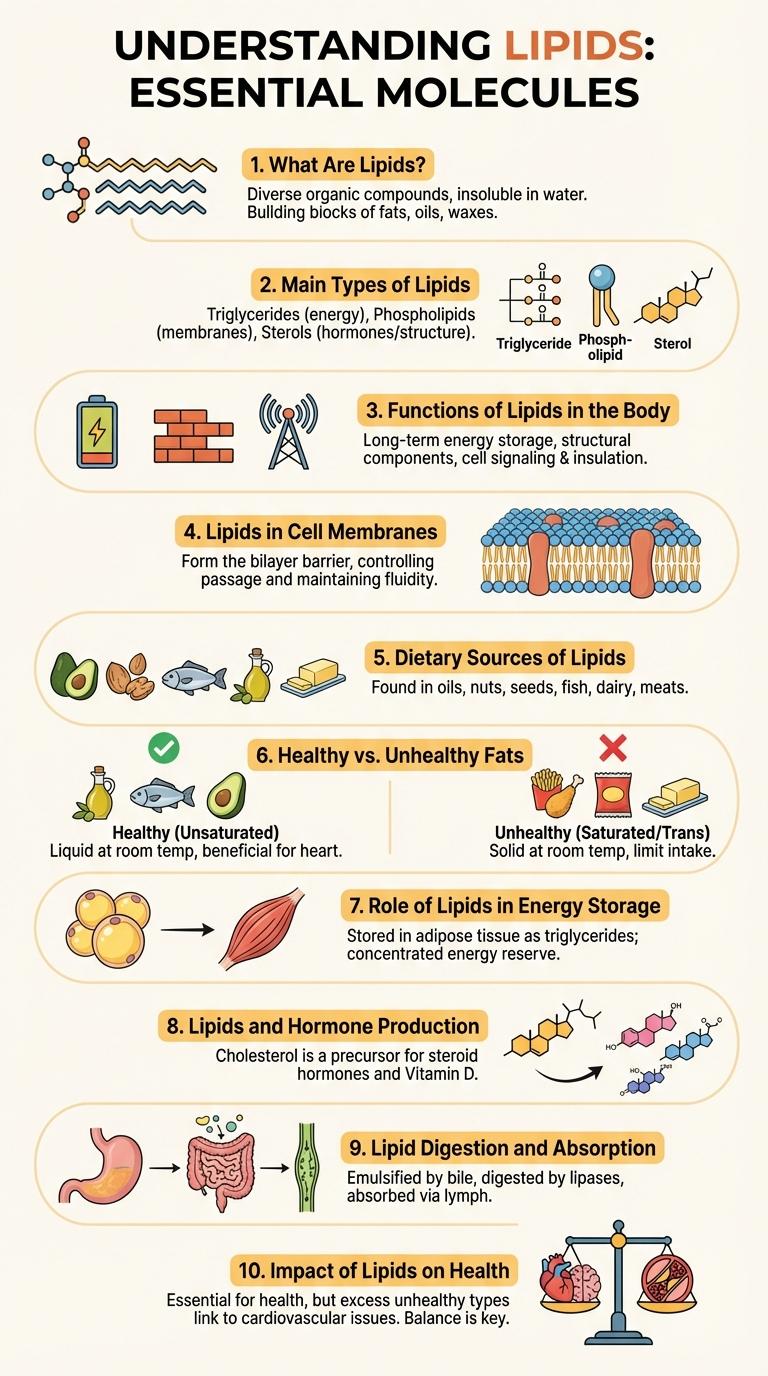
Lipids play a crucial role in the human body, serving as essential components of cell membranes and energy storage molecules. This infographic breaks down the types, functions, and health impacts of lipids to provide a clear understanding of their importance. Visual elements highlight the differences between saturated and unsaturated fats, along with tips for maintaining a balanced lipid intake.
What Are Lipids?
| What Are Lipids? | Key Information |
|---|---|
| Definition | Lipids are a diverse group of hydrophobic or amphipathic organic molecules essential for energy storage, cell membrane structure, and signaling. |
| Main Types | Fats, oils, phospholipids, steroids, and waxes |
| Functions | Energy storage, insulation, protection, cellular membrane composition, hormone production |
| Characteristics | Non-polar, insoluble in water, soluble in organic solvents like chloroform or ether |
| Sources | Animal fats, plant oils, dairy products, nuts, and seeds |
Main Types of Lipids
What are the main types of lipids? Lipids are a diverse group of molecules essential for energy storage, cellular structure, and signaling. The primary types include triglycerides, phospholipids, steroids, and waxes.
| Type of Lipid | Description |
|---|---|
| Triglycerides | Composed of glycerol and three fatty acids, they store energy efficiently in fat cells. |
| Phospholipids | Key components of cell membranes, containing two fatty acids and a phosphate group. |
| Steroids | Have a four-ring structure; cholesterol is a common example important for hormone production. |
| Waxes | Long-chain fatty acids linked to alcohols, providing protective coatings on surfaces like leaves and skin. |
Functions of Lipids in the Body
Lipids play a crucial role in storing energy, providing insulation, and protecting vital organs in the human body. They are essential components of cell membranes, maintaining structural integrity and regulating cellular processes. Lipids also act as signaling molecules, supporting hormonal functions and metabolic regulation.
Lipids in Cell Membranes
Lipids are fundamental components of cell membranes, providing structure and regulating permeability. The lipid bilayer forms the basis for membrane fluidity and cellular interactions.
Cell membranes contain various lipid types that contribute to their functions and properties.
- Phospholipids - Form the primary bilayer structure with hydrophilic heads and hydrophobic tails creating a selective barrier.
- Cholesterol - Modulates membrane fluidity and stability by inserting between phospholipids.
- Glycolipids - Participate in cell recognition and signal transduction on the membrane surface.
Dietary Sources of Lipids
Lipids are essential macronutrients that provide energy and support cell structure. Dietary sources of lipids include a variety of foods rich in fats and oils.
Common sources of lipids are animal products like butter, cheese, and fatty fish, as well as plant-based oils such as olive oil and avocado. Consuming a balance of saturated and unsaturated fats is important for maintaining heart health.
Healthy vs. Unhealthy Fats
Lipids are essential fats that play key roles in energy storage and cell function. Distinguishing between healthy and unhealthy fats is crucial for maintaining cardiovascular health and overall well-being.
Understanding the benefits and risks associated with different types of fats helps optimize diet choices and supports long-term health.
- Healthy Fats - Include monounsaturated and polyunsaturated fats found in olive oil, nuts, and fatty fish that support heart health.
- Unhealthy Fats - Trans fats and excessive saturated fats increase the risk of heart disease and should be limited in the diet.
- Omega-3 Fatty Acids - A subtype of polyunsaturated fats that reduces inflammation and supports brain function.
Role of Lipids in Energy Storage
Lipids are essential molecules that serve as long-term energy storage in living organisms. They store more energy per gram than carbohydrates or proteins, making them efficient energy reserves.
When the body requires energy, lipids are broken down to release fatty acids and glycerol. These components enter metabolic pathways to produce ATP, the cellular energy currency. Lipids also provide insulation and protect vital organs by serving as cushioning.
Lipids and Hormone Production
Lipids play a crucial role in hormone production by serving as the building blocks for steroid hormones such as cortisol, estrogen, and testosterone. These hormones regulate vital functions including metabolism, immune response, and reproductive processes.
Cholesterol, a key lipid, is essential in the synthesis of steroid hormones within endocrine glands like the adrenal cortex and gonads. Without adequate lipid levels, hormone production can be impaired, affecting overall health and homeostasis.
Lipid Digestion and Absorption
Lipids undergo digestion mainly in the small intestine, where bile salts emulsify fats into smaller droplets, enhancing enzyme action. Pancreatic lipase breaks down triglycerides into free fatty acids and monoglycerides. These molecules are absorbed by intestinal cells, reassembled into triglycerides, and transported via chylomicrons into the lymphatic system.