
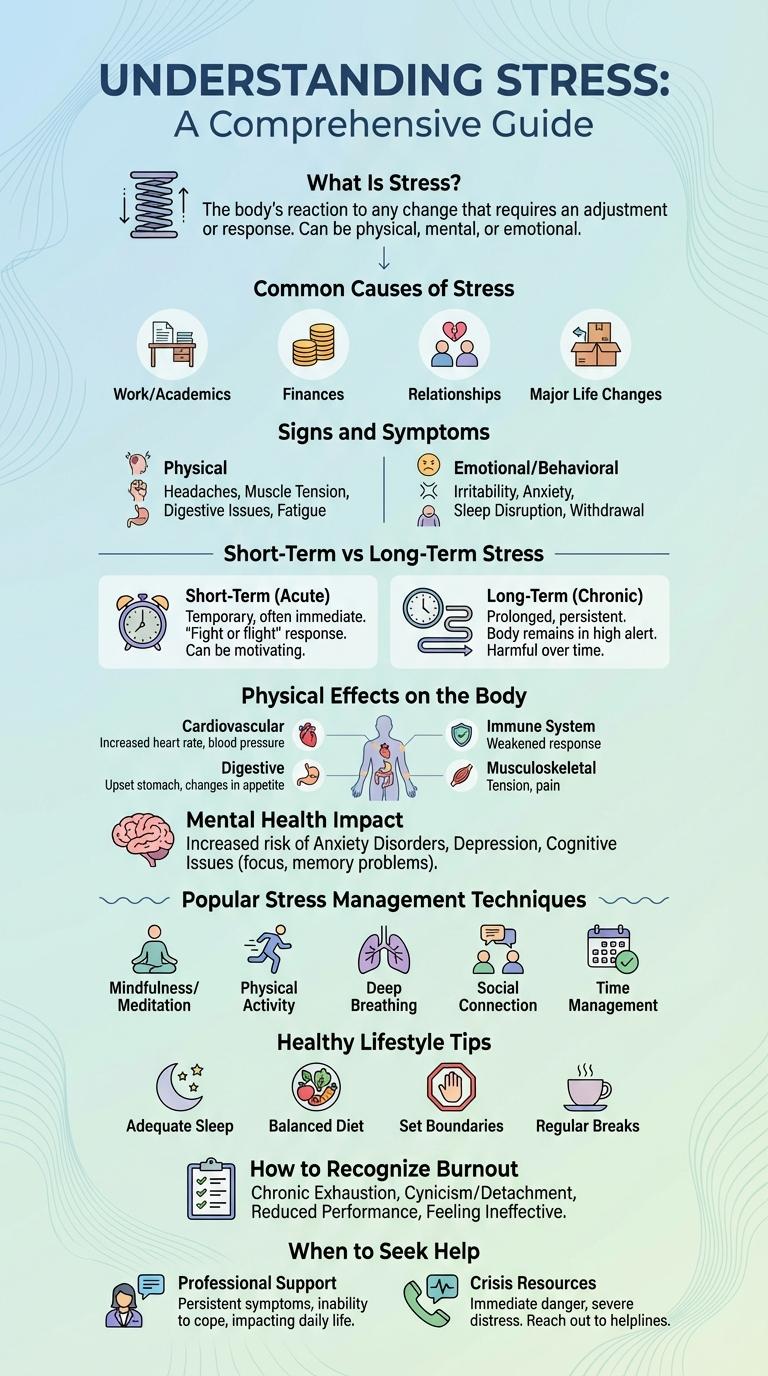
Stress impacts both mental and physical health by triggering the body's fight-or-flight response, leading to increased heart rate and cortisol levels. Recognizing common stressors and their effects helps individuals manage and reduce stress effectively. Infographics visually summarize these complex processes and offer practical strategies for maintaining well-being.
What Is Stress?
What is stress?
Stress is the body's natural response to any demand or challenge. It triggers physical and emotional reactions that prepare an individual to face or escape the situation.
Common Causes of Stress
Stress is a natural response to challenges and demands encountered in daily life. Understanding common causes of stress helps in managing its impact effectively.
Work pressure, financial difficulties, and relationship issues are among the top stress triggers. Health concerns and major life changes also contribute significantly to stress levels.
Signs and Symptoms
Stress can manifest through various physical and emotional signs that affect overall well-being. Recognizing these symptoms early helps in managing stress effectively.
- Headaches - Frequent headaches often indicate elevated stress levels impacting muscle tension.
- Fatigue - Chronic tiredness and low energy are common when the body is under prolonged stress.
- Irritability - Increased frustration and mood swings signal emotional strain caused by stress.
Short-Term vs Long-Term Stress
Stress impacts the body and mind differently depending on its duration. Short-term stress triggers the "fight or flight" response, providing a quick burst of energy and focus. Long-term stress, however, can lead to serious health issues like heart disease, anxiety, and weakened immunity.
Physical Effects on the Body
Stress triggers a cascade of physical reactions in the body, impacting multiple systems. These responses prepare the body to face challenges but can cause harm if prolonged.
Common physical effects include increased heart rate and elevated blood pressure, which strain the cardiovascular system. Muscle tension often results, leading to discomfort or pain. Chronic stress may disrupt digestive processes and weaken the immune response, making the body more vulnerable to illness.
Mental Health Impact
Stress significantly affects mental health by disrupting emotional balance and cognitive function. Understanding its impact helps in managing symptoms and promoting wellbeing.
- Increased Anxiety - Stress triggers the release of cortisol, heightening anxiety levels and causing persistent worry.
- Depression Risk - Chronic stress contributes to chemical imbalances in the brain, increasing susceptibility to depression.
- Impaired Memory - Elevated stress hormones negatively affect the hippocampus, reducing memory retention and recall.
Popular Stress Management Techniques
Stress affects mental and physical health, making effective management essential. Various techniques help reduce stress levels and improve overall well-being.
- Mindfulness Meditation - This practice helps individuals focus on the present moment, reducing anxiety and promoting relaxation.
- Physical Exercise - Regular activity releases endorphins, which act as natural mood lifters and stress reducers.
- Deep Breathing Exercises - Controlled breathing slows the heart rate and calms the nervous system during stressful situations.
- Progressive Muscle Relaxation - Systematically tensing and relaxing muscles aids in relieving physical tension caused by stress.
- Time Management - Prioritizing tasks and setting realistic goals can decrease feelings of overwhelm and improve productivity.
Implementing these stress management methods can significantly enhance mental clarity and emotional balance.
Healthy Lifestyle Tips
Managing stress effectively begins with adopting a healthy lifestyle that supports mental and physical well-being. Incorporate regular physical activity, balanced nutrition, and sufficient sleep to enhance your body's resilience against stress. Practicing mindfulness and maintaining social connections further contribute to reducing stress levels and promoting emotional health.
How to Recognize Burnout
| Signs of Burnout | Description |
|---|---|
| Emotional Exhaustion | Feeling drained, overwhelmed, and unable to cope with daily tasks |
| Reduced Performance | Difficulty concentrating, decreased productivity, and lack of motivation |
| Cynicism and Detachment | Negative attitude toward work and distancing from colleagues |
| Physical Symptoms | Frequent headaches, muscle pain, and disrupted sleep patterns |
| Changes in Behavior | Increased irritability, withdrawing from social activities, and neglecting responsibilities |