
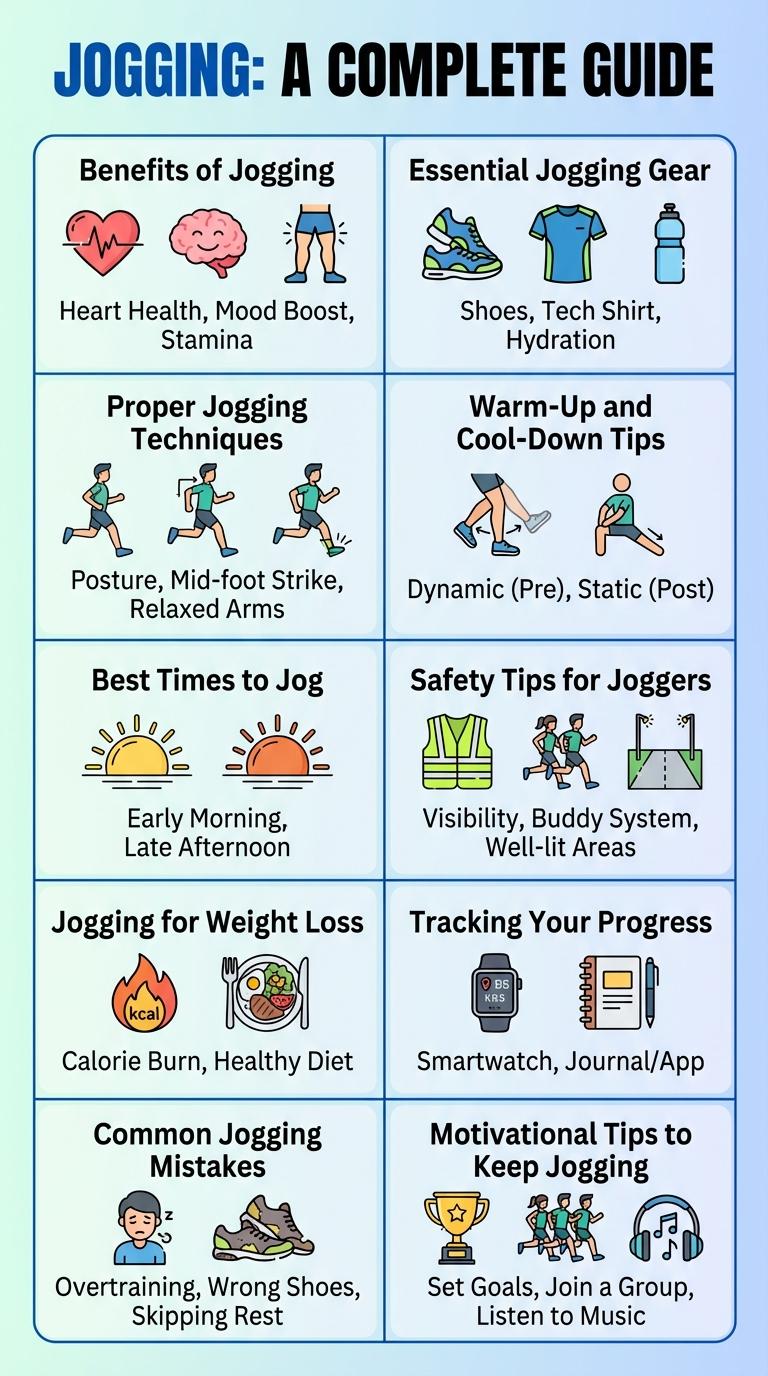
Jogging enhances cardiovascular health and boosts overall fitness by promoting endurance and muscle strength. It serves as an accessible form of exercise that can be easily adapted to various fitness levels and schedules. Visual data in this infographic highlights key benefits, proper techniques, and essential gear to maximize jogging efficiency.
Benefits of Jogging
| Benefit | Description |
|---|---|
| Cardiovascular Health | Improves heart function and reduces risk of heart disease. |
| Weight Management | Burns calories efficiently, aiding in weight loss and maintenance. |
| Mental Well-being | Releases endorphins that reduce stress and improve mood. |
| Bone Strength | Enhances bone density, lowering risk of osteoporosis. |
| Immune System Boost | Regular jogging enhances immune response to fight illness. |
Essential Jogging Gear
What are the essential gear items needed for jogging?
Proper jogging gear enhances comfort, safety, and performance during runs. Key items include supportive running shoes, moisture-wicking clothing, a water bottle, a fitness tracker, and reflective accessories for visibility.
| Gear Item | Importance |
| Running Shoes | Provides cushioning and support to prevent injuries. |
| Moisture-Wicking Clothing | Keeps the body dry and comfortable by drawing sweat away. |
| Water Bottle | Ensures hydration during jogging sessions. |
| Fitness Tracker | Monitors pace, distance, and heart rate for performance tracking. |
| Reflective Accessories | Enhances visibility during low-light conditions for safety. |
Proper Jogging Techniques
Proper jogging techniques enhance performance and reduce injury risks. Maintain an upright posture with relaxed shoulders and a slight forward lean. Land softly on the midfoot, keeping your strides short and your arms bent at 90 degrees for optimal efficiency.
Warm-Up and Cool-Down Tips
Proper warm-up and cool-down routines enhance jogging performance and reduce injury risks. Incorporating specific exercises targets key muscle groups for a safer and more effective workout.
- Dynamic Stretching Warm-Up - Engage in leg swings and lunges to increase blood flow and loosen muscles before jogging.
- Gradual Intensity Increase - Start jogging at a slow pace for 5 minutes to prepare your cardiovascular system and muscles.
- Post-Jog Static Stretching - Hold stretches focusing on calves, hamstrings, and quadriceps for 20-30 seconds to aid muscle recovery.
Best Times to Jog
Jogging at optimal times enhances physical performance and maximizes health benefits. Choosing the right time can improve energy levels and reduce injury risk.
- Morning Jogging - Jogging early boosts metabolism and kickstarts the day with increased energy.
- Afternoon Jogging - Muscle strength and endurance peak, making afternoon ideal for intense workouts.
- Evening Jogging - Jogging in the evening helps reduce stress and improves sleep quality.
Safety Tips for Joggers
Jogging is a popular form of exercise that improves cardiovascular health and boosts mental well-being. Ensuring safety while jogging reduces the risk of injuries and enhances the overall experience. Following key safety tips helps joggers stay protected and enjoy their workouts effectively.
| Safety Tip | Description |
|---|---|
| Wear Reflective Gear | Improves visibility to drivers during early morning or evening runs. |
| Stay Hydrated | Prevents dehydration and maintains energy levels throughout the jog. |
| Choose Safe Routes | Select well-lit, populated paths to enhance personal security. |
| Warm Up and Cool Down | Reduces muscle strain and lowers the chance of injury. |
| Listen to Your Body | Stop jogging if experiencing pain or discomfort to avoid exacerbating injuries. |
Jogging for Weight Loss
Jogging is an effective cardiovascular exercise that helps burn calories and promotes weight loss. Engaging in regular jogging sessions increases metabolic rate, aiding in fat reduction and improving overall body composition.
Consistent jogging combined with a balanced diet accelerates the weight loss process and enhances endurance. Tracking jogging duration and intensity optimizes fat burning and maximizes health benefits.
Tracking Your Progress
Tracking your jogging progress helps maintain motivation and measure improvements in endurance and speed. Using tools like GPS watches or smartphone apps can provide accurate data on distance and pace.
Consistently monitoring your performance lets you set achievable goals and adjust training intensity. Visual progress over time highlights achievements and encourages sustained commitment to jogging routines.
Common Jogging Mistakes
Jogging is an excellent form of cardiovascular exercise promoting overall health and endurance. Many beginners make common mistakes that can hinder progress and increase injury risk.
Incorrect footwear can lead to discomfort and foot injuries during jogging. Overtraining without proper rest causes muscle fatigue and burnout. Poor running posture often results in joint strain and reduced efficiency.