
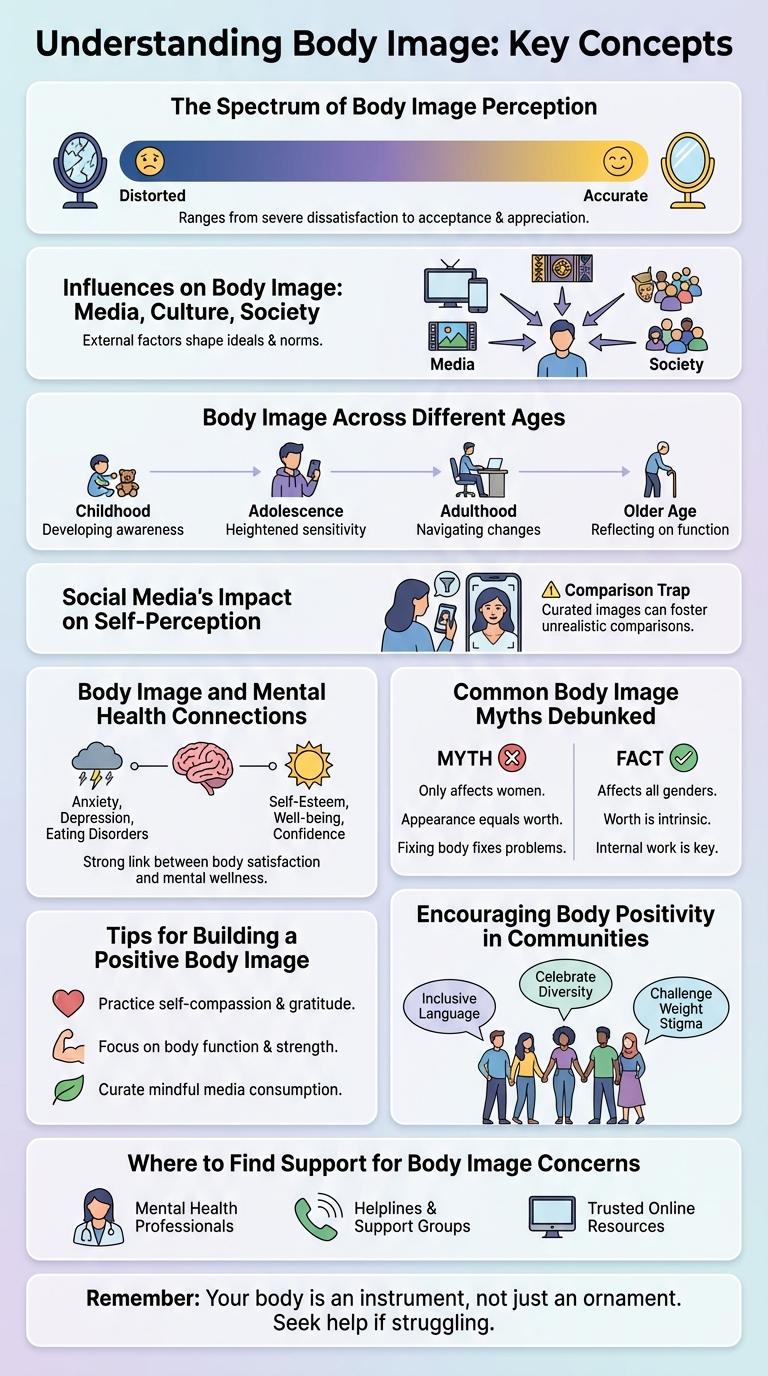
Body image significantly influences mental health and self-esteem, shaping how individuals perceive themselves. Visual representations like infographics effectively highlight key factors affecting body image and promote awareness. This infographic breaks down common misconceptions, societal pressures, and strategies for fostering a positive self-view.
Understanding Body Image: Key Concepts
Body image refers to how individuals perceive, think, and feel about their physical appearance. This perception can be influenced by cultural, social, and psychological factors, impacting self-esteem and mental health. Understanding body image involves recognizing the difference between realistic and idealized views of the body.
The Spectrum of Body Image Perception
Body image perception exists on a dynamic spectrum, reflecting how individuals view and feel about their physical appearance. This spectrum ranges from positive body acceptance to negative body dissatisfaction.
Positive body image involves appreciation and respect for one's body, fostering confidence and mental well-being. Neutral perception represents an objective and indifferent stance toward appearance, without significant emotional impact. Negative body image can lead to distress, lowered self-esteem, and harmful behaviors.
Influences on Body Image: Media, Culture, Society
Body image is significantly shaped by various external factors such as media, culture, and society. These influences collectively impact how individuals perceive their physical appearance and self-worth.
Media often portrays idealized body types, setting unrealistic standards that affect self-esteem and body satisfaction. Cultural norms define beauty standards that vary globally, influencing personal body image perceptions within different communities.
Body Image Across Different Ages
How does body image perception change at different life stages? Children often develop body awareness influenced by family and media, shaping early self-esteem. Teenagers experience heightened sensitivity to appearance due to peer pressure and social comparison.
In adulthood, body image concerns may center around health, fitness, and aging signs. Older adults often face challenges with body acceptance linked to physical changes and societal attitudes about aging.
Social Media's Impact on Self-Perception
Social media platforms shape how individuals perceive their bodies by constantly showcasing curated and idealized images. This exposure often creates unrealistic beauty standards that many users strive to meet.
Studies reveal that excessive social media use correlates with increased body dissatisfaction and lower self-esteem. Positive body image campaigns on social media can counteract these effects by promoting diversity and self-acceptance.
Body Image and Mental Health Connections
Body image significantly influences mental health, affecting emotional well-being and self-esteem. Negative body image can trigger or worsen psychological conditions such as anxiety and depression.
- Body Dissatisfaction - Persistent dissatisfaction with appearance often leads to low self-worth and increased vulnerability to mental health disorders.
- Social Comparison - Comparing oneself to unrealistic media standards can heighten feelings of inadequacy and stress.
- Positive Body Image - Cultivating a positive perception of one's body promotes resilience and emotional stability.
Improving body image through supportive environments and awareness fosters better mental health outcomes.
Common Body Image Myths Debunked
Body image myths often distort people's perceptions of themselves and others. Understanding these misconceptions can promote healthier self-esteem and body positivity.
- Myth: Thinness Equals Beauty - Beauty is diverse and not limited to any specific body size or shape.
- Myth: Only Women Struggle with Body Image - Body image concerns affect people of all genders.
- Myth: Body Image is Just About Appearance - It also involves emotional and psychological well-being.
- Myth: Social Media Reflects Real Life - Images are often edited and do not portray authentic bodies.
- Myth: Fitness Means Being Skinny - Health and fitness come in many forms, not just a slim figure.
Tips for Building a Positive Body Image
Building a positive body image starts with practicing self-acceptance and appreciating your unique features. Surround yourself with supportive people who uplift your confidence and avoid negative media influences. Regularly engage in activities that make you feel strong and healthy, reinforcing a positive connection with your body.
Encouraging Body Positivity in Communities
Promoting body positivity in communities fosters self-acceptance and mental well-being. It challenges unrealistic beauty standards and encourages diversity in body representation.
- Inclusive Programs - Community initiatives that celebrate all body types help reduce stigma and promote acceptance.
- Education Campaigns - Raising awareness about body diversity and media literacy supports healthier self-image among individuals.
- Support Groups - Safe spaces where people share experiences and encourage each other enhance confidence and resilience.