
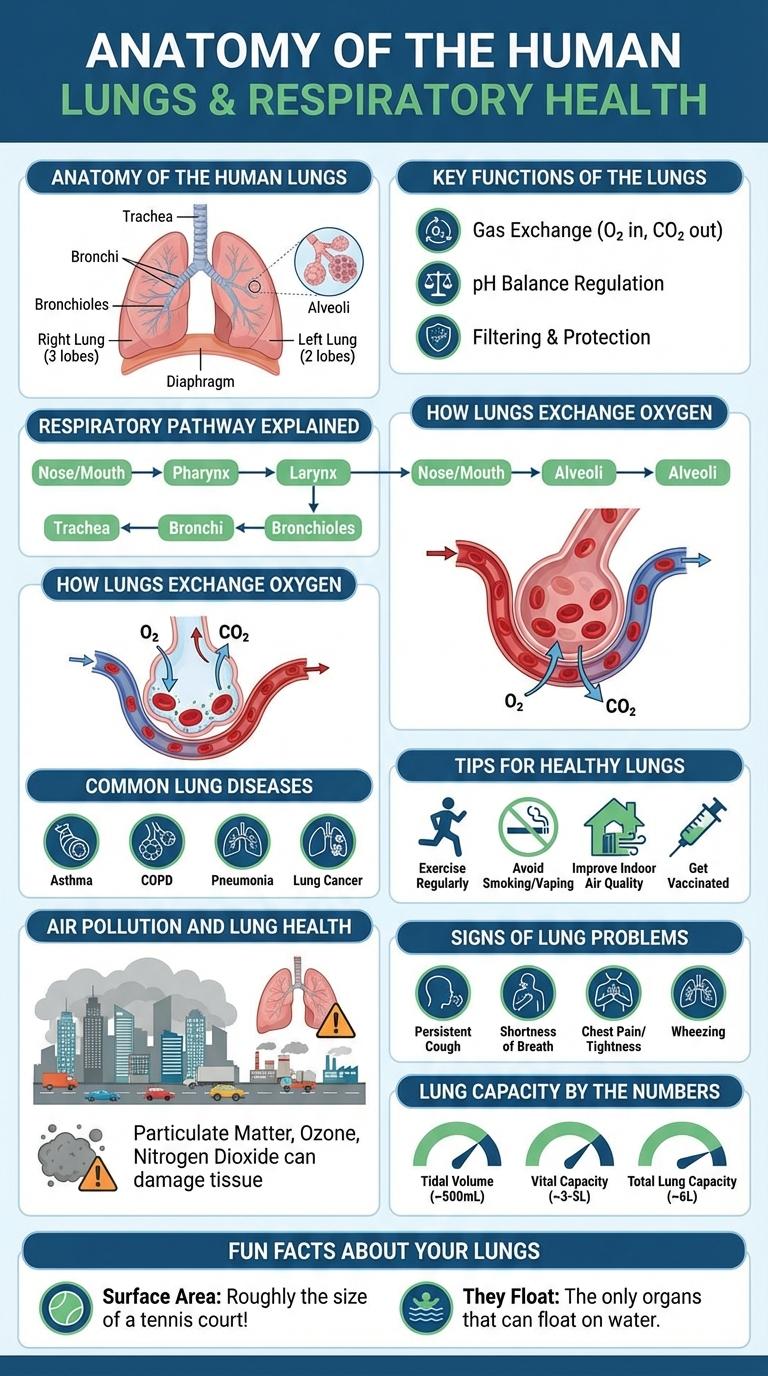
The infographic provides a detailed visualization of the lungs' anatomy, highlighting key components such as the bronchi, alveoli, and pleura. It explains the essential functions of the lungs in gas exchange, emphasizing oxygen intake and carbon dioxide removal. Visual cues also illustrate common respiratory conditions and tips for maintaining healthy lung function.
Anatomy of the Human Lungs
| Component | Description |
|---|---|
| Trachea | Main airway that branches into bronchi, conducting air to lungs |
| Bronchi | Two primary branches from the trachea entering each lung, subdividing into smaller bronchioles |
| Bronchioles | Small airway passages inside the lungs leading air to alveolar sacs |
| Alveoli | Microscopic air sacs where gas exchange occurs between air and blood |
| Lobes | Right lung has three lobes, left lung has two lobes, divided by fissures |
Key Functions of the Lungs
The lungs are essential organs responsible for gas exchange, allowing oxygen to enter the blood and carbon dioxide to be expelled. They regulate blood pH by controlling the balance of oxygen and carbon dioxide. The lungs also play a vital role in protecting the body from harmful airborne particles and pathogens through mucus production and cilia movement.
Respiratory Pathway Explained
The respiratory pathway begins when air enters the nose or mouth, passing through the pharynx and larynx into the trachea. The trachea splits into two bronchi, each leading to a lung, where further branching creates smaller bronchioles.
Air continues to travel through bronchioles until reaching alveoli, tiny sacs where gas exchange occurs. Oxygen enters the bloodstream, and carbon dioxide is expelled from the body through exhalation.
How Lungs Exchange Oxygen
The lungs play a crucial role in oxygen exchange, allowing oxygen to enter the bloodstream while removing carbon dioxide. Air travels through the bronchial tubes and reaches tiny air sacs called alveoli, where the exchange takes place.
Oxygen passes through the thin walls of the alveoli into surrounding capillaries and binds to red blood cells. Carbon dioxide, a waste product, moves from the blood into the alveoli to be exhaled, completing the respiratory cycle.
Common Lung Diseases
The lungs are vital organs responsible for oxygen exchange and removing carbon dioxide from the body. Common lung diseases can significantly impair respiratory function and overall health.
- Chronic Obstructive Pulmonary Disease (COPD) - A progressive lung disease that causes breathing difficulties due to airflow obstruction.
- Asthma - A chronic condition characterized by airway inflammation and bronchoconstriction leading to wheezing and shortness of breath.
- Pneumonia - An infection that inflames the air sacs in one or both lungs, potentially filling them with fluid or pus.
- Lung Cancer - Abnormal cell growth in lung tissues that can hinder breathing and spread to other body parts.
- Pulmonary Fibrosis - A condition involving scarring of lung tissue that reduces elasticity and oxygen absorption efficiency.
Tips for Healthy Lungs
Maintaining healthy lungs is essential for overall well-being and optimal respiratory function. Simple lifestyle choices can significantly improve lung health and prevent respiratory diseases.
- Avoid Smoking - Smoking damages the airways and lung tissue, increasing the risk of lung cancer and chronic obstructive pulmonary disease (COPD).
- Exercise Regularly - Physical activity strengthens lung capacity and improves oxygen exchange efficiency.
- Reduce Exposure to Pollutants - Limiting contact with outdoor pollution, dust, and chemical fumes helps protect lung tissue from harmful irritants.
Air Pollution and Lung Health
Air pollution significantly impacts lung health by introducing harmful particles and gases into the respiratory system. Understanding the connection between polluted air and lung diseases is vital for prevention and treatment.
- Fine Particulate Matter (PM2.5) - Tiny particles penetrate deep into the lungs, causing inflammation and worsening respiratory conditions.
- Ozone Exposure - Ground-level ozone damages lung tissue and reduces lung function over time.
- Chronic Respiratory Diseases - Air pollution increases the risk of asthma, chronic bronchitis, and lung cancer.
Reducing air pollution improves overall lung function and decreases the incidence of respiratory illnesses.
Signs of Lung Problems
How can you recognize the early signs of lung problems?
Persistent coughing and shortness of breath are common indicators of lung issues. Other symptoms may include wheezing, chest pain, and unexplained fatigue.
What does a chronic cough suggest about lung health?
A cough that lasts more than eight weeks can signal chronic bronchitis or other lung diseases. It is important to consult a healthcare provider if this symptom persists.
Why is shortness of breath a serious warning sign?
Difficulty breathing may indicate conditions like asthma, pneumonia, or COPD. Early detection improves treatment outcomes and lung function preservation.
Can wheezing be a sign of lung disease?
Wheezing often reflects airway obstruction or inflammation. Conditions such as asthma or infections commonly cause this symptom.
How does chest pain relate to lung problems?
Chest pain associated with breathing can be a sign of pleurisy, lung infections, or pulmonary embolism. Timely medical evaluation is crucial to diagnose these conditions.
Lung Capacity by the Numbers
The human lungs are vital respiratory organs responsible for oxygen exchange essential for survival. Lung capacity measures the maximum amount of air the lungs can hold during a deep breath.
Average total lung capacity for adults is about 6 liters. Vital capacity, the volume of air exhaled after a deep inhalation, typically ranges from 3.5 to 5 liters. Lung capacity varies by age, sex, body size, and health conditions.