
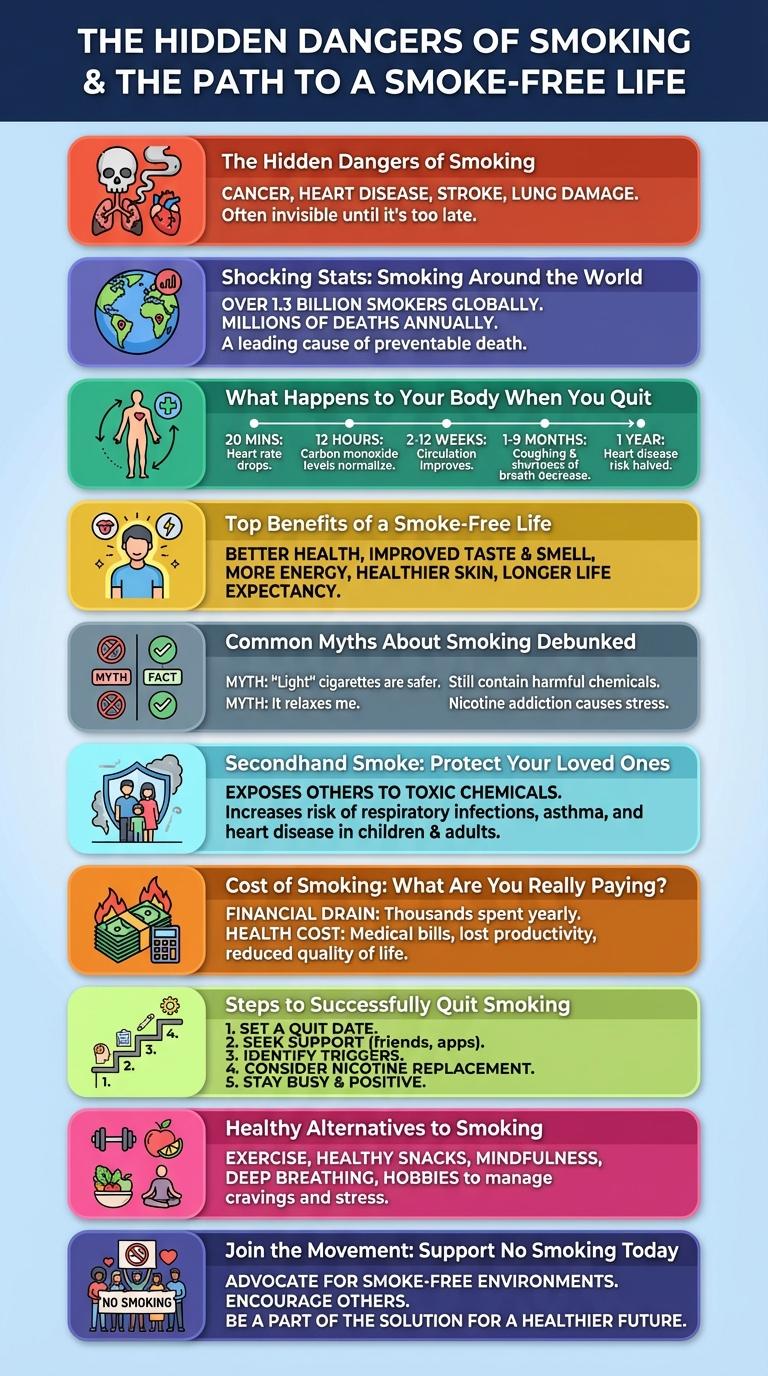
Smoking causes serious health risks, including lung cancer, heart disease, and respiratory problems. Quitting smoking improves overall health, reduces the risk of chronic illnesses, and increases life expectancy. This infographic highlights key statistics and benefits associated with smoking cessation.
The Hidden Dangers of Smoking
| Hidden Danger | Impact |
|---|---|
| Carbon Monoxide Exposure | Reduces oxygen in blood, causing heart stress and shortness of breath |
| Toxic Chemicals | Contains over 7,000 chemicals, 70 of which are carcinogenic |
| Chronic Inflammation | Leads to lung diseases, including COPD and chronic bronchitis |
| Immune System Suppression | Increases vulnerability to infections and slows healing processes |
| Secondhand Smoke Risks | Causes respiratory issues and increased cancer risk in non-smokers |
Shocking Stats: Smoking Around the World
Smoking remains a leading cause of preventable death worldwide, with over 1.3 billion tobacco users globally. Approximately 8 million people die each year due to tobacco-related illnesses, including 1.2 million non-smokers exposed to secondhand smoke. The highest smoking rates are found in Eastern Europe and parts of Asia, where nearly 40% of adults smoke daily.
What Happens to Your Body When You Quit
Quitting smoking triggers rapid and beneficial changes throughout your body. These improvements boost overall health and reduce the risk of serious diseases.
- 20 Minutes - Blood pressure and pulse rate return to near normal levels shortly after quitting.
- 12 Hours - Carbon monoxide levels in the blood drop to normal, improving oxygen circulation.
- 1 Week - Lung function begins to improve as inflammation decreases and breathing becomes easier.
- 1 Month - Circulation continues to improve, making physical activities easier and reducing fatigue.
- 1 Year - Risk of heart disease is reduced by half compared to a smoker's risk.
Quitting smoking significantly enhances life expectancy and quality of life over time.
Top Benefits of a Smoke-Free Life
Living a smoke-free life significantly improves overall health and well-being. Quitting smoking reduces the risk of numerous diseases and enhances life quality.
- Improved Lung Function - Lung capacity and breathing ease increase within weeks of quitting smoking.
- Lower Cancer Risk - The chance of developing lung, throat, and mouth cancers decreases substantially over time.
- Better Heart Health - Stopping smoking reduces blood pressure and improves circulation, lowering heart disease risk.
Common Myths About Smoking Debunked
Smoking remains a leading cause of preventable diseases worldwide. Many misconceptions about smoking continue to influence people's habits and health choices.
Myth 1: "Light cigarettes are safer." In reality, light cigarettes expose smokers to harmful toxins just like regular cigarettes. Myth 2: "Smoking helps reduce stress." Evidence shows smoking increases anxiety and long-term health risks. Myth 3: "Only heavy smokers suffer health issues." Even occasional smoking significantly raises the risk of heart disease and lung problems.
Secondhand Smoke: Protect Your Loved Ones
Secondhand smoke contains harmful chemicals that can cause serious health problems in non-smokers. Exposure increases the risk of respiratory infections, heart disease, and lung cancer.
Protect your loved ones by maintaining a smoke-free environment at home and in enclosed spaces. Encourage smokers to quit or smoke outdoors to reduce secondhand smoke exposure.
Cost of Smoking: What Are You Really Paying?
Smoking imposes a significant financial burden on individuals, with the average smoker spending over $2,000 annually on cigarettes. Healthcare costs related to smoking-related illnesses contribute billions of dollars each year to national healthcare systems. Lost productivity due to smoking-related diseases further amplifies the economic impact on both individuals and society.
Steps to Successfully Quit Smoking
Quitting smoking significantly improves health and reduces the risk of chronic diseases. Following clear steps increases the chances of successfully quitting smoking for good.
- Set a Quit Date - Choose a specific day within the next two weeks to stop smoking completely and prepare mentally.
- Identify Triggers - Recognize situations, emotions, or habits that encourage smoking and develop strategies to avoid them.
- Seek Support - Use support groups, counseling, or quitlines to gain encouragement and accountability during the quitting process.
Healthy Alternatives to Smoking
Looking for healthy alternatives to smoking? Quitting smoking can improve your health and wellbeing significantly. Replacing cigarettes with positive habits helps maintain motivation and reduces cravings.
| Alternative | Benefit |
|---|---|
| Exercise | Boosts mood and reduces stress, enhancing lung function |
| Nicotine Replacement Therapy | Controls withdrawal symptoms and eases quitting process |
| Healthy Snacks | Diverts oral fixation and supports nutrition |
| Mindfulness & Meditation | Improves focus and reduces anxiety linked to quitting |
| Social Support Groups | Offers motivation and accountability during cessation |