
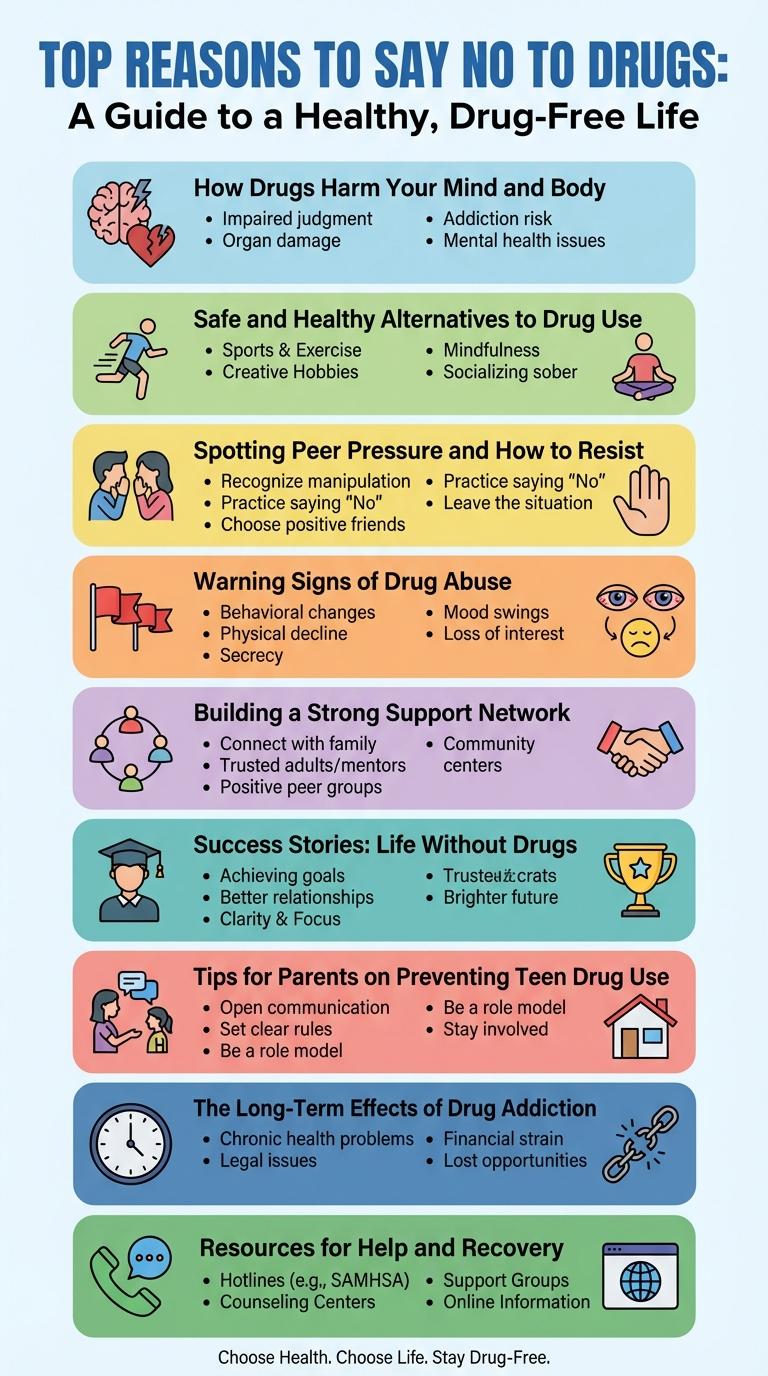
Understanding the dangers of drug use is crucial for maintaining a healthy lifestyle. Visual tools like infographics simplify complex information about the risks and prevention methods associated with drug abuse. This infographic highlights effective strategies to avoid drugs and promotes awareness for making safer choices.
Top Reasons to Say No to Drugs
Choosing a drug-free lifestyle promotes better health and personal success. Understanding the key reasons to avoid drugs can empower positive decisions.
- Protect Your Health - Avoiding drugs reduces risks of chronic diseases and mental health disorders.
- Enhance Mental Clarity - Staying drug-free supports better concentration and emotional stability.
- Improve Relationships - Sobriety fosters trust and stronger connections with family and friends.
How Drugs Harm Your Mind and Body
Drugs can significantly impair both your mental and physical health. Understanding the dangers helps you make informed decisions to protect yourself.
Drug use disrupts brain function, leading to memory loss, impaired judgment, and mental health disorders such as anxiety and depression. Physically, drugs can damage vital organs like the heart, liver, and lungs. Long-term use increases the risk of chronic diseases, addiction, and even death.
Safe and Healthy Alternatives to Drug Use
Choosing safe and healthy alternatives to drug use promotes both physical and mental well-being. Engaging in activities like exercise, hobbies, and social connections helps reduce the urge to use drugs.
Regular physical activity releases endorphins, naturally boosting mood and reducing stress. Pursuing creative outlets such as art or music provides fulfilling ways to express emotions.
Spotting Peer Pressure and How to Resist
| Spotting Peer Pressure | How to Resist |
|---|---|
| Feeling pressured to fit in or be accepted by a group. | Use firm, clear statements like "No thanks, I'm not interested." |
| Friends repeatedly offering or encouraging drug use. | Suggest alternative fun activities that don't involve drugs. |
| Feeling anxious or uncomfortable when drugs are mentioned. | Walk away from situations where drugs are present. |
| Observing friends' risky behavior related to drug use. | Build confidence by practicing refusal skills with trusted adults. |
| Hearing statements like "Everyone is doing it." | Remember personal goals and health benefits of staying drug-free. |
Warning Signs of Drug Abuse
Recognizing the warning signs of drug abuse is crucial for early intervention and prevention. Awareness helps individuals seek help before addiction develops.
- Changes in Behavior - Noticeable shifts in mood, energy, or social interactions can indicate drug use.
- Physical Symptoms - Unexplained weight loss, bloodshot eyes, or poor hygiene often accompany substance abuse.
- Neglecting Responsibilities - Missing work, school, or family commitments may signal drug dependence.
Building a Strong Support Network
Building a strong support network is essential for avoiding drug use. Surrounding yourself with positive influences encourages healthy choices and resilience.
Trusted friends, family members, and mentors provide guidance and emotional support during challenging times. Engaging in community groups or activities fosters a sense of belonging and accountability.
Success Stories: Life Without Drugs
Success stories of individuals living drug-free inspire hope and resilience. Personal journeys highlight the transformative power of determination and support networks. Embracing a drug-free lifestyle leads to improved health, stronger relationships, and renewed opportunities.
Tips for Parents on Preventing Teen Drug Use
Preventing teen drug use is crucial for ensuring healthy development and long-term well-being. Parents play a key role in guiding and supporting their children to make safe choices.
- Open Communication - Encourage honest conversations about the risks and consequences of drugs.
- Set Clear Expectations - Establish firm rules and consistent consequences regarding drug use.
- Monitor Activities - Be aware of your teen's social circle, whereabouts, and daily routines.
- Promote Healthy Habits - Support involvement in sports, hobbies, and positive social groups.
- Lead by Example - Model responsible behavior and avoid substance abuse at home.
Active parental involvement and positive reinforcement significantly reduce the likelihood of teen drug experimentation.
The Long-Term Effects of Drug Addiction
Drug addiction causes severe long-term health problems including brain damage, heart disease, and liver failure. Persistent drug use can lead to cognitive decline, emotional instability, and increased risk of mental illnesses like depression and anxiety. Avoiding drugs protects overall health, improving life expectancy and quality of life.