
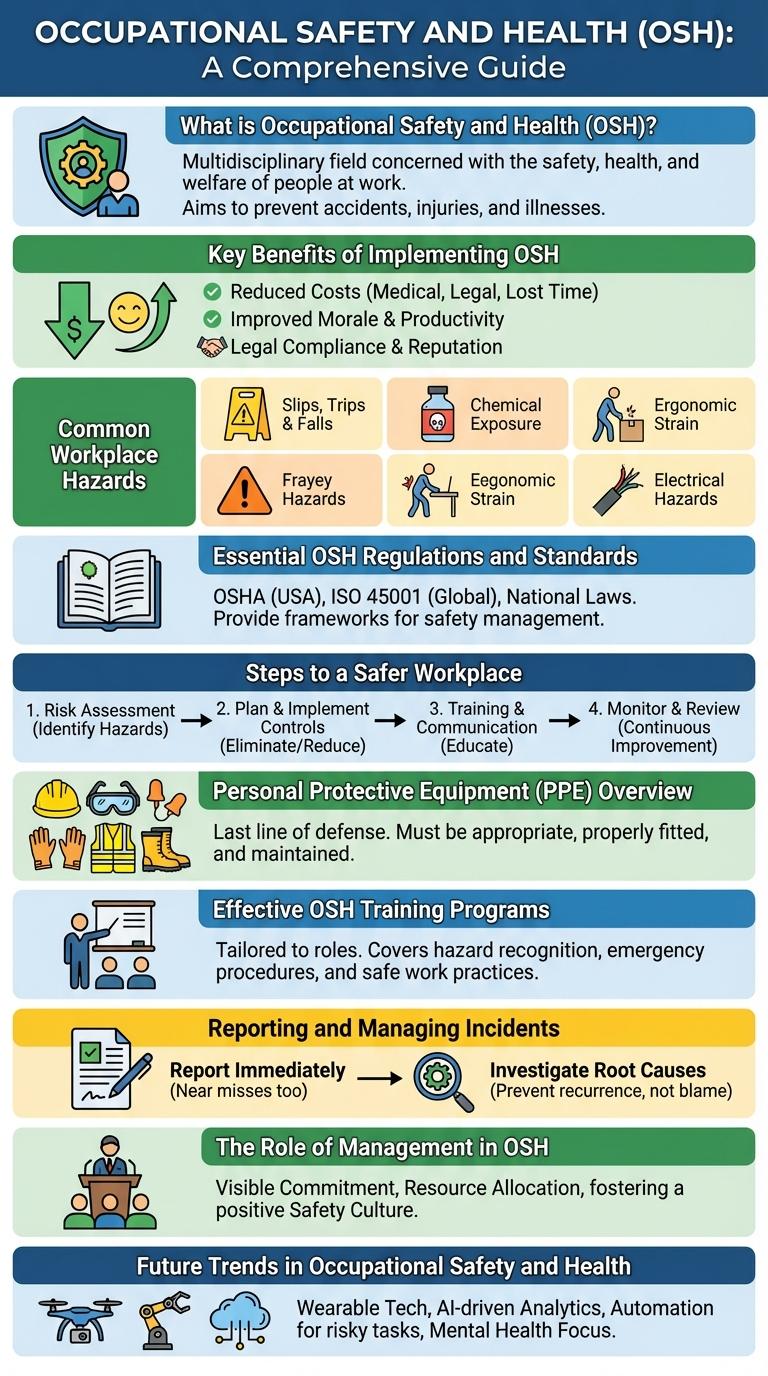
Occupational Safety and Health (OSH) plays a vital role in protecting workers from workplace hazards and ensuring a safe environment. Infographics efficiently communicate key OSH principles, statistics, and best practices in a visually engaging format. This approach helps increase awareness and promotes a culture of safety across various industries.
What is Occupational Safety and Health (OSH)?
| Occupational Safety and Health (OSH) | Definition |
|---|---|
| Purpose | Ensures safety, health, and welfare of employees at workplaces |
| Key Focus | Prevention of workplace injuries, illnesses, and accidents |
| Scope | Includes physical, chemical, biological, and psychosocial hazards |
| Regulations | Guided by local laws and international standards like ILO and OSHA |
| Benefits | Improved employee well-being, productivity, and reduced costs |
Key Benefits of Implementing OSH
Occupational Safety and Health (OSH) programs promote safer work environments, reducing the risk of accidents and injuries. Organizations benefit from improved employee well-being and increased operational efficiency.
- Reduced Workplace Accidents - Implementing OSH standards minimizes hazards and prevents injuries, enhancing overall safety.
- Increased Employee Productivity - Safe work conditions boost morale and reduce downtime due to illness or injury.
- Compliance with Legal Regulations - Adhering to OSH policies ensures organizations comply with national and international safety laws.
Common Workplace Hazards
Occupational Safety and Health (OSH) aims to identify and mitigate common workplace hazards to ensure employee safety. Recognizing these risks helps prevent accidents and promotes a healthy work environment.
- Slips, Trips, and Falls - These incidents are among the most frequent workplace accidents caused by wet floors, uneven surfaces, or poor lighting.
- Chemical Exposure - Hazardous substances can cause respiratory issues, skin irritation, or long-term health problems if not properly handled.
- Ergonomic Hazards - Poor workstation design can lead to musculoskeletal disorders and repetitive strain injuries.
- Electrical Hazards - Faulty wiring or improper equipment use may result in shocks, burns, or fires.
- Noise Exposure - Prolonged loud noise can cause hearing loss and increase stress levels among employees.
Essential OSH Regulations and Standards
Occupational Safety and Health (OSH) regulations establish mandatory guidelines to protect workers' safety and well-being across industries. Key standards include OSHA's General Industry Standards, the Hazard Communication Standard, and the Control of Hazardous Energy (Lockout/Tagout) protocols. Compliance with these regulations reduces workplace accidents, ensures legal adherence, and promotes a culture of safety.
Steps to a Safer Workplace
Creating a safer workplace involves identifying potential hazards and assessing risks systematically. Implementing effective safety protocols and providing regular training ensures employees are well-prepared to handle emergencies. Continuous monitoring and improvement of occupational safety practices help maintain a secure work environment.
Personal Protective Equipment (PPE) Overview
Personal Protective Equipment (PPE) is essential for minimizing exposure to workplace hazards that can cause injuries or illnesses. Common types of PPE include gloves, helmets, eye protection, and respiratory devices.
Choosing the right PPE depends on the specific risks present in the work environment, such as chemical, biological, or physical hazards. Proper training and maintenance of PPE are crucial to ensure maximum effectiveness and worker safety.
Effective OSH Training Programs
Effective Occupational Safety and Health (OSH) training programs are essential for reducing workplace accidents and promoting a safe environment. These programs enhance employee knowledge and encourage proactive safety behaviors.
- Customized Content - Tailoring training materials to specific job roles increases relevance and retention.
- Interactive Learning - Incorporating hands-on exercises and simulations improves engagement and skill acquisition.
- Regular Updates - Frequent training refreshers ensure compliance with evolving safety standards and regulations.
- Management Involvement - Active support from leadership fosters a culture of safety and accountability.
- Evaluation and Feedback - Continuous assessment helps identify knowledge gaps and training effectiveness.
Integrating these elements creates comprehensive OSH training programs that significantly elevate workplace safety performance.
Reporting and Managing Incidents
Occupational Safety and Health (OSH) emphasizes the importance of timely reporting and effective management of workplace incidents. Proper incident handling ensures safer environments and compliance with regulations.
Employees must report incidents immediately to supervisors or through designated reporting systems. Accurate documentation of incidents helps identify risks and prevent future occurrences. Management should investigate incidents promptly and implement corrective actions to maintain a safe workplace.
The Role of Management in OSH
Effective management plays a crucial role in Occupational Safety and Health (OSH) by establishing clear policies and fostering a safety-oriented culture. Leadership commitment directly influences workplace safety standards and employee well-being.
Managers are responsible for risk assessment, resource allocation, and ensuring compliance with safety regulations. Proactive involvement in OSH leads to reduced accidents and improved organizational performance.