
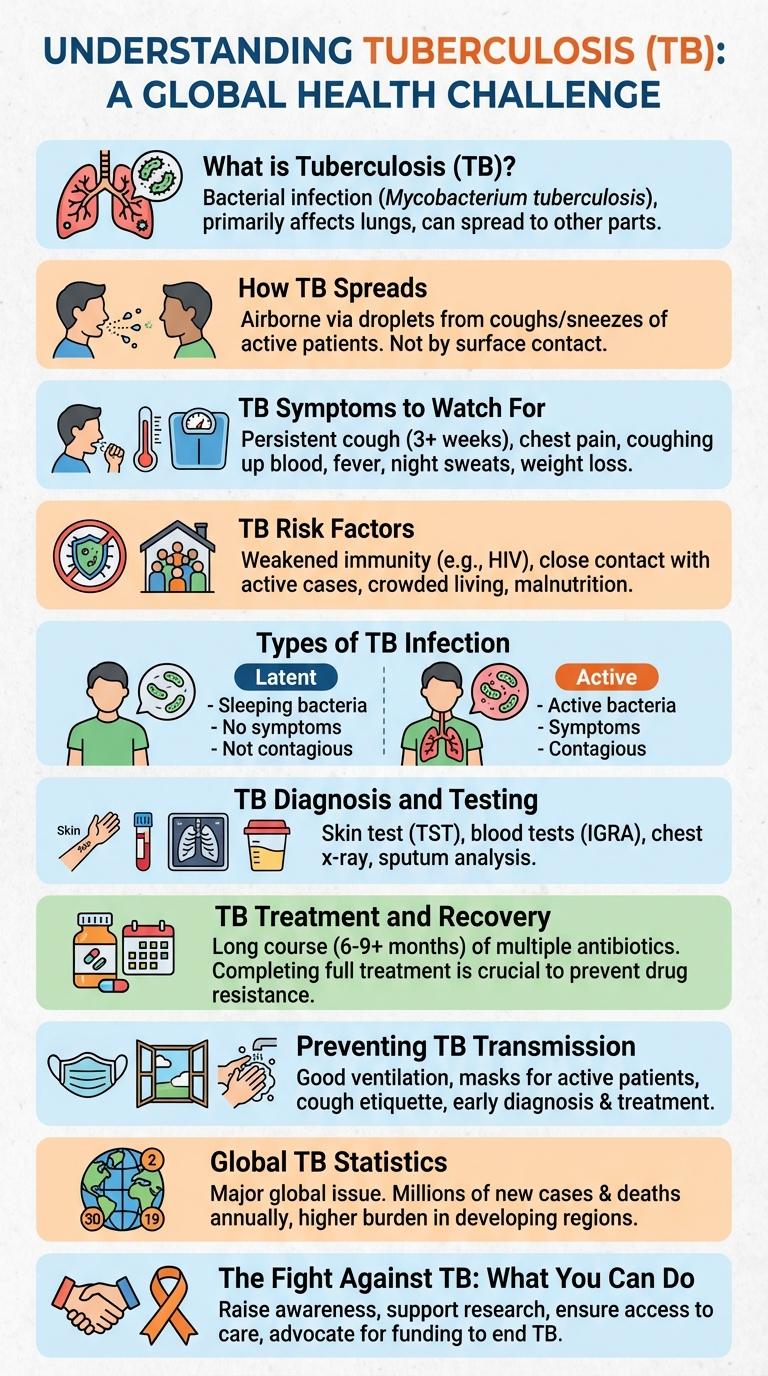
Tuberculosis (TB) remains a critical global health challenge, affecting millions each year. Understanding the transmission, symptoms, and prevention methods is essential for controlling the spread of this infectious disease. This infographic highlights key facts and statistics to raise awareness and promote effective TB management.
What is Tuberculosis (TB)?
Tuberculosis (TB) is a contagious bacterial infection caused by Mycobacterium tuberculosis. It primarily affects the lungs but can impact other parts of the body.
TB spreads through airborne droplets when an infected person coughs or sneezes. Early diagnosis and treatment are crucial to prevent serious health complications and transmission.
How TB Spreads
Tuberculosis (TB) spreads through airborne droplets when an infected person coughs, sneezes, or speaks. These droplets containing Mycobacterium tuberculosis bacteria can be inhaled by others, leading to new infections. Close and prolonged contact with an infected individual increases the risk of transmission.
TB Symptoms to Watch For
| TB Symptom | Description |
|---|---|
| Persistent Cough | Cough lasting more than 3 weeks, sometimes with blood or mucus |
| Chest Pain | Discomfort or pain in the chest when breathing or coughing |
| Unexplained Weight Loss | Sudden drop in body weight without dieting or increased exercise |
| Night Sweats | Excessive sweating during sleep, often soaking clothes or bedding |
| Fatigue | Persistent tiredness and lack of energy despite rest |
TB Risk Factors
Tuberculosis (TB) is a contagious disease caused by the bacteria Mycobacterium tuberculosis, affecting the lungs and other organs. Various risk factors increase the likelihood of developing active TB from latent infection.
Key TB risk factors include weakened immune systems, close contact with TB patients, and living in crowded or poorly ventilated environments. Other risks involve HIV infection, malnutrition, and substance abuse, which impair the body's ability to fight the bacteria.
Types of TB Infection
Tuberculosis (TB) infection occurs in different forms, each affecting the body uniquely. Understanding the types of TB infection is crucial for diagnosis and treatment.
- Latent TB Infection - The bacteria remain inactive in the body without causing symptoms or spreading to others.
- Active TB Disease - The bacteria multiply and cause symptoms such as coughing, fever, and weight loss, making the person contagious.
- Extrapulmonary TB - The infection spreads outside the lungs to organs like the lymph nodes, bones, or brain, causing localized complications.
TB Diagnosis and Testing
Tuberculosis (TB) diagnosis relies on a combination of clinical evaluation, imaging, and laboratory tests to accurately detect the infection. Early and precise TB testing is vital for effective treatment and controlling the spread of the disease.
- Sputum Smear Microscopy - Detects TB bacteria by examining sputum samples under a microscope for acid-fast bacilli.
- Chest X-Ray - Identifies lung abnormalities consistent with TB infection and monitors treatment progress.
- GeneXpert MTB/RIF Test - Molecular test that rapidly detects TB DNA and rifampicin resistance within hours.
- Tuberculin Skin Test (TST) - Measures immune response to TB antigens to screen for latent TB infection.
- Interferon-Gamma Release Assays (IGRAs) - Blood tests that assess immune activity against TB-specific proteins, useful in latent TB diagnosis.
TB Treatment and Recovery
What are the key steps in tuberculosis (TB) treatment? TB treatment involves a strict regimen of multiple antibiotics taken daily for at least six months. Completing the full course ensures the elimination of Mycobacterium tuberculosis and prevents drug resistance.
How does TB treatment affect recovery time? Effective TB therapy typically leads to symptom improvement within two to three weeks. Full recovery requires adherence to the treatment plan and follow-up medical evaluations to confirm bacteriological cure.
What drugs are commonly used in TB treatment? The primary medications include isoniazid, rifampicin, ethambutol, and pyrazinamide. These drugs target different bacterial pathways to maximize efficacy and reduce the risk of resistance.
Why is treatment adherence critical for TB recovery? Skipping doses can lead to incomplete bacterial eradication and multidrug-resistant TB strains. Patient education and support systems improve adherence and treatment success rates.
How is TB recovery monitored during treatment? Regular sputum tests, chest X-rays, and clinical assessments track progress. Monitoring ensures timely intervention if complications or drug resistance arise.
Preventing TB Transmission
Tuberculosis (TB) is a contagious bacterial infection primarily affecting the lungs. Preventing TB transmission is crucial to controlling its spread within communities.
TB spreads through airborne droplets when an infected person coughs or sneezes. Wearing masks, ensuring proper ventilation, and early diagnosis significantly reduce transmission risks. Vaccination with the BCG vaccine also helps protect against severe forms of TB, especially in children.
Global TB Statistics
Tuberculosis (TB) remains a major global health challenge affecting millions worldwide. Understanding key statistics helps in tracking progress and guiding treatment efforts.
- 10 million cases globally - Approximately 10 million people developed TB in 2022, reflecting the ongoing spread of the disease.
- 1.6 million deaths annually - TB caused an estimated 1.6 million deaths in 2022, making it one of the top infectious killers worldwide.
- High burden in Asia and Africa - Over 85% of TB cases occur in the WHO South-East Asia, Africa, and Western Pacific regions.
Efforts to expand diagnosis and treatment access remain critical to reducing the global TB burden.