
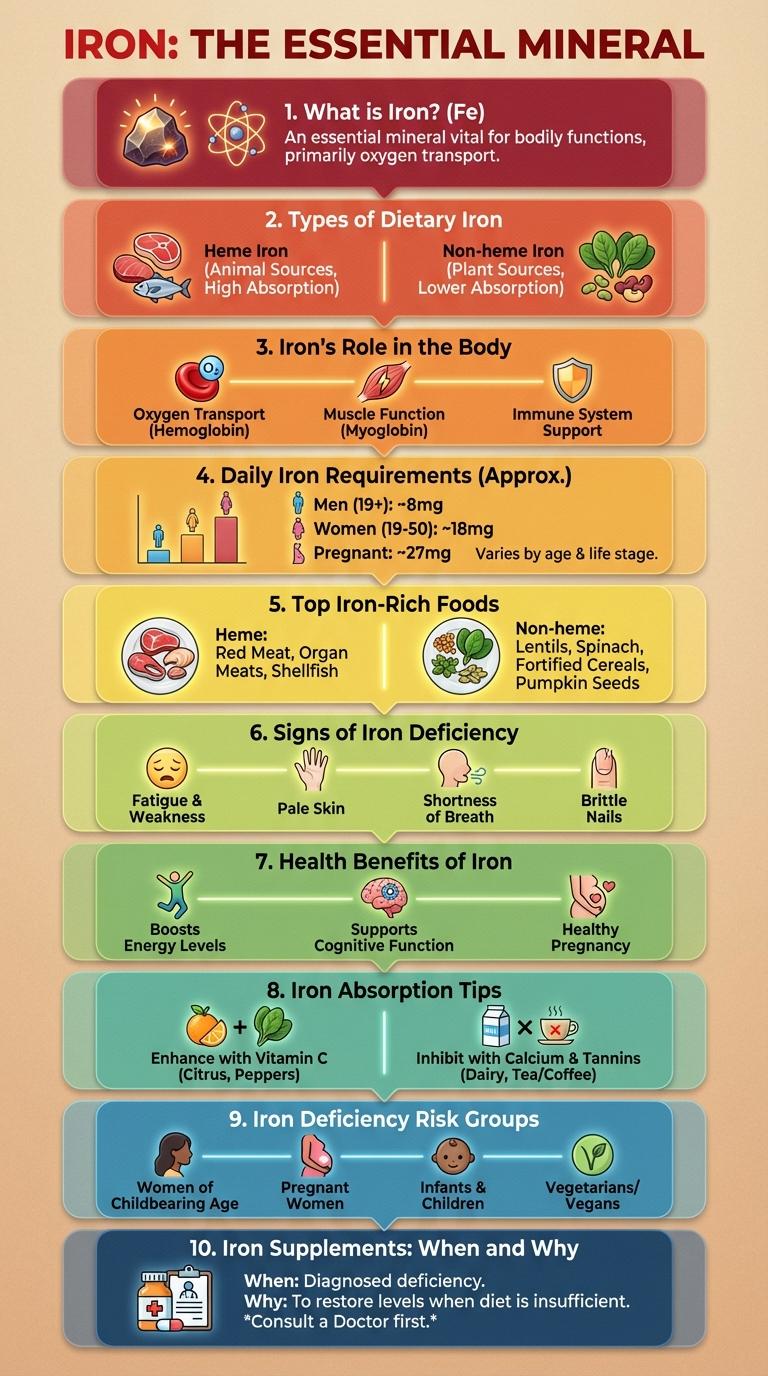
Iron is a vital mineral essential for producing hemoglobin, which transports oxygen in the blood. It supports energy metabolism, immune function, and cognitive development. Deficiency in iron can lead to anemia, causing fatigue and weakened immunity.
What is Iron?
Iron is a chemical element with the symbol Fe and atomic number 26. It is a metal known for its strength and magnetic properties, essential for various industrial applications.
- Abundance - Iron is the fourth most abundant element in the Earth's crust.
- Biological Role - Iron is vital for the formation of hemoglobin in red blood cells, aiding oxygen transport.
- Industrial Use - It is a primary component in steel manufacturing, crucial for construction and machinery.
Types of Dietary Iron
Iron is an essential mineral vital for oxygen transport and energy production in the body. Dietary iron exists primarily in two forms: heme and non-heme iron.
Heme iron is found in animal-based foods like red meat, poultry, and fish, offering high bioavailability. Non-heme iron, present in plant-based foods such as beans, spinach, and fortified cereals, has lower absorption rates but can be enhanced with vitamin C intake.
Iron's Role in the Body
What essential functions does iron perform in the human body?
Iron is crucial for producing hemoglobin, a protein in red blood cells that transports oxygen from the lungs to tissues. It also supports energy metabolism and immune system function, maintaining overall health and vitality.
Daily Iron Requirements
Iron is an essential mineral critical for oxygen transport and energy production in the body. Daily iron requirements vary based on age, gender, and physiological status.
Adult men typically need about 8 mg of iron daily, while women of reproductive age require 18 mg due to menstruation-related losses. Pregnant women need higher amounts, around 27 mg, to support fetal development. Children and adolescents have varying needs that depend on growth rates and developmental stages.
Top Iron-Rich Foods
Iron is an essential mineral crucial for producing hemoglobin and supporting oxygen transport in the blood. Consuming iron-rich foods helps prevent anemia and boosts energy levels. Incorporate a variety of plant-based and animal-based sources to meet daily iron requirements effectively.
| Food | Iron Content (mg per 100g) |
|---|---|
| Spinach | 2.7 |
| Red Meat (Beef) | 2.6 |
| Lentils | 3.3 |
| Pumpkin Seeds | 8.8 |
| Chicken Liver | 11.0 |
Signs of Iron Deficiency
| Sign | Description |
|---|---|
| Fatigue | Persistent tiredness due to insufficient oxygen transport in the blood. |
| Pale Skin | Reduced red blood cell count causes paleness, especially noticeable on face and inner eyelids. |
| Shortness of Breath | Difficulty breathing during physical activity because of low hemoglobin levels. |
| Cold Hands and Feet | Poor blood circulation results in cold extremities. |
| Headaches and Dizziness | Low oxygen delivery to the brain can cause frequent headaches and lightheadedness. |
Health Benefits of Iron
Iron is an essential mineral that plays a crucial role in maintaining overall health. It supports various bodily functions, particularly related to oxygen transport and energy production.
- Improves Energy Levels - Iron is vital for the production of hemoglobin, which carries oxygen to muscles and tissues, boosting energy and reducing fatigue.
- Supports Immune Function - Adequate iron intake helps strengthen the immune system by supporting the growth and differentiation of immune cells.
- Enhances Cognitive Function - Iron contributes to proper brain development and function, improving memory, concentration, and mental performance.
Maintaining sufficient iron levels is key to promoting overall vitality and preventing iron-deficiency-related health issues.
Iron Absorption Tips
Iron absorption improves significantly when consumed with vitamin C-rich foods like citrus fruits, strawberries, and bell peppers. Avoid drinking coffee or tea during iron-rich meals, as they contain polyphenols that inhibit absorption. Cooking in cast iron cookware can increase the iron content of food, boosting overall intake effectively.
Iron Deficiency Risk Groups
Iron deficiency affects millions worldwide and can lead to anemia and impaired cognitive function. Identifying at-risk groups helps target prevention and treatment efforts effectively.
- Infants and Young Children - Rapid growth increases iron demands, making them vulnerable to deficiency without adequate dietary intake.
- Pregnant Women - Increased blood volume and fetal needs elevate iron requirements, heightening the risk of deficiency.
- Vegetarians and Vegans - Plant-based diets contain non-heme iron with lower absorption rates compared to animal sources.
- Individuals with Chronic Blood Loss - Conditions like heavy menstruation or gastrointestinal bleeding reduce iron stores.
- Adults with Poor Nutrition - Inadequate intake of iron-rich foods leads to insufficient iron levels supporting bodily functions.