
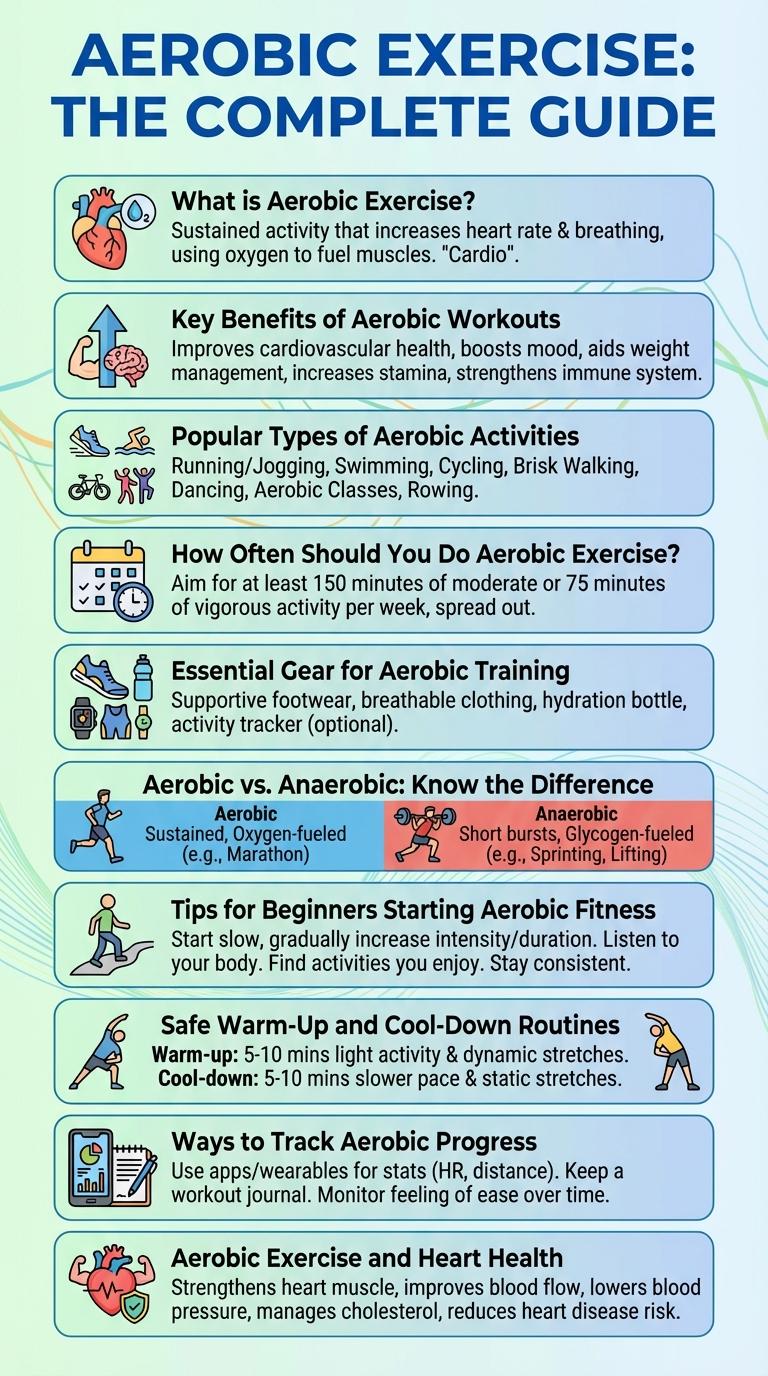
Aerobic exercise boosts cardiovascular health by increasing heart rate and improving lung function. This type of workout enhances endurance, burns calories, and promotes weight management. Regular aerobic activity also reduces the risk of chronic diseases like diabetes and hypertension.
What is Aerobic Exercise?
Aerobic exercise is a type of physical activity that increases heart rate and breathing for an extended period. It relies on oxygen to help produce energy and improve cardiovascular endurance. Common examples include walking, running, swimming, and cycling.
Key Benefits of Aerobic Workouts
Aerobic exercise enhances cardiovascular health and overall endurance. Engaging in regular aerobic workouts contributes to improved physical and mental well-being.
- Boosts Heart Health - Aerobic workouts increase heart rate, strengthening the heart muscle and improving circulation.
- Enhances Lung Capacity - Consistent aerobic activity improves oxygen intake and respiratory efficiency.
- Supports Weight Management - Aerobic exercise helps burn calories and reduce body fat effectively.
- Improves Mental Health - Regular aerobic activity releases endorphins, reducing stress and anxiety.
- Increases Stamina - Continuous aerobic training builds endurance, allowing longer and more intense physical activity.
Incorporating aerobic exercises into daily routines promotes long-term health and vitality.
Popular Types of Aerobic Activities
Aerobic exercise includes activities that increase heart rate and improve cardiovascular health. Popular types of aerobic activities are walking, cycling, swimming, dancing, and running. These exercises promote endurance, burn calories, and enhance overall fitness.
How Often Should You Do Aerobic Exercise?
How often should you do aerobic exercise for optimal health? Experts recommend at least 150 minutes of moderate-intensity aerobic activity per week. This can be divided into 30 minutes on most days for improved cardiovascular fitness and weight management.
Essential Gear for Aerobic Training
Aerobic exercise requires specific gear to enhance performance and comfort. Proper equipment supports effective training and reduces injury risk.
Essential gear includes quality running shoes that provide cushioning and stability. Moisture-wicking clothing helps regulate body temperature and keeps skin dry.
Aerobic vs. Anaerobic: Know the Difference
Aerobic and anaerobic exercises differ primarily in oxygen usage and duration. Aerobic exercises rely on oxygen for energy and are sustained over longer periods.
Anaerobic exercises do not use oxygen directly and involve short bursts of intense activity. Understanding their differences helps optimize workout routines based on fitness goals.
Tips for Beginners Starting Aerobic Fitness
Starting aerobic exercise can improve cardiovascular health and increase energy levels. Following practical tips helps beginners build endurance safely and effectively.
- Start Slowly - Begin with low-intensity activities like walking to allow your body to adapt gradually.
- Set Realistic Goals - Define achievable targets to stay motivated and track progress.
- Warm Up and Cool Down - Incorporate stretching before and after workouts to prevent injuries.
Safe Warm-Up and Cool-Down Routines
Engaging in proper warm-up and cool-down routines is essential for maximizing the benefits of aerobic exercise and preventing injuries. These practices prepare the body for physical activity and aid in recovery post-exercise.
Safe warm-up and cool-down routines enhance cardiovascular health and muscle flexibility effectively.
- Gradual Warm-Up - Begin with 5-10 minutes of light cardio like walking or jogging to slowly increase heart rate and blood flow.
- Dynamic Stretching - Incorporate movements such as leg swings and arm circles to improve joint mobility before aerobic exercise.
- Cool-Down Phase - Follow aerobic sessions with 5-10 minutes of low-intensity activity to reduce heart rate gradually and prevent blood pooling.
Ways to Track Aerobic Progress
Tracking aerobic exercise progress helps improve fitness by monitoring key metrics such as heart rate, distance, and time. Using reliable tools and methods ensures accurate assessment of aerobic capacity over time.
Popular ways to track aerobic progress include using wearable fitness devices like heart rate monitors and smartwatches. Recording distance and pace with GPS-enabled apps provides detailed performance insights. Maintaining an exercise journal helps identify trends and set achievable goals for continuous improvement.