
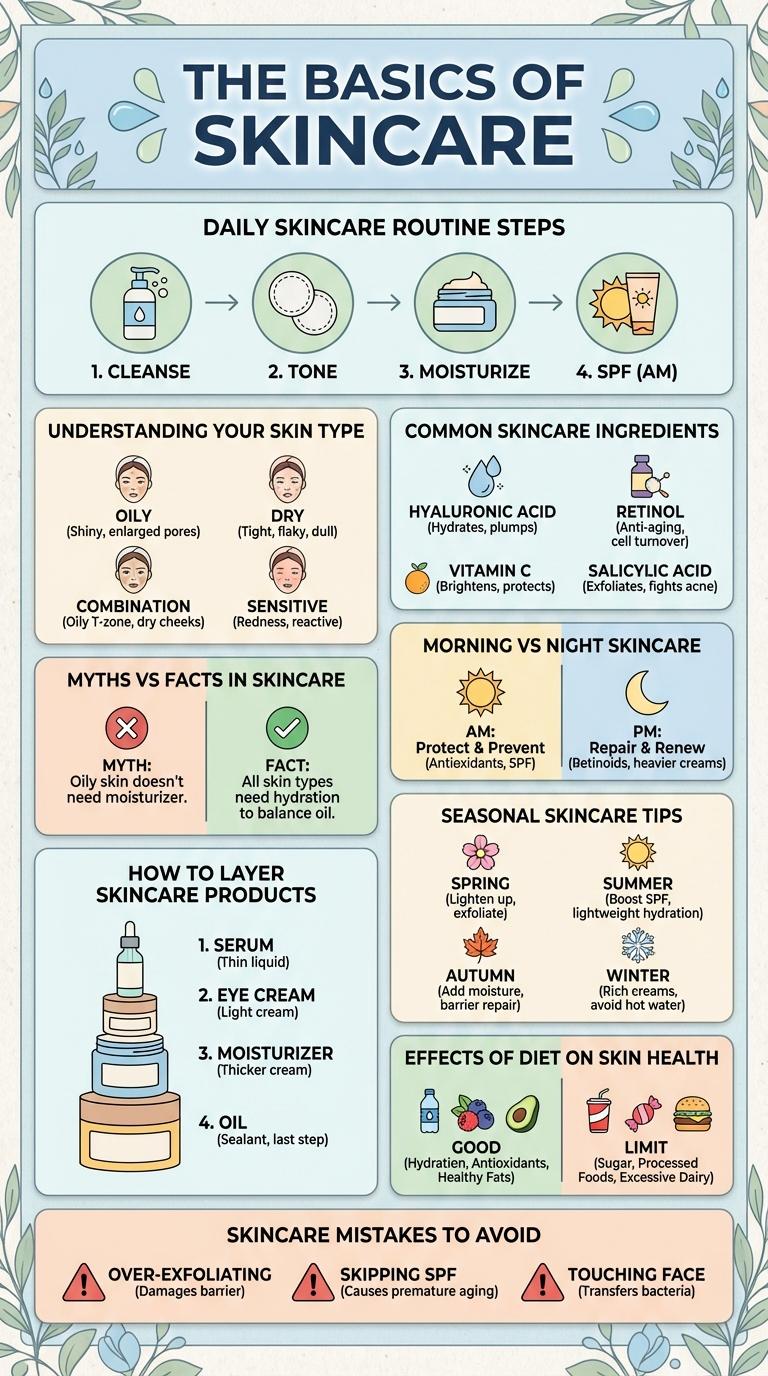
Skincare infographics visually simplify complex beauty routines and key skin health facts, making it easier to understand effective practices. Essential tips on cleansing, moisturizing, and sun protection are highlighted to promote glowing, healthy skin. This visual guide enhances your skincare knowledge with concise, impactful information.
The Basics of Skincare
Skincare is essential for maintaining healthy and radiant skin. Understanding the basics helps create an effective routine tailored to your skin type.
Start with cleansing to remove dirt and excess oils, followed by moisturizing to keep skin hydrated. Sunscreen protects against harmful UV rays, preventing premature aging. Consistency and choosing products suited for your skin type improve overall skin health.
Daily Skincare Routine Steps
| Step | Description |
|---|---|
| 1. Cleanse | Remove dirt, oil, and impurities using a gentle facial cleanser suited for your skin type. |
| 2. Tone | Balance skin pH and tighten pores with an alcohol-free toner containing soothing ingredients. |
| 3. Treat | Apply serums or treatments targeting specific concerns such as acne, hydration, or anti-aging. |
| 4. Moisturize | Hydrate and protect skin barrier with a moisturizer suitable for your skin's needs. |
| 5. Protect | Use broad-spectrum sunscreen with at least SPF 30 to shield skin from UV damage. |
Understanding Your Skin Type
Identifying your skin type is essential for selecting the right skincare products and routines. Proper care tailored to your skin type improves skin health and appearance.
Understanding whether your skin is oily, dry, combination, sensitive, or normal guides effective treatment choices.
- Oily Skin - Characterized by excess sebum production, leading to shine and prone to acne.
- Dry Skin - Lacks moisture, often feels tight and may show flaking or rough patches.
- Combination Skin - Features both oily areas, typically in the T-zone, and dry or normal patches elsewhere.
Common Skincare Ingredients
Common skincare ingredients include hyaluronic acid, known for its powerful hydration properties, and retinol, which promotes cell turnover and reduces signs of aging. Vitamin C is another key ingredient, celebrated for its antioxidant benefits and ability to brighten skin tone. Niacinamide helps improve skin barrier function and minimize pores, making it a versatile choice in many skincare formulations.
Myths vs Facts in Skincare
Skincare myths often lead to confusion and ineffective routines. Understanding the facts helps achieve healthier, glowing skin.
Many people believe oily skin doesn't need moisturizing, which is false. Proper hydration balances oil production and prevents breakouts.
Morning vs Night Skincare
Effective skincare routines vary between morning and night to address the skin's changing needs throughout the day. Morning skincare focuses on protection, while night skincare emphasizes repair and hydration.
- Morning: Sunscreen Application - Protects skin from harmful UV rays and environmental damage during the day.
- Morning: Lightweight Moisturizer - Hydrates skin without clogging pores, preparing it for makeup or daily exposure.
- Night: Deep Cleansing - Removes makeup, dirt, and pollutants accumulated throughout the day for a fresh start.
- Night: Rich Moisturizer or Repair Cream - Supports skin regeneration and restores moisture lost during the day.
- Night: Targeted Treatments - Includes serums or retinoids to address specific concerns like aging or acne.
Adapting skincare routines to morning and night optimizes skin health and appearance effectively.
How to Layer Skincare Products
Mastering the art of layering skincare products enhances their effectiveness and boosts skin health. Understanding the correct order ensures each product penetrates properly without causing irritation.
Start with lightweight products like serums and essences, moving towards heavier creams and oils. Applying products from thinnest to thickest texture helps maximize absorption and hydration.
Seasonal Skincare Tips
Seasonal skincare requires adapting your routine to weather changes to maintain healthy, glowing skin. In winter, focus on hydration and protection against dryness caused by cold air, while summer demands sun protection and lightweight moisturizers. Adjusting skincare ingredients seasonally, such as using antioxidants in fall and extra moisture in spring, ensures optimal skin health year-round.
Effects of Diet on Skin Health
How does diet impact skin health? Nutrient-rich foods provide essential vitamins and antioxidants that promote skin repair and hydration. Poor dietary choices can lead to inflammation, acne, and premature aging.