
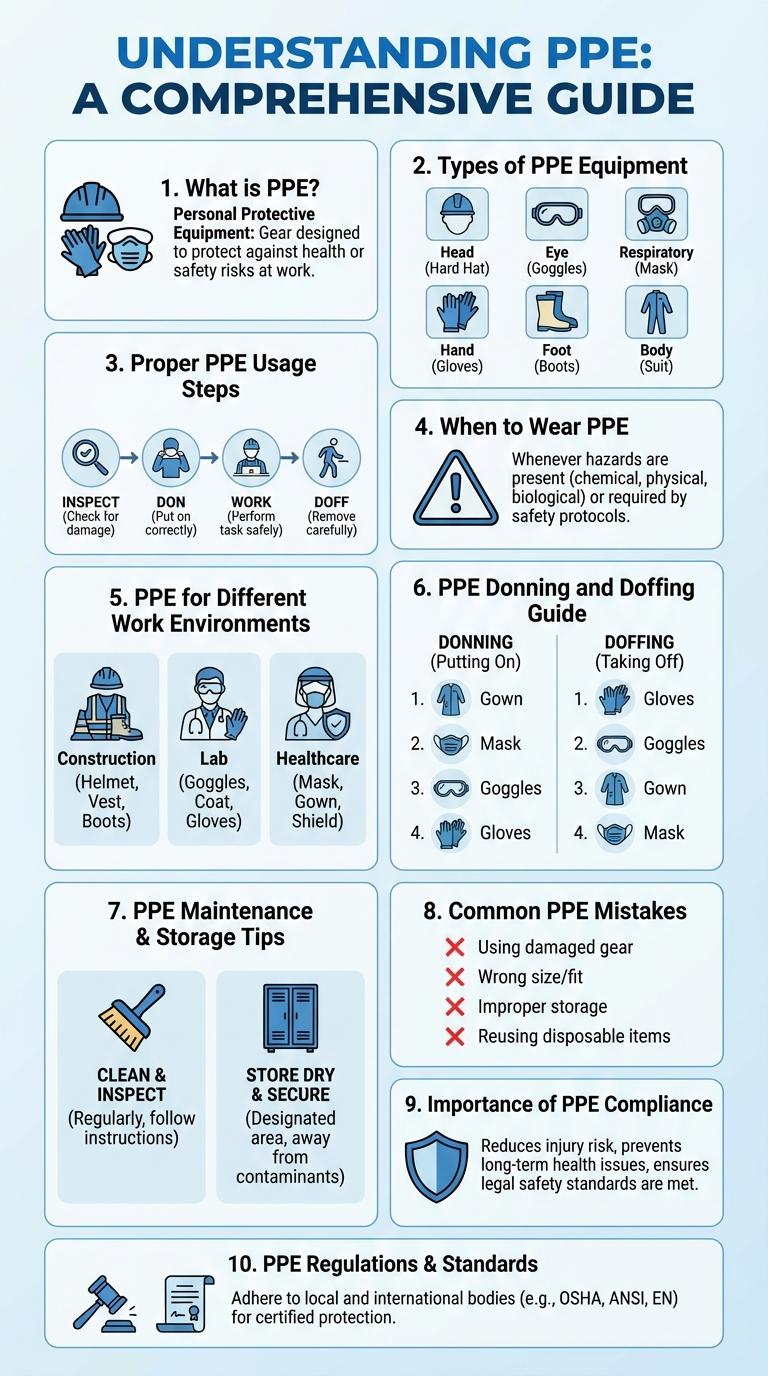
Personal protective equipment (PPE) plays a crucial role in safeguarding individuals across various industries from potential hazards. This infographic visually highlights key types of PPE, their specific uses, and essential safety guidelines to ensure maximum protection. Understanding and properly utilizing PPE can significantly reduce workplace injuries and enhance overall safety compliance.
What is PPE?
Personal Protective Equipment (PPE) includes clothing and gear designed to protect individuals from workplace hazards. It acts as a barrier against physical, chemical, and biological risks.
PPE encompasses items such as helmets, gloves, masks, and safety goggles. Proper use of PPE reduces injury and exposure to harmful substances in various environments.
Types of PPE Equipment
Personal Protective Equipment (PPE) includes various types designed to protect different parts of the body from workplace hazards. Common types of PPE include helmets for head protection, gloves for hand safety, and goggles for eye defense. Other essential equipment includes respirators for respiratory protection and safety boots for foot safety.
Proper PPE Usage Steps
Proper Personal Protective Equipment (PPE) usage is essential for workplace safety. It minimizes exposure to hazards and prevents injuries.
- Select Appropriate PPE - Identify hazards and choose PPE that offers adequate protection.
- Inspect PPE Before Use - Check for damage or defects to ensure effectiveness and safety.
- Wear PPE Correctly - Follow manufacturer guidelines to ensure proper fit and function.
When to Wear PPE
Personal Protective Equipment (PPE) is essential for safeguarding workers from hazards in various environments. Knowing when to wear PPE ensures maximum protection and safety compliance.
- During Hazardous Tasks - PPE should be worn whenever engaging in activities involving chemical, biological, or physical risks.
- In Contaminated Areas - Use PPE when entering zones with infectious agents or toxic substances to prevent exposure.
- When Operating Machinery - PPE is necessary to protect against mechanical injuries and flying debris during equipment use.
Consistent use of PPE in designated situations significantly reduces the risk of injury and occupational illness.
PPE for Different Work Environments
| Work Environment | Recommended PPE |
|---|---|
| Construction Sites | Hard hats, steel-toed boots, safety goggles, high-visibility vests, ear protection |
| Healthcare Facilities | Face masks, gloves, gowns, face shields, respirators |
| Manufacturing Plants | Safety glasses, earplugs, gloves, protective clothing, respiratory masks |
| Chemical Laboratories | Chemical-resistant gloves, lab coats, safety goggles, face shields, respirators |
| Outdoor Utilities Work | Hard hats, insulated gloves, safety harnesses, high-visibility clothing, protective boots |
PPE Donning and Doffing Guide
Personal Protective Equipment (PPE) is essential for safeguarding healthcare workers and preventing contamination. Proper donning and doffing techniques minimize infection risks and ensure maximum protection.
Begin donning by performing hand hygiene, then sequentially put on gown, mask or respirator, goggles or face shield, and gloves. During doffing, carefully remove gloves first, followed by goggles or face shield, gown, and mask, avoiding contact with contaminated surfaces. Always perform hand hygiene thoroughly before and after the entire process to reduce pathogen transmission.
PPE Maintenance & Storage Tips
How can proper maintenance extend the life of your PPE? Regular cleaning removes contaminants that degrade materials. Inspect PPE frequently for damage to ensure ongoing protection.
What are the best practices for storing PPE correctly? Store PPE in a cool, dry place away from direct sunlight to prevent material deterioration. Use labeled containers to keep equipment organized and easily accessible.
Common PPE Mistakes
Proper use of Personal Protective Equipment (PPE) is essential for workplace safety. Common mistakes with PPE can reduce its effectiveness and increase risk of injury.
- Incorrect Fit - Wearing PPE that is too loose or tight compromises protection and comfort.
- Ignoring Maintenance - Failure to properly clean and inspect PPE leads to equipment failure.
- Using Wrong PPE - Selecting PPE not suited for specific hazards undermines safety measures.
Importance of PPE Compliance
Personal Protective Equipment (PPE) is essential for safeguarding workers from workplace hazards. Compliance with PPE protocols significantly reduces the risk of injuries and occupational diseases. Ensuring proper use and maintenance of PPE enhances overall workplace safety and productivity.