
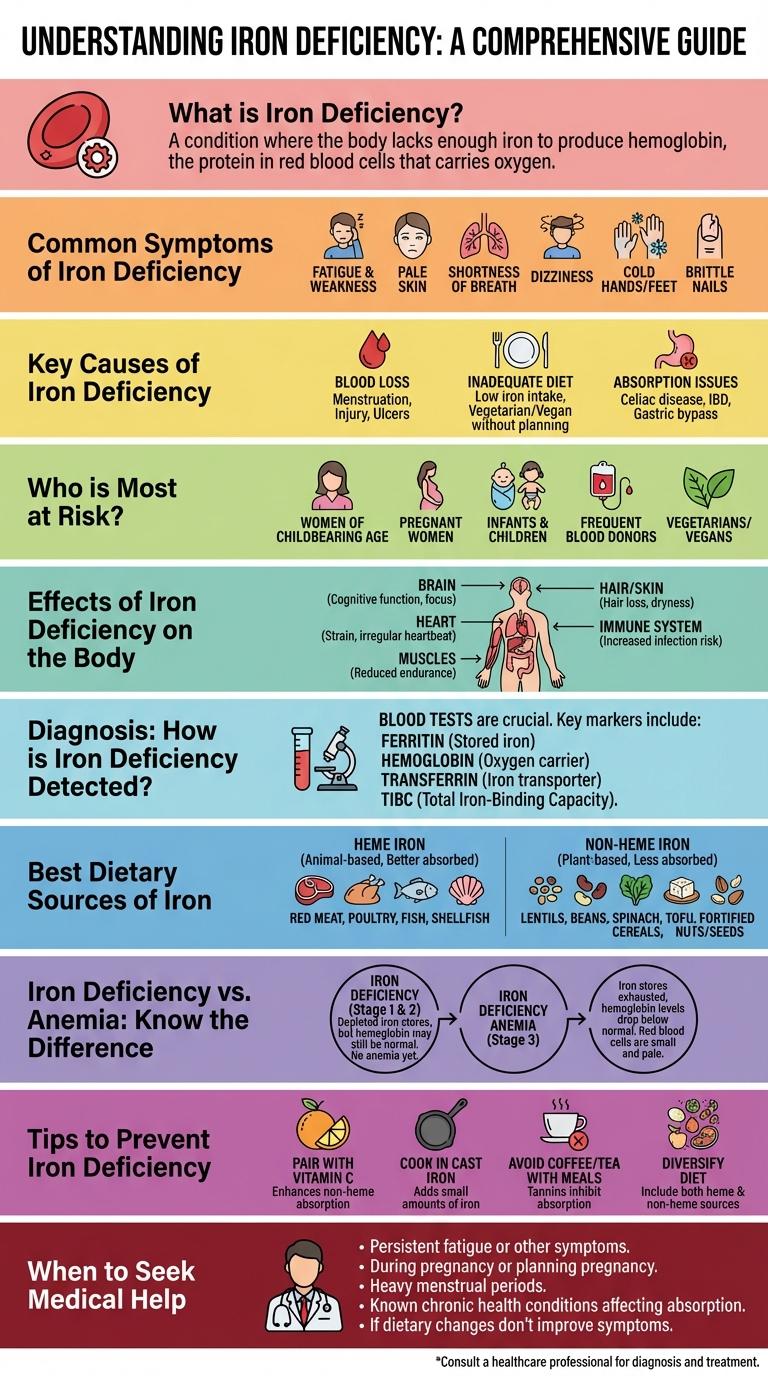
Iron deficiency is a common nutritional issue affecting millions worldwide, leading to symptoms such as fatigue, weakness, and impaired cognitive function. This infographic highlights key facts, causes, and prevention strategies to help individuals recognize and address iron deficiency effectively. Understanding these essentials can promote better health and well-being through improved iron intake and lifestyle choices.
What is Iron Deficiency?
Iron deficiency is a condition where the body lacks adequate iron to produce enough healthy red blood cells. This shortage impairs oxygen transport, leading to fatigue and weakened immunity.
- Cause - Iron deficiency occurs due to insufficient dietary iron, blood loss, or poor absorption in the digestive tract.
- Symptoms - Common signs include tiredness, pale skin, dizziness, and shortness of breath.
- Risk Groups - Women of childbearing age, infants, and people with chronic diseases are more susceptible to iron deficiency.
Early detection and treatment of iron deficiency can prevent anemia and improve overall health.
Common Symptoms of Iron Deficiency
| Common Symptom | Description |
|---|---|
| Fatigue | Persistent tiredness due to low oxygen transport in the blood. |
| Pale Skin | Reduced hemoglobin levels cause noticeable paleness, especially in the face and inner eyelids. |
| Shortness of Breath | Difficulty breathing during physical activities because of insufficient oxygen delivery. |
| Dizziness | Lightheadedness or fainting linked to reduced oxygen supply to the brain. |
| Cold Hands and Feet | Poor blood circulation leading to extremities feeling unusually cold. |
Key Causes of Iron Deficiency
Iron deficiency occurs when the body lacks sufficient iron to produce healthy red blood cells. Key causes include inadequate dietary intake, chronic blood loss, and impaired iron absorption. Women, infants, and individuals with certain medical conditions face a higher risk of developing iron deficiency.
Who is Most at Risk?
Iron deficiency affects millions worldwide, with certain groups at higher risk. Infants, pregnant women, and individuals with chronic diseases are particularly vulnerable due to increased iron needs or reduced absorption. Understanding who is most at risk helps target prevention and treatment strategies effectively.
Effects of Iron Deficiency on the Body
Iron deficiency disrupts the body's ability to produce hemoglobin, leading to reduced oxygen transport in the blood. This condition commonly causes fatigue and weakness due to insufficient oxygen delivery to tissues.
The brain experiences impaired cognitive function and decreased concentration as a result of low iron levels. Iron deficiency weakens the immune system, increasing susceptibility to infections. Physical symptoms include pale skin, shortness of breath, and brittle nails.
Diagnosis: How is Iron Deficiency Detected?
Iron deficiency is diagnosed through a combination of clinical evaluation and laboratory tests. Early detection is crucial to prevent complications and initiate appropriate treatment.
- Complete Blood Count (CBC) - Measures levels of hemoglobin and hematocrit to assess anemia presence.
- Serum Ferritin Test - Evaluates iron stores in the body, with low levels indicating deficiency.
- Serum Iron and Total Iron-Binding Capacity (TIBC) - Determines the amount of circulating iron and the blood's capacity to transport iron.
Best Dietary Sources of Iron
Iron deficiency is a common nutritional issue that can lead to anemia, fatigue, and weakened immunity. Incorporating iron-rich foods into your diet helps maintain healthy iron levels and supports overall well-being.
Best dietary sources of iron include both heme and non-heme iron. Heme iron, found in animal products, is more easily absorbed by the body compared to non-heme iron from plant-based foods.
| Food Source | Iron Content (mg per 100g) |
|---|---|
| Beef liver | 6.2 |
| Spinach | 2.7 |
| Lentils | 3.3 |
| Chicken breast | 1.0 |
| Fortified cereals | 4.5 |
Pairing iron-rich foods with vitamin C sources can enhance iron absorption significantly. Avoid consuming calcium-rich foods or coffee and tea during iron-rich meals, as they may inhibit iron uptake.
Iron Deficiency vs. Anemia: Know the Difference
Iron deficiency occurs when the body lacks enough iron to produce hemoglobin, the protein in red blood cells responsible for oxygen transport. It is the most common nutritional deficiency worldwide, affecting over 2 billion people.
Anemia is a condition characterized by a reduced number of red blood cells or hemoglobin, leading to fatigue and weakness. Iron deficiency anemia is the most prevalent form, caused specifically by inadequate iron levels.
Tips to Prevent Iron Deficiency
Iron deficiency is a common nutritional condition affecting millions worldwide. Preventing it requires focused dietary and lifestyle strategies to maintain adequate iron levels.
- Consume Iron-Rich Foods - Incorporate lean meats, spinach, lentils, and fortified cereals to boost iron intake.
- Enhance Iron Absorption - Pair iron-rich meals with vitamin C sources like citrus fruits to improve absorption.
- Avoid Iron Inhibitors During Meals - Limit tea, coffee, and calcium supplements around iron-rich meals as they reduce iron uptake.