
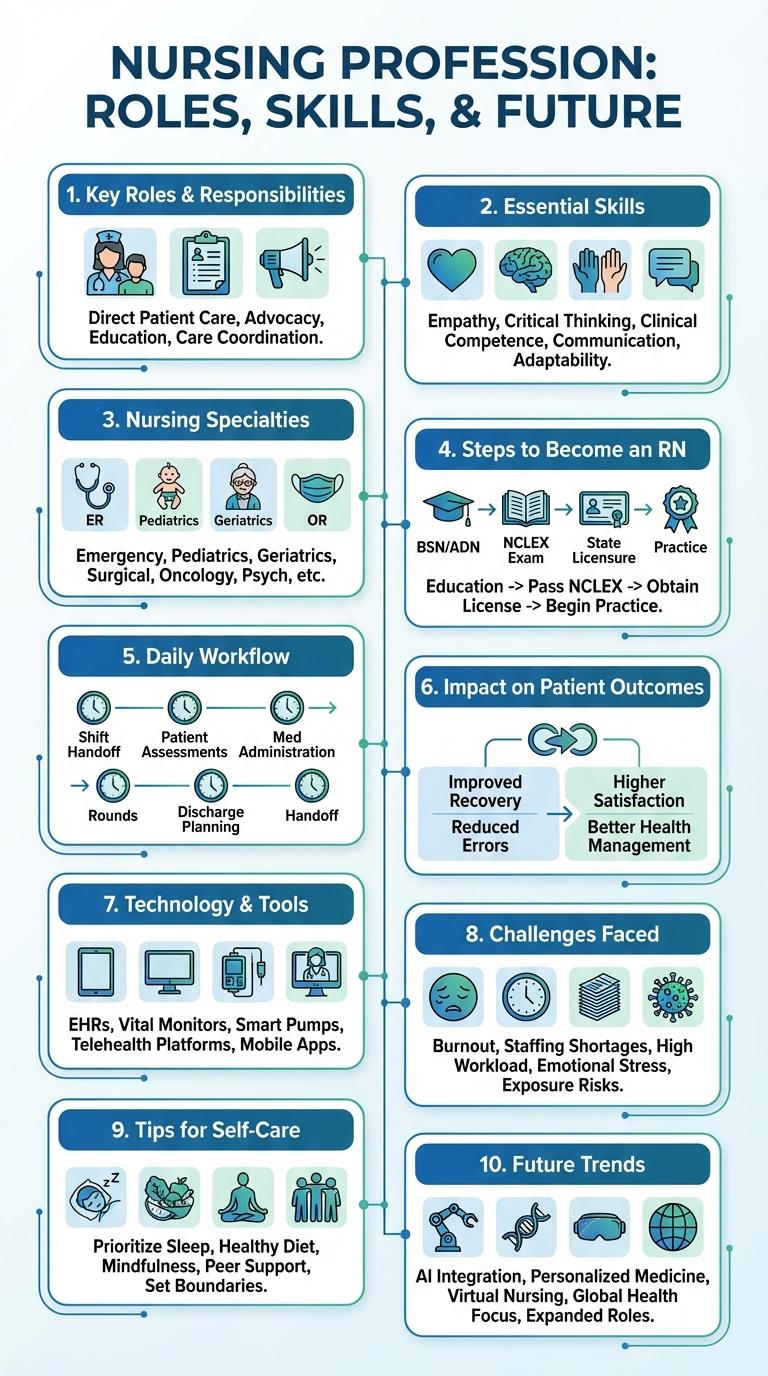
Nurses play a vital role in healthcare, providing compassionate care and expert medical support to patients. This infographic highlights key statistics, responsibilities, and the impact of nurses in various medical settings. Understanding their diverse roles underscores the importance of nursing in maintaining patient health and improving outcomes.
Key Roles and Responsibilities of a Nurse
Nurses are essential healthcare professionals who provide compassionate care and support to patients. Their duties encompass clinical, educational, and emotional aspects to ensure optimal patient well-being.
- Patient Care - Nurses administer medications, monitor vital signs, and assist with daily activities to promote recovery.
- Health Education - Nurses educate patients and families about treatment plans, preventive care, and healthy lifestyle choices.
- Collaboration - Nurses work closely with doctors, therapists, and other healthcare team members to coordinate effective patient care.
- Advocacy - Nurses advocate for patient rights and ensure their needs and preferences are respected during medical treatment.
- Documentation - Nurses maintain accurate records of patient health status, treatments, and progress for continuity of care.
Essential Skills Every Nurse Must Have
Nurses play a critical role in healthcare, requiring a diverse set of essential skills to provide effective patient care. Key skills include clinical expertise, effective communication, critical thinking, compassion, and time management. Mastery of these skills ensures nurses can respond promptly to patient needs and collaborate efficiently within medical teams.
The Different Types of Nursing Specialties
Nurses play a vital role in healthcare, offering specialized skills to address diverse patient needs. Nursing specialties allow professionals to focus on specific areas of care, enhancing patient outcomes and expertise.
- Registered Nurse (RN) - Provides direct patient care, administers medications, and performs medical procedures in various medical settings.
- Critical Care Nurse - Cares for patients with life-threatening conditions in intensive care units, monitoring vital signs and supporting advanced treatments.
- Pediatric Nurse - Specializes in treating infants, children, and adolescents, ensuring age-appropriate healthcare and emotional support.
- Oncology Nurse - Focuses on cancer patient care, administering chemotherapy and managing symptoms related to cancer treatments.
- Neonatal Nurse - Provides specialized care to newborns, especially premature or ill infants, in neonatal intensive care units (NICU).
Steps to Becoming a Registered Nurse
What are the essential steps to becoming a registered nurse? Earning a nursing degree from an accredited program is the first crucial step. Passing the NCLEX-RN exam follows to obtain licensure.
How important is gaining clinical experience in nursing education? Hands-on clinical practice provides vital real-world skills and patient care experience. This training is required for graduation and licensure eligibility.
What role does state licensure play in becoming a registered nurse? Each state requires candidates to pass the NCLEX-RN exam and fulfill application processes. Licensure ensures compliance with local healthcare regulations and standards.
Can further education impact a nursing career? Obtaining a Bachelor of Science in Nursing (BSN) or higher degrees enhances career opportunities. Advanced degrees enable specialization and leadership roles within healthcare.
What continuing requirements do registered nurses face? Registered nurses must complete continuing education credits periodically. Ongoing learning maintains licensure and keeps nurses updated on medical advancements.
Daily Workflow in a Nurse's Shift
Nurses play a critical role in healthcare, managing patient care from vital sign monitoring to medication administration throughout their shift. Their daily workflow involves assessing patient conditions, updating medical records, and coordinating with doctors and other healthcare professionals. Effective time management and attention to detail ensure quality care and patient safety during every shift.
Impact of Nurses on Patient Outcomes
Nurses play a critical role in improving patient outcomes through direct care, patient education, and advocacy. Their continuous monitoring allows early detection of complications, reducing hospital readmissions and mortality rates.
Studies show that higher nurse staffing levels correlate with lower patient mortality and fewer adverse events. Effective nursing care enhances recovery times, patient satisfaction, and overall healthcare quality.
Technology and Tools Used by Nurses
Nurses rely heavily on advanced technology and specialized tools to provide efficient patient care. These innovations enhance accuracy, communication, and treatment outcomes in healthcare settings.
- Electronic Health Records (EHR) - Digital systems that store comprehensive patient data for easy access and updates by nurses.
- Telehealth Devices - Tools enabling remote patient monitoring and virtual consultations, expanding care beyond hospital walls.
- Vital Signs Monitors - Portable devices that continuously measure heart rate, blood pressure, and oxygen levels to track patient status.
- Medication Administration Systems - Barcode scanning technology ensuring correct medication delivery and reducing errors.
- Mobile Health Apps - Applications that assist nurses in scheduling, patient education, and real-time communication with healthcare teams.
Integration of these technologies empowers nurses to deliver safer, faster, and more personalized healthcare services.
Challenges Faced by Nurses Today
Nurses play a critical role in healthcare, yet they face numerous challenges today that impact their effectiveness and well-being. Staffing shortages, high patient loads, and emotional stress are among the most pressing issues.
Workplace violence and long hours contribute significantly to nurse burnout and turnover rates. Access to mental health support for nurses remains limited, exacerbating stress levels. Improving nurse retention requires addressing these challenges through policy changes and support systems.
Tips for Nurse Self-Care and Wellbeing
Nurses play a vital role in healthcare, often managing high-stress environments and demanding schedules. Prioritizing self-care is essential for maintaining mental and physical health amid these challenges.
Effective self-care strategies include regular breaks, proper hydration, and balanced nutrition to sustain energy levels. Mindfulness techniques and adequate sleep help reduce burnout and improve overall wellbeing.