
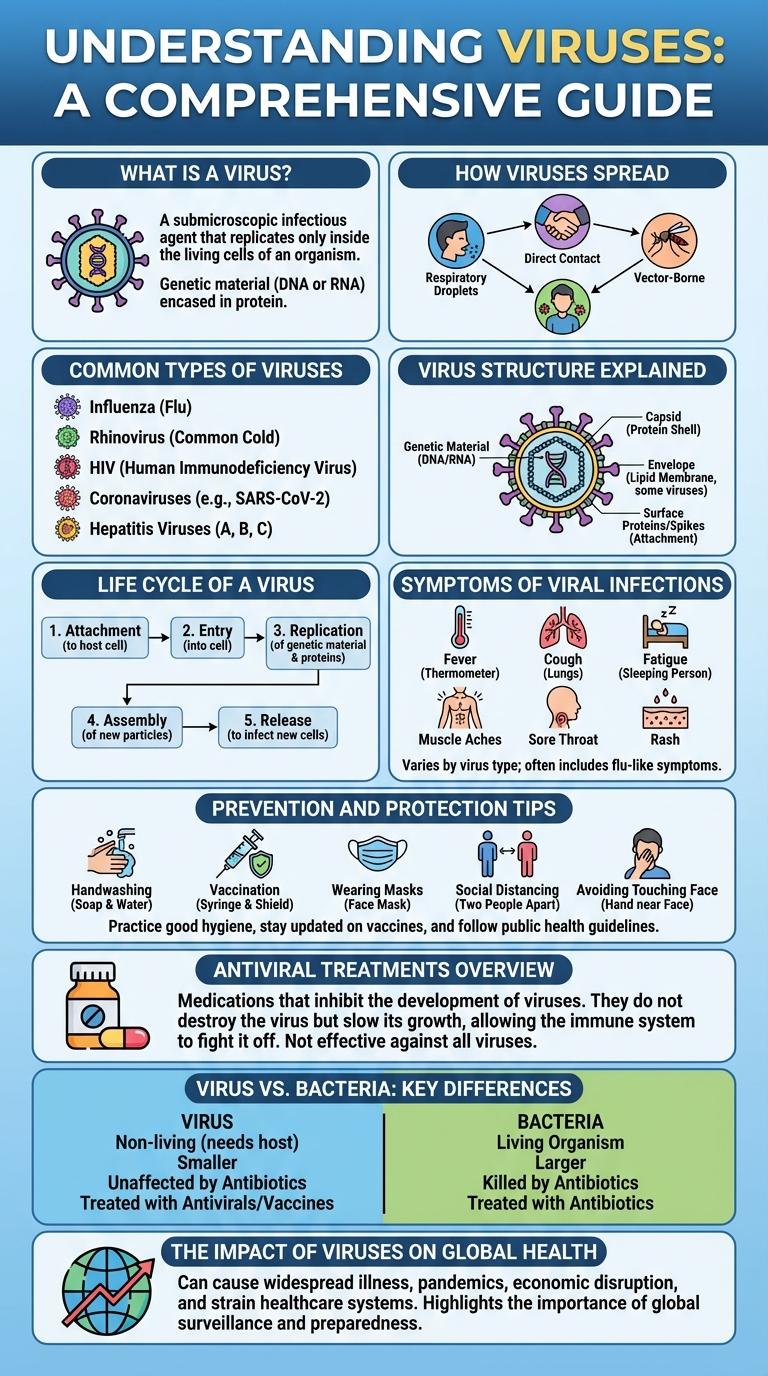
Visual representations of viruses illuminate their structure, transmission pathways, and impact on human health. Infographics quickly convey complex scientific data, enhancing public understanding and awareness. Clear, concise visuals support effective communication of prevention methods and symptoms.
What is a Virus?
What is a virus? A virus is a microscopic infectious agent that can only replicate inside the living cells of an organism. It consists of genetic material, either DNA or RNA, enclosed in a protein coat called a capsid.
How Viruses Spread
Viruses spread through multiple pathways, infecting hosts rapidly. Understanding these transmission modes is key to prevention and control.
- Airborne transmission - Viruses travel through tiny droplets expelled when an infected person coughs or sneezes.
- Direct contact - Physical touch with an infected individual or contaminated surfaces facilitates viral transfer.
- Vector-borne spread - Certain viruses rely on insects like mosquitoes to transmit infection between hosts.
Common Types of Viruses
Viruses are microscopic infectious agents that can infect all types of life forms, from animals and plants to bacteria and archaea. Common types of viruses include Influenza, responsible for seasonal flu outbreaks, and Human Immunodeficiency Virus (HIV), which causes AIDS. Other significant viruses are the Coronavirus family, including SARS-CoV-2, and the Herpesviridae family, responsible for herpes infections.
Virus Structure Explained
Viruses consist of genetic material, either DNA or RNA, enclosed within a protective protein coat called a capsid. Some viruses have an outer lipid envelope derived from the host cell membrane, which aids in infecting target cells. The structure of viruses enables them to attach to, enter, and hijack host cells to replicate and spread.
Life Cycle of a Virus
Viruses follow a specific life cycle to infect host cells and replicate. Understanding each stage helps in developing antiviral strategies and treatments.
- Attachment - The virus binds to specific receptors on the surface of the host cell.
- Penetration - The virus or its genetic material enters the host cell.
- Replication - Viral genetic material is copied using the host cell's machinery.
- Assembly - New viral particles are assembled inside the host cell.
- Release - Newly formed viruses are released to infect other cells.
Symptoms of Viral Infections
Viral infections are caused by viruses entering and multiplying within the body. Recognizing symptoms early helps in timely treatment and prevents the spread of infection.
Common symptoms of viral infections include fever, fatigue, and body aches. Respiratory issues like coughing and sore throat often occur. Some viruses may also cause skin rashes or gastrointestinal problems such as nausea and diarrhea.
Prevention and Protection Tips
| Prevention Tips | Protection Tips |
|---|---|
| Wash hands frequently with soap for at least 20 seconds | Wear a properly fitted mask in crowded or enclosed spaces |
| Avoid touching face, especially eyes, nose, and mouth | Use hand sanitizer with minimum 60% alcohol content |
| Maintain physical distance of at least 6 feet from others | Disinfect frequently touched surfaces daily |
| Stay home when feeling unwell or exhibiting symptoms | Get vaccinated according to local health guidelines |
| Cover mouth and nose when coughing or sneezing using a tissue | Avoid sharing personal items like towels and utensils |
Antiviral Treatments Overview
Antiviral treatments play a crucial role in managing viral infections by inhibiting virus replication. These therapies target various stages of the viral life cycle to reduce symptoms and prevent disease progression.
- Entry Inhibitors - Block viruses from entering host cells, preventing infection initiation.
- Reverse Transcriptase Inhibitors - Impede viral RNA conversion into DNA, essential for virus replication.
- Protease Inhibitors - Inhibit viral protease enzymes, disrupting the assembly of new viral particles.
- Neuraminidase Inhibitors - Prevent release of viruses from infected cells, limiting spread within the body.
- Immunomodulators - Enhance the immune system's response to viral infections, improving treatment outcomes.
Effective antiviral treatments vary based on the virus type and resistance patterns.
Virus vs. Bacteria: Key Differences
Viruses and bacteria are microscopic organisms that cause infections in humans but differ significantly in structure and function. Viruses are non-living particles requiring a host to replicate, whereas bacteria are single-celled living organisms capable of independent reproduction.
Viruses consist of genetic material encased in a protein coat and lack cellular components, while bacteria have complex cellular structures including a cell wall and cytoplasm. Treatments vary: antibiotics target bacteria but are ineffective against viruses, which may require antiviral medications or vaccines for prevention.