
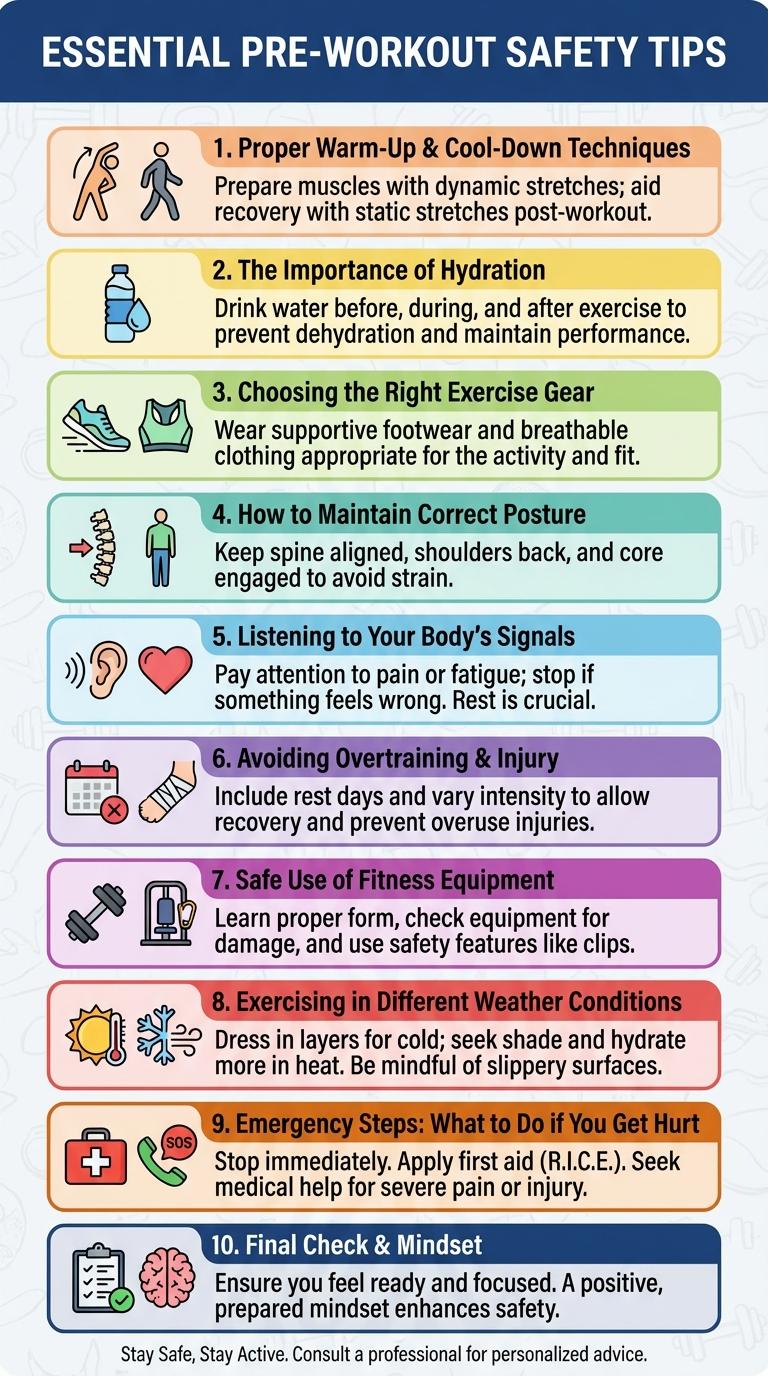
Following safety guidelines during exercise is essential to prevent injuries and ensure effective workouts. Proper warm-ups, hydration, and listening to your body's limits contribute to a safer fitness routine. Incorporating these practices consistently helps maintain long-term health and fitness progress.
Essential Pre-Workout Safety Tips
Preparing properly before exercise minimizes the risk of injury and enhances workout effectiveness. Following essential pre-workout safety tips ensures a safer and more productive fitness routine.
- Warm Up Thoroughly - Engage in light aerobic activities and dynamic stretches to increase blood flow and loosen muscles before intense exercise.
- Hydrate Adequately - Drink water prior to working out to maintain electrolyte balance and prevent dehydration during physical activity.
- Check Equipment - Inspect workout gear and machines to confirm they are in good condition and safe to use.
Proper Warm-Up and Cool-Down Techniques
Proper warm-up and cool-down techniques are vital for preventing injuries and enhancing exercise performance. These practices prepare the body for physical activity and aid in recovery afterward.
- Dynamic Warm-Up - Engages muscles and increases heart rate gradually to prepare the body for exercise.
- Stretching During Cool-Down - Helps maintain flexibility and reduces muscle stiffness post-workout.
- Controlled Breathing - Supports oxygen flow and helps regulate body temperature both before and after exercise.
The Importance of Hydration
Staying hydrated during exercise is crucial for maintaining optimal body temperature and preventing dehydration-related fatigue. Drinking water before, during, and after physical activity helps sustain energy levels and supports muscle function. Proper hydration reduces the risk of heat exhaustion and improves overall exercise performance.
Choosing the Right Exercise Gear
Choosing the right exercise gear is essential for both safety and performance during workouts. Proper attire helps prevent injuries and enhances comfort.
Wear footwear designed for your specific activity to provide adequate support and reduce the risk of falls. Opt for breathable, moisture-wicking fabrics to keep your body cool and dry. Always ensure your gear fits properly to avoid restrictions or chafing that could lead to injury.
How to Maintain Correct Posture
| Posture Guideline | Description |
|---|---|
| Head Alignment | Keep your head in a neutral position, eyes focused forward to avoid neck strain. |
| Shoulder Position | Relax shoulders and keep them back and down to prevent hunching. |
| Spine Alignment | Maintain a straight spine with a natural curve; avoid arching or slumping. |
| Core Engagement | Engage abdominal muscles to support the lower back and stabilize the body. |
| Foot Placement | Place feet shoulder-width apart with even weight distribution for balance. |
Listening to Your Body's Signals
Listening to your body's signals is essential for safe exercise practices. Pay attention to signs of pain, dizziness, or excessive fatigue and adjust your activity accordingly. Rest and recovery are crucial to prevent injuries and ensure long-term fitness success.
Avoiding Overtraining and Injury
How can you prevent overtraining during your exercise routine?
Listen to your body and incorporate rest days to allow muscle recovery. Overtraining can lead to fatigue, decreased performance, and increased injury risk.
What are the signs that indicate you might be overtraining?
Persistent soreness, prolonged fatigue, and irritability are common symptoms. Monitoring these signs helps adjust your workout intensity timely.
How does proper warm-up reduce injury risk?
A warm-up increases blood flow to muscles and improves flexibility. This prepares your body for exercise and lowers chances of strains or sprains.
Why is proper technique essential during workouts?
Correct form minimizes stress on joints and muscles, preventing injuries. Using wrong posture repeatedly can cause chronic pain or acute injury.
How important is hydration for exercise safety?
Keeping hydrated maintains optimal muscle function and body temperature. Dehydration can lead to cramps, dizziness, and impaired performance.
Safe Use of Fitness Equipment
Proper use of fitness equipment is essential to prevent injuries during exercise. Always read instructions and adjust machines to fit your body before starting your workout.
Check for any damaged parts or loose bolts on equipment prior to use. Wear appropriate footwear and avoid distractions to maintain focus and balance while exercising.
Exercising in Different Weather Conditions
Exercising in various weather conditions requires adapting your routine to maintain safety and performance. Proper hydration, clothing, and timing are essential for preventing weather-related health risks.
In hot weather, wear lightweight, breathable fabrics and exercise during cooler parts of the day to avoid heat exhaustion. Cold weather calls for layered clothing and warm-up exercises to prevent muscle injuries.