
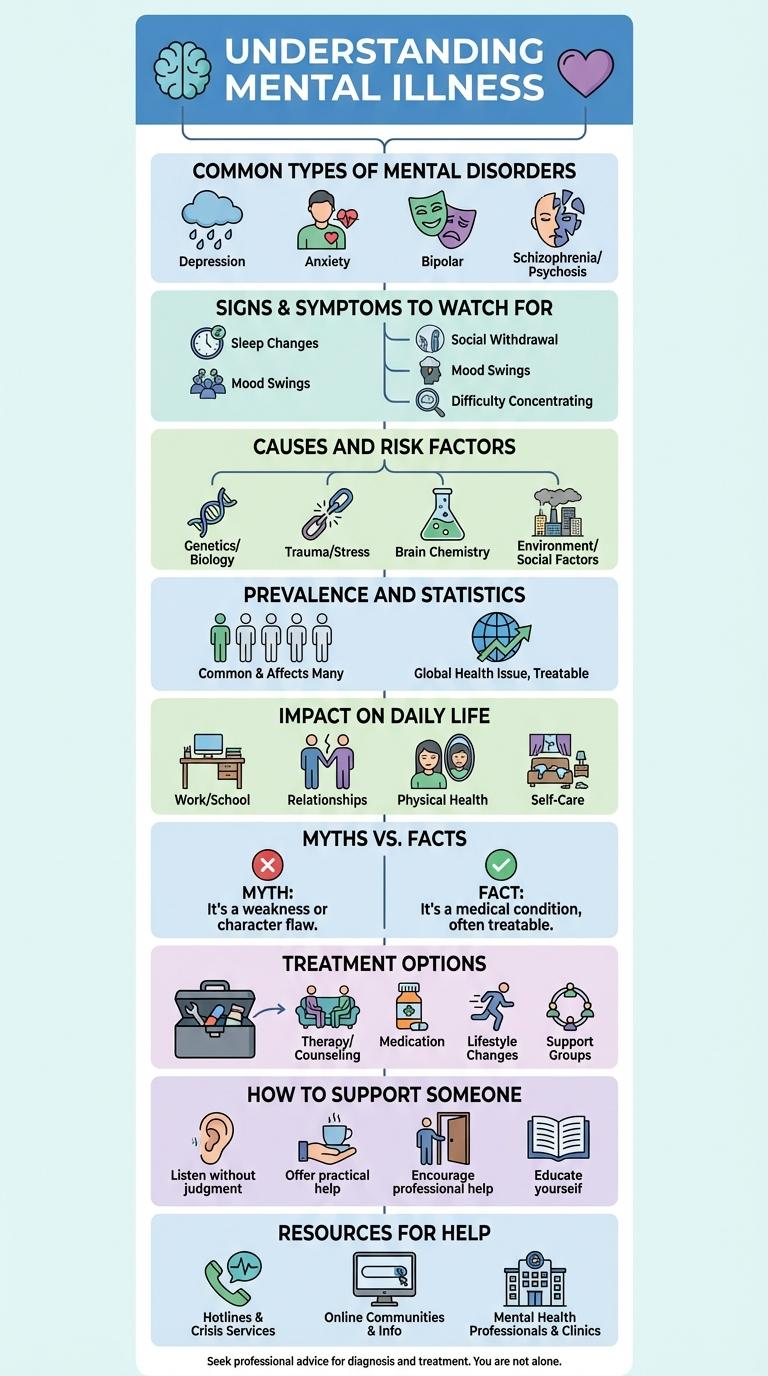
Mental illness affects millions globally, impacting how individuals think, feel, and behave daily. Visualizing this data through an infographic simplifies complex information, making awareness and understanding more accessible. Key statistics and facts highlight the prevalence, types, and importance of seeking help.
Understanding Mental Illness
What is mental illness and how does it affect people?
Mental illness refers to a wide range of mental health conditions that impact mood, thinking, and behavior. These disorders can affect anyone and vary in severity from mild to debilitating.
How common are mental illnesses worldwide?
According to the World Health Organization, approximately 1 in 8 people globally experience a mental disorder each year. Conditions like depression, anxiety, and bipolar disorder are among the most prevalent.
What are the main types of mental illness?
Common mental illnesses include anxiety disorders, mood disorders such as depression and bipolar disorder, schizophrenia, and eating disorders. Each type has distinct symptoms that require specific treatments.
What causes mental illness?
Mental illnesses can result from a combination of genetic, biological, environmental, and psychological factors. Stressful life events, brain chemistry imbalances, and family history are key contributors.
How can mental illness be treated effectively?
Treatment often involves psychotherapy, medication, or a combination of both tailored to the individual's needs. Early diagnosis and intervention improve outcomes significantly for those affected.
Common Types of Mental Disorders
Mental illness affects millions worldwide, with varying degrees of severity and impact. Common types include depression, anxiety disorders, bipolar disorder, schizophrenia, and post-traumatic stress disorder (PTSD). Early diagnosis and treatment improve outcomes and quality of life for those affected.
Signs & Symptoms to Watch For
Mental illness affects millions globally and recognizing early signs is essential for timely intervention. Identifying symptoms helps in seeking appropriate support and treatment.
- Persistent sadness or irritability - Experiencing prolonged feelings of sadness, hopelessness, or irritability that disrupt daily life.
- Changes in sleep patterns - Noticeable insomnia, excessive sleeping, or disrupted sleep routines.
- Withdrawal from social activities - Avoiding friends, family, and previously enjoyed activities without clear reason.
- Difficulty concentrating - Struggling with focus, memory, or decision-making tasks.
- Unexplained physical symptoms - Experiencing headaches, stomachaches, or chronic pain without medical cause.
Causes and Risk Factors
Mental illness arises from a complex interplay of genetic, environmental, and psychological factors. Understanding these causes and risk factors helps in early identification and effective management.
- Genetic Predisposition - Family history increases the likelihood of developing mental health disorders.
- Traumatic Experiences - Exposure to abuse, violence, or significant loss can trigger mental illness.
- Chronic Medical Conditions - Long-term illnesses like diabetes or heart disease contribute to mental health risks.
Early recognition of these factors enables targeted interventions to reduce the impact of mental illness.
Prevalence and Statistics
Mental illness affects approximately 1 in 5 adults in the United States each year, highlighting its widespread impact. Depression and anxiety disorders are among the most common, with over 264 million people experiencing depression globally. Despite its prevalence, only about 43% of individuals with mental illness receive treatment, emphasizing the need for increased awareness and resources.
Impact on Daily Life
Mental illness significantly affects daily functioning, influencing emotions, thoughts, and behaviors. Individuals may experience difficulties in managing routine tasks, maintaining relationships, and performing at work or school.
Symptoms such as fatigue, anxiety, and impaired concentration reduce overall productivity and quality of life. Support systems, therapy, and medication play crucial roles in improving daily living for those affected.
Myths vs. Facts
| Myths | Facts |
|---|---|
| Mental illness is a sign of weakness. | Mental illness is a medical condition affecting the brain. |
| People with mental illness are violent or dangerous. | Most people with mental illness are not violent and pose no threat to others. |
| Mental illness cannot be treated effectively. | Many mental illnesses are manageable with therapy, medication, or both. |
| Mental illness is caused by personal failure or bad character. | Mental illness results from complex interactions of genetics, environment, and biology. |
| Seeking help for mental illness is shameful. | Seeking professional help improves outcomes and supports recovery. |
Treatment Options
Mental illness affects millions worldwide, requiring effective treatment options for improved well-being. Understanding available therapies helps individuals make informed decisions for their mental health care.
Treatment options for mental illness include psychotherapy, medication, and lifestyle changes. Cognitive-behavioral therapy (CBT) and counseling are common psychotherapeutic techniques. Antidepressants, antipsychotics, and mood stabilizers are prescribed based on diagnosis. Combining treatments often yields the best outcomes. Support groups and self-care practices also enhance recovery.
How to Support Someone
Supporting someone with mental illness requires empathy and understanding. Knowing how to offer meaningful help can improve their recovery and well-being.
- Listen Actively - Pay full attention to their feelings without interrupting or judging.
- Encourage Professional Help - Suggest seeing a therapist or counselor for expert support.
- Offer Practical Assistance - Help with daily tasks to reduce their stress and burden.