
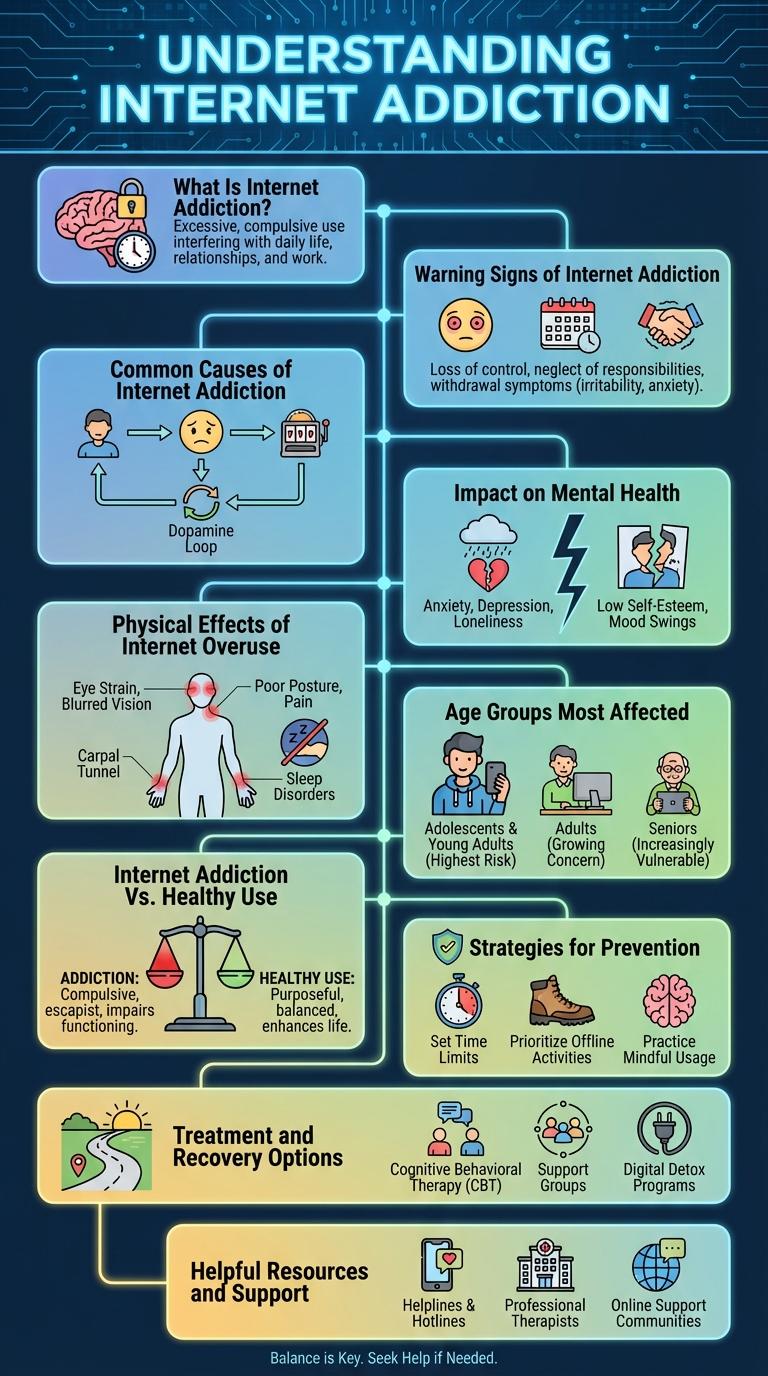
Internet addiction significantly impacts mental health and daily productivity by altering brain function and disrupting normal routines. Recognizing the signs of excessive online use helps individuals regain control and promotes healthier digital habits. This infographic highlights key statistics, symptoms, and strategies to combat internet addiction effectively.
What Is Internet Addiction?
Internet addiction is a behavioral disorder characterized by excessive or poorly controlled preoccupations, urges, or behaviors regarding computer use and internet access. It can lead to significant impairment in daily life, including social isolation, neglect of responsibilities, and mental health issues. Recognizing the signs early is essential for effective management and recovery.
Warning Signs of Internet Addiction
Internet addiction is a growing concern affecting individuals across all age groups. Recognizing the warning signs early can help prevent severe emotional and physical consequences.
Understanding these symptoms is crucial for timely intervention and support.
- Excessive Time Online - Spending more hours on the internet than intended, often neglecting responsibilities.
- Withdrawal Symptoms - Experiencing irritability, anxiety, or sadness when unable to access the internet.
- Neglect of Personal Life - Ignoring hobbies, social interactions, and self-care in favor of internet use.
Common Causes of Internet Addiction
What drives people to develop internet addiction? Multiple factors contribute to this compulsive behavior, often rooted in emotional and psychological needs. Identifying these causes helps in managing and preventing addiction effectively.
| Cause | Description |
| Social Isolation | Many turn to the internet to escape loneliness and connect with others virtually. |
| Boredom | Unstructured free time leads individuals to seek stimulation and entertainment online. |
| Stress Relief | Internet use becomes a coping mechanism to alleviate stress and emotional discomfort. |
| Peer Pressure | Social environments encourage constant internet engagement to maintain friendships. |
| Accessibility | Ubiquitous internet access increases the likelihood of repetitive and prolonged usage. |
Impact on Mental Health
| Impact on Mental Health | Description |
|---|---|
| Anxiety | Excessive internet use can increase feelings of nervousness and worry, leading to chronic anxiety disorders. |
| Depression | Internet addiction results in isolation and low mood, contributing to the development of clinical depression. |
| Sleep Disorders | Prolonged screen time disrupts circadian rhythms, causing insomnia and poor sleep quality. |
| Decreased Attention Span | Constant online stimulation reduces the ability to concentrate on tasks for extended periods. |
| Social Withdrawal | Dependence on virtual interactions leads to neglect of real-life relationships and increased loneliness. |
Physical Effects of Internet Overuse
Internet overuse can lead to various physical health issues, including eye strain, headaches, and disrupted sleep patterns due to prolonged screen exposure. Frequent use often causes poor posture, resulting in neck, back, and wrist pain commonly referred to as "tech neck" or repetitive strain injuries. Long-term overuse may contribute to decreased physical activity, increasing the risk of obesity and related health complications.
Age Groups Most Affected
Internet addiction affects various age groups, with adolescents and young adults being the most vulnerable. Studies show that individuals aged 12 to 25 spend the highest amount of time online, often leading to excessive use and dependency.
Children aged 8 to 12 also demonstrate increasing rates of internet addiction due to early exposure to digital devices. Older adults show lower prevalence but may develop addiction linked to social isolation and loneliness.
Internet Addiction Vs. Healthy Use
Internet addiction is characterized by excessive or poorly controlled urges to use the internet, leading to negative effects on daily life. Healthy internet use involves balanced and purposeful online activities without interference in personal and professional responsibilities.
Internet addiction often results in neglect of real-life relationships and decreased productivity. People with healthy internet habits manage their screen time effectively and maintain social interactions offline. Awareness and self-regulation are key factors that differentiate healthy use from addictive behavior.
Strategies for Prevention
Internet addiction affects mental and physical health by disrupting daily routines and social interactions. Implementing effective prevention strategies can help maintain balanced internet usage and promote overall well-being.
- Set Time Limits - Establish daily or weekly internet usage caps to encourage mindful browsing and reduce overuse.
- Encourage Offline Activities - Promote hobbies, physical exercise, and face-to-face social interactions to balance online and real-life engagement.
- Use Monitoring Tools - Employ apps or software that track and control screen time to increase awareness of internet habits.
Treatment and Recovery Options
Internet addiction affects millions worldwide and requires effective treatment strategies for recovery. Understanding available options helps individuals regain control over their digital habits.
- Cognitive Behavioral Therapy (CBT) - CBT helps patients identify and change unhealthy thought patterns contributing to excessive internet use.
- Support Groups - Peer-led groups provide emotional support and shared experiences to encourage long-term recovery.
- Digital Detox Programs - Structured breaks from technology reduce dependency and promote healthier offline activities.
Successful recovery often combines therapy, support systems, and lifestyle adjustments tailored to individual needs.