
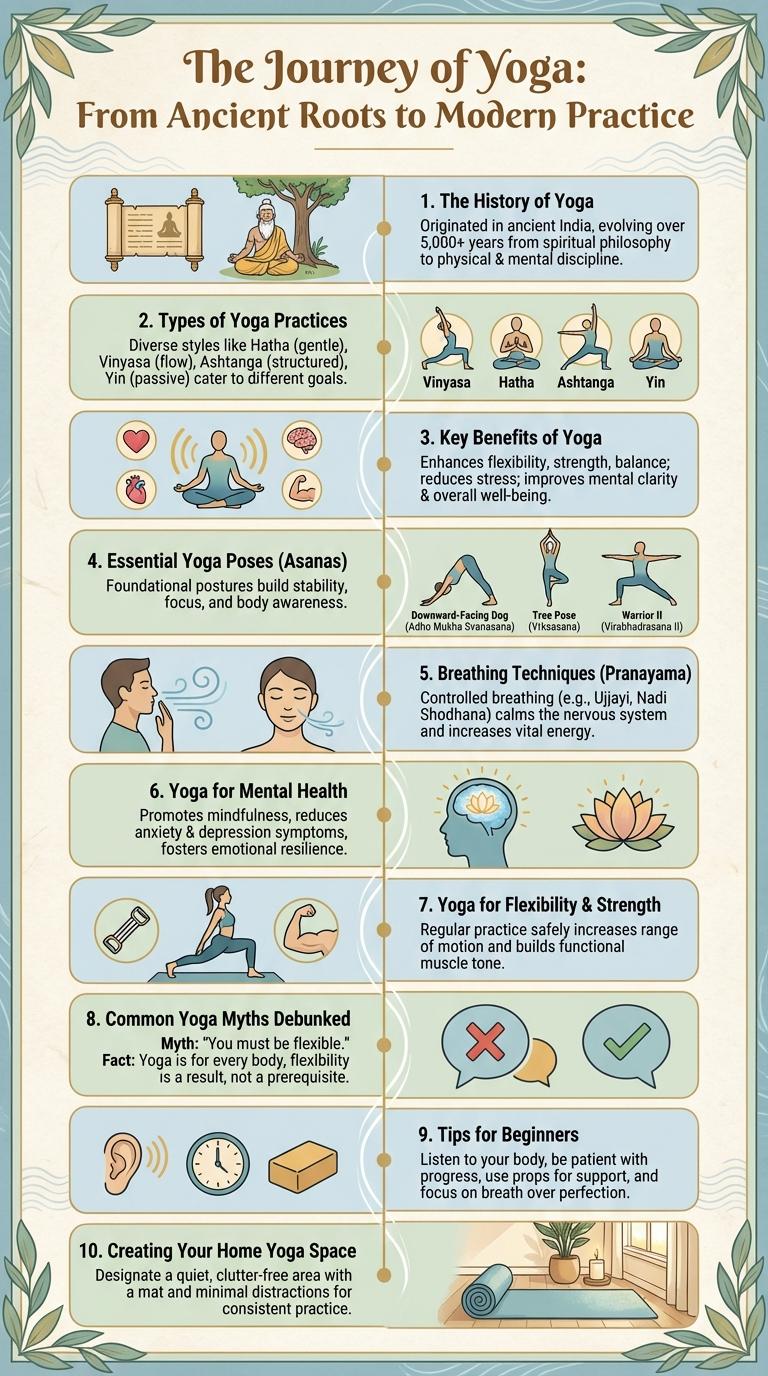
Yoga combines breath control, meditation, and physical postures to promote holistic well-being and mental clarity. Infographics effectively illustrate yoga's diverse styles and health benefits, making complex information easy to understand. Visual representations highlight key poses, breathing techniques, and mindfulness practices essential for a balanced lifestyle.
The History of Yoga
Yoga, originating over 5,000 years ago in ancient India, is a spiritual and physical discipline aimed at achieving harmony between the mind, body, and soul. The earliest references to yoga are found in the Rigveda, one of the oldest sacred texts.
The practice evolved through diverse schools, including Hatha and Raja Yoga, each emphasizing different techniques like postures, breath control, and meditation. Today, yoga is a global phenomenon promoting wellness, mindfulness, and holistic health.
Types of Yoga Practices
| Type of Yoga | Key Characteristics |
|---|---|
| Hatha Yoga | Foundation of most yoga styles, emphasizes physical postures and breathing techniques for balance and relaxation. |
| Vinyasa Yoga | Dynamic practice linking breath with movement, creating a flow of postures that build strength and flexibility. |
| Ashtanga Yoga | Structured and rigorous sequence of poses, focusing on endurance, strength, and stamina. |
| Bikram Yoga | Performed in a heated room, consists of 26 specific postures aimed to detoxify and improve circulation. |
| Yin Yoga | Slow-paced practice targeting deep connective tissues, promoting flexibility and joint mobility. |
Key Benefits of Yoga
Yoga offers a holistic approach to improving physical and mental health. Practicing yoga regularly enhances well-being through mindful movement and breath control.
- Improves Flexibility - Yoga stretches muscles and increases the range of motion in joints, promoting overall flexibility.
- Reduces Stress - Breath-focused yoga techniques activate the parasympathetic nervous system, helping to lower stress levels.
- Enhances Strength - Holding yoga poses builds muscle strength and supports better posture.
Essential Yoga Poses
Essential yoga poses enhance flexibility, strength, and balance, making them fundamental for practitioners of all levels. Key poses include Downward Dog, Warrior II, Tree Pose, Child's Pose, and Cobra Pose, each targeting different muscle groups and promoting mindfulness. Incorporating these poses into a regular routine supports physical health and mental well-being.
Breathing Techniques in Yoga
Breathing techniques in yoga, known as pranayama, play a crucial role in enhancing mental clarity and physical health. These methods regulate the flow of breath to improve oxygen intake and reduce stress levels.
- Nadi Shodhana - This alternate nostril breathing technique balances the nervous system and promotes relaxation.
- Ujjayi Breath - Also called "victorious breath," it generates internal heat and improves focus during yoga practice.
- Kapalabhati - This rapid breathing exercise detoxifies the respiratory system and increases energy.
Mastering these breathing exercises supports overall well-being and deepens the yoga experience.
Yoga for Mental Health
How does yoga benefit mental health? Yoga integrates physical postures, breathing exercises, and meditation to reduce stress and anxiety. Practicing yoga regularly improves mood, enhances focus, and promotes emotional resilience.
What are the key mental health benefits of yoga? Yoga lowers cortisol levels, which helps control stress. It also increases gamma-aminobutyric acid (GABA), a neurotransmitter linked to better mood and relaxation.
Which yoga styles are best for mental well-being? Hatha and Restorative yoga emphasize slow movements and deep breathing, ideal for calming the mind. Vinyasa yoga combines breath with movement, boosting endorphins and energy levels.
| Yoga Techniques | Mental Health Benefits |
|---|---|
| Pranayama (Breath Control) | Reduces anxiety, stabilizes mood |
| Meditation | Improves focus, lowers stress hormones |
| Asanas (Postures) | Releases tension, boosts confidence |
| Mindfulness | Enhances self-awareness, reduces depression |
How often should one practice yoga for mental health improvements? Daily short sessions or 3-4 times per week can create significant mental health benefits. Consistency helps build emotional strength and reduces symptoms of anxiety and depression.
Yoga for Flexibility & Strength
Yoga enhances flexibility and strength through a combination of stretching and muscle engagement poses. Regular practice helps improve joint mobility and builds muscular endurance.
Poses like Downward Dog and Warrior II target multiple muscle groups, increasing overall body stability. Improved flexibility reduces the risk of injuries during physical activities. Strength gained from yoga supports better posture and functional movement in daily life.
Common Yoga Myths Debunked
Yoga is often misunderstood due to widespread myths that misrepresent its true nature and benefits. Clarifying these misconceptions helps people appreciate yoga's holistic impact on physical and mental health.
- Yoga is only about flexibility - Yoga improves strength, balance, and mental focus, not just flexibility.
- Yoga requires spiritual belief - Many practice yoga solely for its physical and mental health advantages without any spiritual context.
- Yoga is not a workout - Yoga can be physically intense and supports cardiovascular health and muscle toning.
Tips for Beginners
Starting yoga can enhance flexibility, reduce stress, and improve overall well-being. Beginners should focus on understanding basic poses and breathing techniques to build a strong foundation.
Consistent practice and patience are key to progressing safely in yoga. Using beginner-friendly resources and listening to your body helps prevent injury and promotes lasting benefits.