
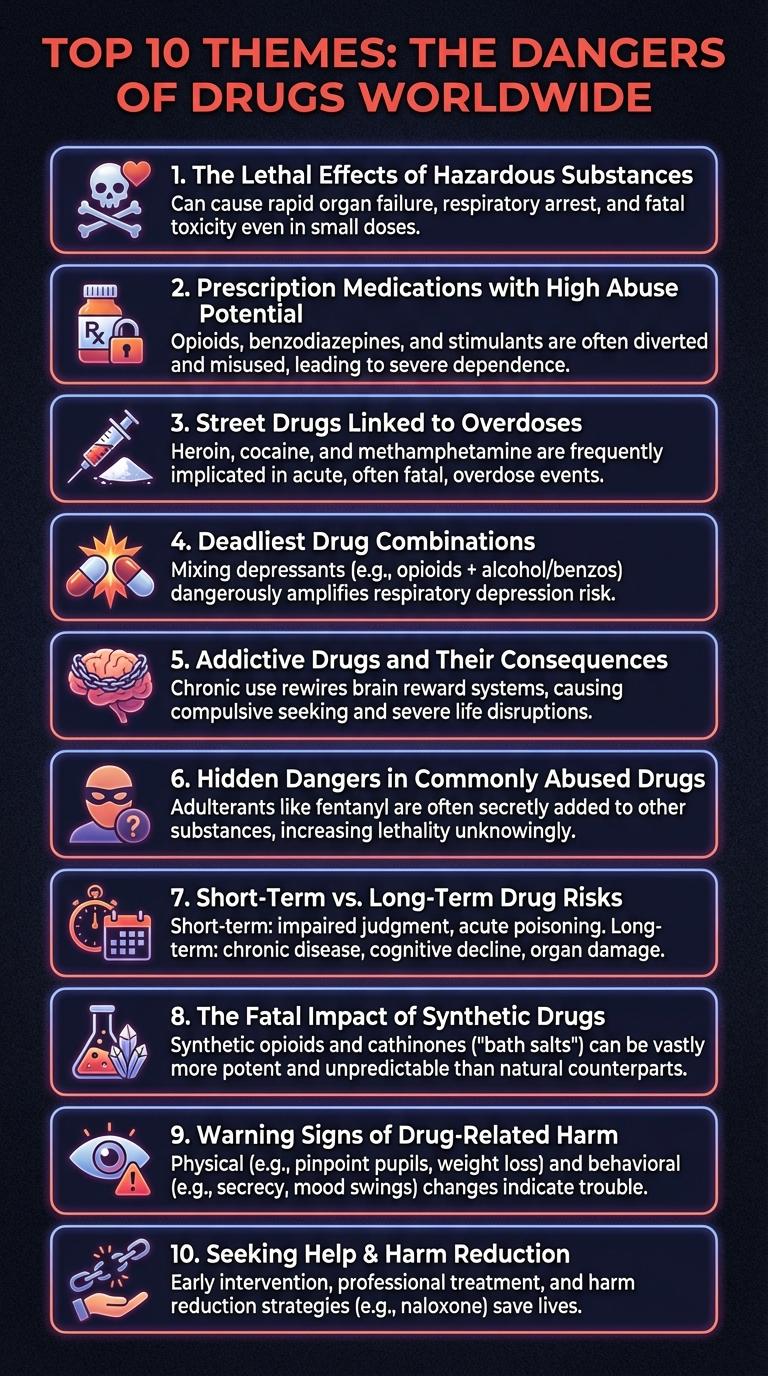
Infographics about dangerous drugs highlight the risks and consequences of substance abuse through clear visuals and concise data. They emphasize the impact on physical health, mental well-being, and social relationships. These visual aids serve as powerful tools for awareness and prevention initiatives.
Top 10 Most Dangerous Drugs Worldwide
The Top 10 Most Dangerous Drugs Worldwide pose severe health risks and contribute to high rates of addiction, overdose, and societal harm. This infographic highlights the drugs responsible for the highest levels of physical damage, mental impairment, and social disruption globally.
Heroin, methamphetamine, and cocaine rank among the most harmful due to their addictive potential and deadly effects on the brain and body. Synthetic opioids and crack cocaine also stand out for their rapid addiction rates and overdose fatalities.
The Lethal Effects of Hazardous Substances
Dangerous drugs such as opioids, methamphetamines, and synthetic cannabinoids pose severe health risks due to their highly toxic chemical properties. These hazardous substances can cause respiratory failure, cardiac arrest, and irreversible brain damage, leading to a high mortality rate. The use of contaminated or illicitly manufactured drugs further increases the risk of fatal overdose and long-term health complications.
Prescription Medications with High Abuse Potential
Prescription medications with high abuse potential pose significant risks to individuals and public health. Understanding these drugs helps in recognizing their dangers and preventing misuse.
- Opioids - Drugs like oxycodone and hydrocodone are powerful painkillers with a high risk of addiction and overdose.
- Benzodiazepines - Medications such as alprazolam and diazepam are prescribed for anxiety but can lead to dependence and severe withdrawal symptoms.
- Stimulants - Prescription stimulants like Adderall and Ritalin are used for ADHD treatment but carry potential for abuse due to their energizing effects.
Street Drugs Linked to Overdoses
Street drugs such as heroin, fentanyl, and methamphetamine are major contributors to the rising overdose crisis. Fentanyl, in particular, is extremely potent and often mixed with other substances, increasing the risk of accidental overdose. Understanding these dangerous drugs is crucial for prevention and saving lives.
Deadliest Drug Combinations
Deadliest drug combinations significantly increase the risk of fatal overdose. Mixing substances like opioids, alcohol, and benzodiazepines can cause severe respiratory depression.
Opioids combined with alcohol amplify sedation and suppress breathing, leading to high mortality rates. Benzodiazepines mixed with opioids also intensify central nervous system depression, creating life-threatening risks.
Addictive Drugs and Their Consequences
What are the most addictive drugs and their consequences?
Addictive drugs such as heroin, cocaine, methamphetamine, nicotine, and alcohol cause severe health and social problems. They lead to physical dependence, mental health disorders, and significant social and economic impacts.
| Drug | Consequences |
|---|---|
| Heroin | High risk of overdose, respiratory failure, and infectious diseases. |
| Cocaine | Cardiovascular issues, paranoia, addiction, and cognitive impairments. |
| Methamphetamine | Severe dental problems, cognitive decline, psychosis, and violent behavior. |
| Nicotine | Chronic respiratory diseases, cancer, and strong physical dependence. |
| Alcohol | Liver cirrhosis, addiction, impaired judgment, and social problems. |
Hidden Dangers in Commonly Abused Drugs
Many commonly abused drugs contain hidden dangers that can cause severe health issues beyond their immediate effects. Understanding these risks is crucial for prevention and informed decision-making.
- Prescription Opioids Masking Addiction Risks - These medications can cause respiratory depression and lead to fatal overdoses despite being prescribed legally.
- Alcohol's Impact on Brain Function - Chronic use deteriorates cognitive abilities and increases the risk of mental health disorders.
- Inhalants Containing Toxic Chemicals - Substances like glue and paint fumes can cause sudden sniffing death syndrome and irreversible organ damage.
Short-Term vs. Long-Term Drug Risks
Dangerous drugs pose significant health risks that vary over time. Understanding the contrast between short-term and long-term effects is crucial for awareness and prevention.
Short-term drug risks include impaired judgment, overdose, and acute poisoning, which can lead to immediate medical emergencies. Long-term drug use may result in chronic health conditions such as liver damage, cognitive decline, and addiction. Both types of risks contribute to decreased quality of life and increased mortality rates.
The Fatal Impact of Synthetic Drugs
| The Fatal Impact of Synthetic Drugs | |
|---|---|
| Synthetic Drug Type | Fatal Overdose Rate (per 100,000 users) |
| Fentanyl and analogs | 52.8 |
| Bath Salts (Synthetic Cathinones) | 14.3 |
| Spice (Synthetic Cannabinoids) | 8.7 |
| NBOMe series (Synthetic Hallucinogens) | 11.2 |
| Synthetic drugs cause unpredictable toxicity and rapid fatal overdose. Death rates exceed those of many traditional drugs. Awareness and caution are critical as potency and purity fluctuate dangerously in street supplies. | |