
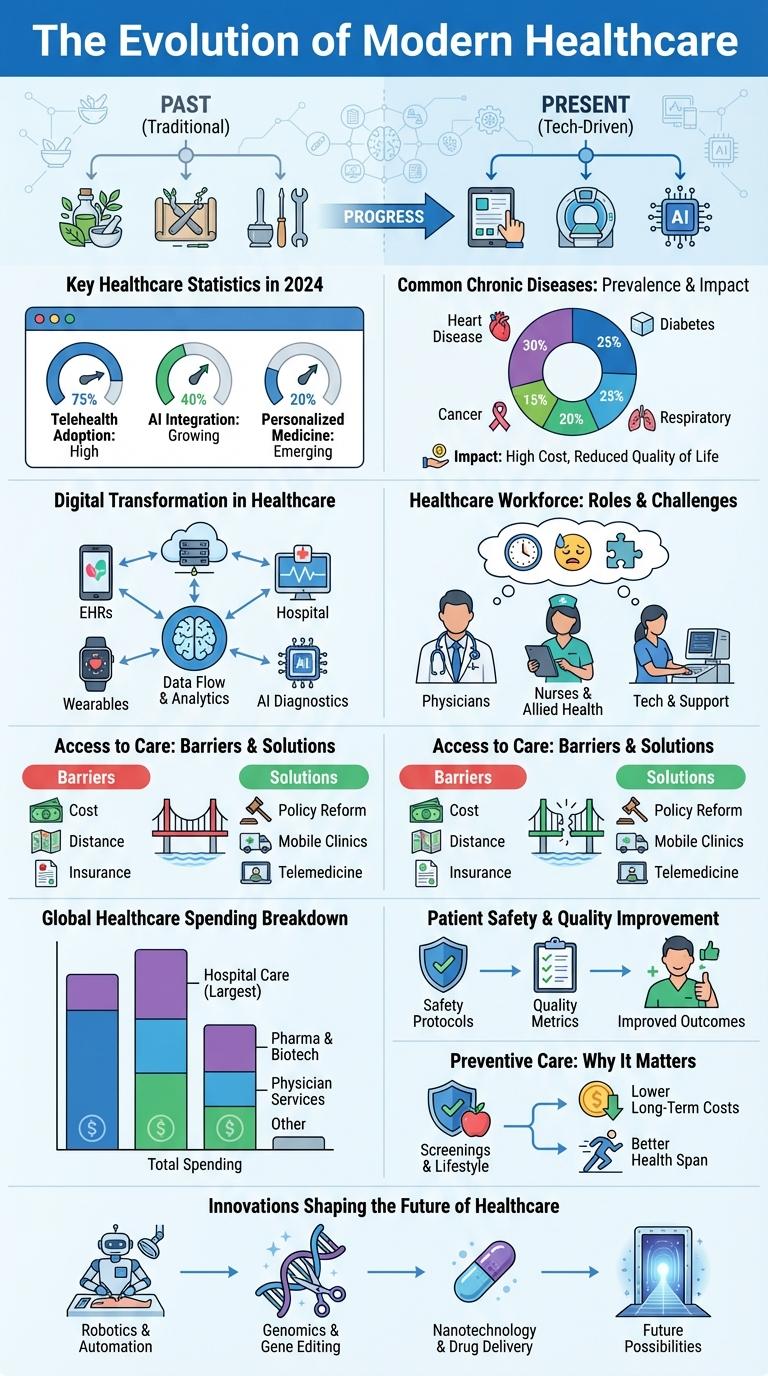
Healthcare infographics visually simplify complex medical information, making it easier to understand patient care, medical statistics, and wellness trends. They effectively communicate vital data such as disease prevalence, treatment options, and health policy impacts to both professionals and the public. Clear, engaging visuals help promote awareness and support informed decision-making in healthcare.
The Evolution of Modern Healthcare
The evolution of modern healthcare has been marked by significant advancements in medical technology and treatment methods. From ancient herbal remedies to cutting-edge diagnostic tools, healthcare continues to transform rapidly.
Key milestones include the discovery of antibiotics, the development of vaccines, and the integration of digital health records. These innovations enhance patient outcomes and streamline healthcare delivery worldwide.
Key Healthcare Statistics in 2024
| Healthcare Statistic | Value (2024) |
|---|---|
| Global Healthcare Spending | $10.1 trillion |
| Average Life Expectancy Worldwide | 73.2 years |
| Percentage of Population with Health Insurance | 78% |
| Annual Number of Hospital Admissions | 400 million |
| Healthcare Workforce Growth Rate | 3.5% per year |
Common Chronic Diseases: Prevalence & Impact
Common chronic diseases affect millions worldwide, significantly impacting global health systems and quality of life. These long-term conditions require ongoing medical attention and often lead to serious complications.
Heart disease, diabetes, and chronic respiratory diseases rank among the most prevalent chronic illnesses. Each condition contributes to high mortality rates and increased healthcare costs. Effective management and prevention strategies are essential to reduce their burden on individuals and society.
Digital Transformation in Healthcare
Digital transformation in healthcare is revolutionizing patient care through advanced technologies and data integration. This shift enhances service delivery, operational efficiency, and personalized treatment options.
Healthcare providers increasingly adopt digital tools to improve outcomes and reduce costs.
- Electronic Health Records (EHRs) - Digitally stored patient information enables faster access and accurate data sharing among clinicians.
- Telemedicine - Remote consultations allow patients to receive care without physical visits, expanding access to medical services.
- Artificial Intelligence (AI) - AI-driven analysis aids in diagnostics, treatment planning, and predicting patient risks effectively.
Healthcare Workforce: Roles & Challenges
The healthcare workforce comprises diverse roles essential for delivering quality patient care. Workforce challenges impact the efficiency and effectiveness of healthcare systems globally.
- Physicians - Diagnose and treat illnesses, requiring extensive education and training.
- Nurses - Provide continuous patient care and support across various settings.
- Allied Health Professionals - Include therapists, technicians, and pharmacists critical for specialized care.
- Workforce Shortages - Staffing gaps lead to increased workloads and burnout among healthcare workers.
- Training and Retention - Investing in education and career development is vital to maintain a skilled workforce.
Addressing workforce challenges ensures sustainable healthcare delivery and improved patient outcomes.
Access to Care: Barriers & Solutions
Access to healthcare remains a critical challenge, with barriers such as geographic location, high costs, and lack of insurance coverage limiting patient care. Rural populations experience significant difficulties due to fewer healthcare facilities and specialists available. Solutions include expanding telemedicine services, increasing insurance coverage, and investing in community health programs to enhance accessibility.
Global Healthcare Spending Breakdown
Global healthcare spending reflects the allocation of resources across various sectors within the medical industry. Understanding this breakdown helps identify priorities and optimize budget distribution for improved health outcomes worldwide.
Hospitals, pharmaceuticals, and outpatient services dominate the spending landscape. Preventive care and administrative costs also constitute significant portions of the global healthcare expenditure.
Patient Safety & Quality Improvement
Patient safety and quality improvement are critical components of effective healthcare systems. These efforts reduce medical errors and enhance patient outcomes across all care settings.
- Medication Safety - Implementing accurate medication reconciliation helps prevent prescribing errors and adverse drug events.
- Infection Control - Strict hygiene protocols and sterilization reduce hospital-acquired infections significantly.
- Continuous Training - Regular staff education on best practices promotes adherence to quality standards and safety guidelines.
Preventive Care: Why It Matters
Why is preventive care crucial for maintaining health?
Preventive care helps identify and reduce risk factors before serious illnesses develop. It improves overall well-being and lowers healthcare costs by promoting early detection and healthy lifestyle choices.