
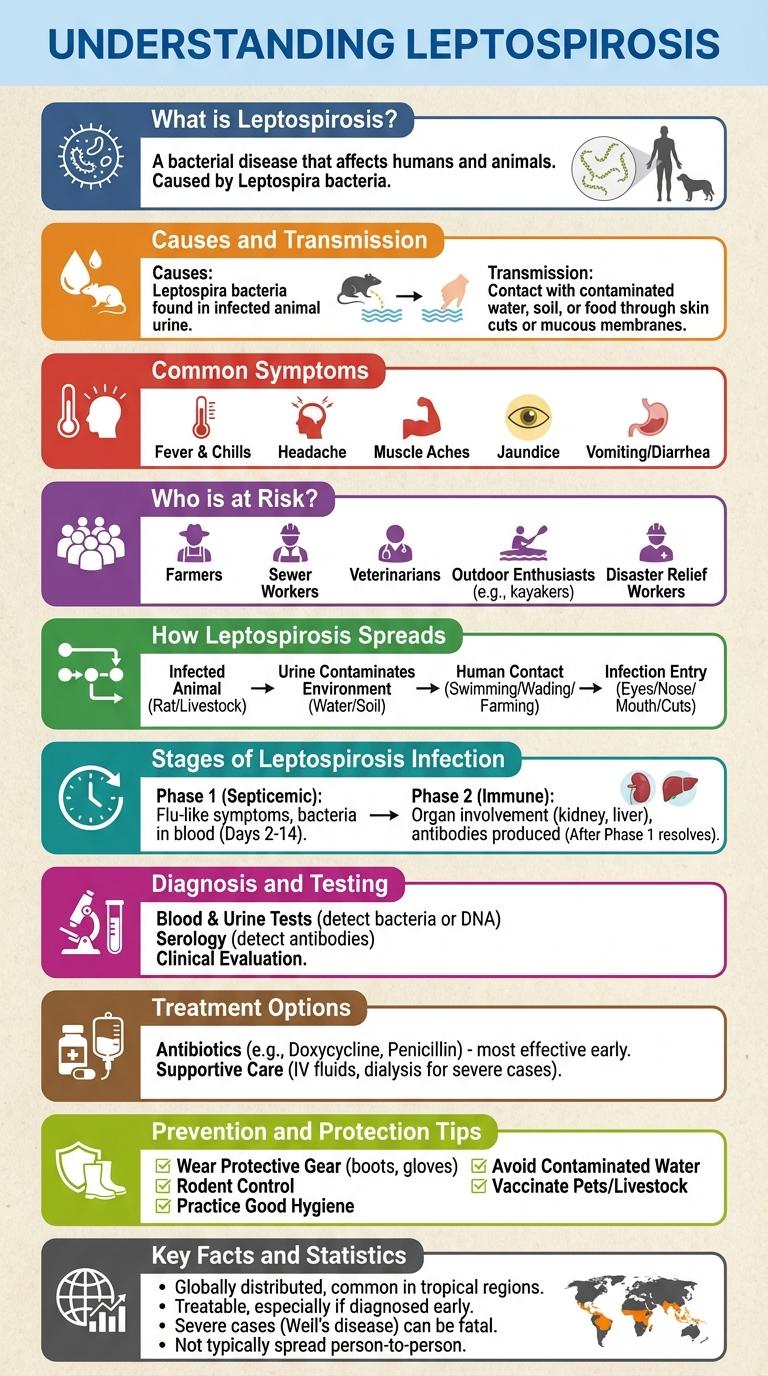
Leptospirosis is a bacterial infection transmitted through water contaminated by animal urine, posing significant health risks in tropical and subtropical regions. Symptoms range from mild flu-like effects to severe complications such as organ failure, making early detection crucial. Understanding the transmission, symptoms, and prevention methods through this infographic helps raise awareness and reduce the incidence of leptospirosis.
What is Leptospirosis?
Leptospirosis is a bacterial infection caused by the Leptospira species, typically transmitted through contact with water or soil contaminated by infected animal urine. The disease affects both humans and animals and can lead to a wide range of symptoms, from mild flu-like signs to severe complications like kidney damage or meningitis. Early diagnosis and treatment with antibiotics are crucial to prevent serious health outcomes and control the spread of leptospirosis.
Causes and Transmission
Leptospirosis is a bacterial infection caused by the Leptospira species. These bacteria thrive in warm, moist environments, especially in stagnant water.
Humans contract leptospirosis through direct contact with contaminated water, soil, or animal urine. Common carriers include rodents, livestock, and wild animals.
Common Symptoms
What are the common symptoms of leptospirosis? Leptospirosis often begins with high fever and severe headaches. Other early signs include muscle pain, chills, and vomiting.
Who is at Risk?
Leptospirosis is a bacterial infection that affects people worldwide, especially in tropical and subtropical regions. Understanding who is at risk helps in preventing and managing this disease effectively.
- Agricultural Workers - People working with livestock or in flooded fields are highly exposed to contaminated water and soil.
- Urban Residents in Flood-Prone Areas - Flooding increases contact with contaminated water, raising infection chances in urban settings.
- Outdoor Enthusiasts - Hikers, campers, and swimmers in freshwater bodies risk exposure to leptospira bacteria.
- Sanitation and Sewer Workers - These professionals frequently encounter environments contaminated with animal urine carrying leptospira.
- People with Poor Sanitation - Living in overcrowded conditions with inadequate waste disposal elevates the risk of infection.
How Leptospirosis Spreads
Leptospirosis is a bacterial infection caused by the Leptospira species. It primarily spreads through contact with water or soil contaminated by the urine of infected animals.
Humans can contract leptospirosis by entering contaminated environments, especially through cuts or mucous membranes. Common sources include flooded areas, stagnant water, and wet soil. Rodents, livestock, and wildlife serve as key reservoirs for the bacteria.
Stages of Leptospirosis Infection
Leptospirosis is a bacterial infection that progresses through distinct stages. Understanding these stages aids in early diagnosis and effective treatment.
- Incubation Period - This stage lasts 2 to 30 days, during which the bacteria enter the body but symptoms have not yet appeared.
- Febrile Phase - Characterized by sudden high fever, muscle aches, and headache, this phase typically lasts 4 to 7 days as the bacteria multiply in the bloodstream.
- Icteric Phase - Also known as the immune phase, this stage features jaundice, kidney dysfunction, and possible liver damage, occurring in severe cases after the initial symptoms.
Diagnosis and Testing
| Diagnostic Method | Description |
|---|---|
| Microscopic Agglutination Test (MAT) | Gold standard for leptospirosis diagnosis; detects antibodies against Leptospira serovars with high specificity. |
| Polymerase Chain Reaction (PCR) | Detects Leptospira DNA in blood or urine samples; effective during early stages of infection before antibodies develop. |
| Enzyme-Linked Immunosorbent Assay (ELISA) | Measures IgM and IgG antibodies against Leptospira; useful for screening and supporting diagnosis, especially after the first week of symptoms. |
| Culture | Isolation of Leptospira from clinical specimens such as blood, urine, or cerebrospinal fluid; time-consuming and less commonly used due to slow growth. |
| Dark-Field Microscopy | Direct visualization of Leptospira in clinical samples; limited sensitivity and specificity, mainly used in resource-limited settings. |
Treatment Options
Leptospirosis treatment primarily involves the administration of antibiotics such as doxycycline or penicillin to eliminate the bacterial infection. Early intervention is crucial to prevent severe complications including kidney damage, liver failure, or meningitis.
Supportive care may include hydration, pain relief, and hospitalization in severe cases for intensive monitoring. Prompt medical attention significantly improves prognosis and reduces the risk of long-term health issues associated with leptospirosis.
Prevention and Protection Tips
Leptospirosis is a bacterial infection transmitted through water contaminated by animal urine, posing risks in flooded or tropical areas. Protect yourself by avoiding contact with potentially contaminated water, wearing protective clothing, and maintaining good personal hygiene. Vaccination for pets and controlling rodent populations help reduce the risk of infection.