
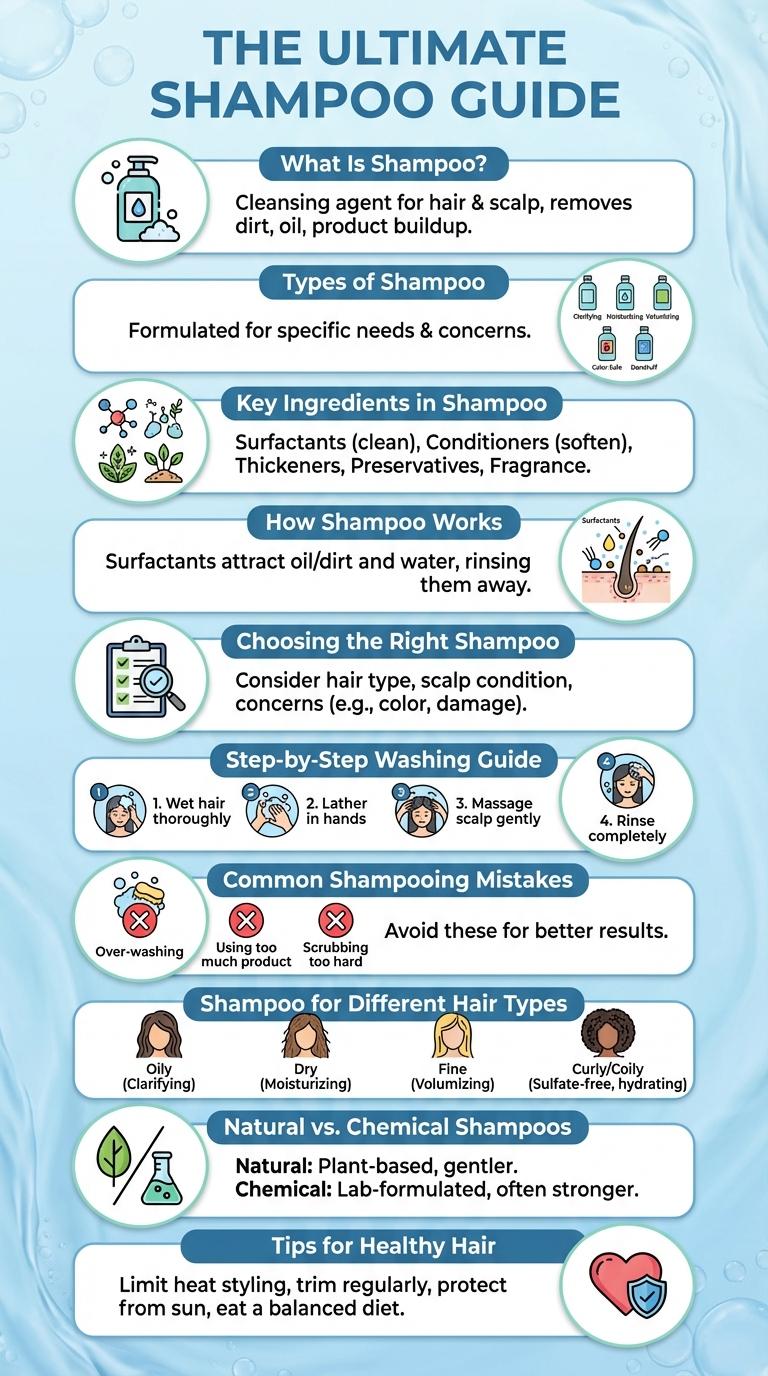
Shampoo is essential for maintaining healthy and clean hair by effectively removing dirt, oil, and buildup from the scalp. Different formulas target various hair types and concerns, from moisturizing dry strands to enhancing volume for fine hair. Understanding the ingredients and benefits of shampoos helps in choosing the right product for optimal hair care.
What Is Shampoo?
What Is Shampoo?
Shampoo is a cleansing product designed to remove dirt, oil, and buildup from the scalp and hair. It contains surfactants that help break down impurities for a fresh, clean feeling.
Types of Shampoo
Shampoos are formulated to address various hair types and scalp needs. Common types include moisturizing, volumizing, clarifying, and anti-dandruff shampoos.
Moisturizing shampoos hydrate dry hair, while volumizing shampoos add body to fine hair. Clarifying shampoos remove buildup, and anti-dandruff shampoos target scalp flaking and irritation.
Key Ingredients in Shampoo
Shampoo formulations include a variety of key ingredients that cleanse, nourish, and protect hair. Understanding these components helps in selecting the right shampoo for specific hair needs.
- Surfactants - These cleansing agents remove dirt, oil, and impurities from the scalp and hair.
- Conditioning Agents - Ingredients like silicones and oils that smooth hair strands and improve manageability.
- Preservatives - Compounds that extend shelf life by preventing microbial growth and contamination.
How Shampoo Works
Shampoo cleans hair by using surfactants that break down oils and dirt on the scalp and strands. These cleansing agents trap impurities in tiny micelles, allowing them to be rinsed away with water. Conditioning ingredients in shampoo help restore moisture and smooth the hair cuticle for shine and manageability.
Choosing the Right Shampoo
Selecting the right shampoo is essential for maintaining healthy hair and scalp. Understanding your hair type helps in choosing a product that meets your specific needs.
- Hair Type Suitability - Choose shampoos formulated for your hair type such as oily, dry, curly, or color-treated to achieve optimal results.
- Ingredients Matter - Look for key ingredients like biotin, keratin, or natural oils that nourish and strengthen hair.
- Avoid Harsh Chemicals - Steer clear of sulfates and parabens that can strip natural oils and cause damage.
Consistent use of the right shampoo promotes scalp health and enhances hair appearance.
Step-by-Step Washing Guide
| Step | Instructions |
|---|---|
| 1. Wet Hair | Thoroughly saturate hair with warm water to prepare scalp and strands for cleansing |
| 2. Apply Shampoo | Dispense a quarter-sized amount of shampoo into palm and distribute evenly over scalp |
| 3. Massage Scalp | Use fingertips to gently massage scalp in circular motions for 1-2 minutes to remove dirt and oil |
| 4. Rinse Thoroughly | Rinse hair completely with warm water to remove all shampoo residue, preventing buildup |
| 5. Condition (Optional) | Apply conditioner from mid-length to ends to hydrate and detangle hair, then rinse after 2-3 minutes |
Common Shampooing Mistakes
Using shampoo incorrectly can reduce its effectiveness and harm your hair. Many people make common mistakes that prevent their hair from getting properly cleaned and cared for.
One frequent error is applying too much shampoo, which can strip natural oils and cause dryness. Another mistake is not rinsing thoroughly, leaving residue that leads to buildup and scalp irritation. Lastly, washing hair with hot water can weaken hair strands and cause damage over time.
Shampoo for Different Hair Types
Choosing the right shampoo is essential to maintain healthy hair and scalp. Different hair types require specific formulations to address their unique needs.
- Shampoo for Oily Hair - Designed to remove excess oil and buildup without stripping natural moisture.
- Shampoo for Dry Hair - Enriched with hydrating ingredients to restore moisture and prevent brittleness.
- Shampoo for Color-Treated Hair - Formulated to protect hair color and strengthen strands against damage.
Natural vs. Chemical Shampoos
Natural shampoos contain plant-based ingredients like aloe vera, coconut oil, and chamomile, which nourish hair without synthetic chemicals. Chemical shampoos often include sulfates, parabens, and silicones that can cleanse effectively but may cause scalp irritation or dryness over time. Choosing natural shampoos supports healthier hair and reduces exposure to potentially harmful additives commonly found in chemical formulations.